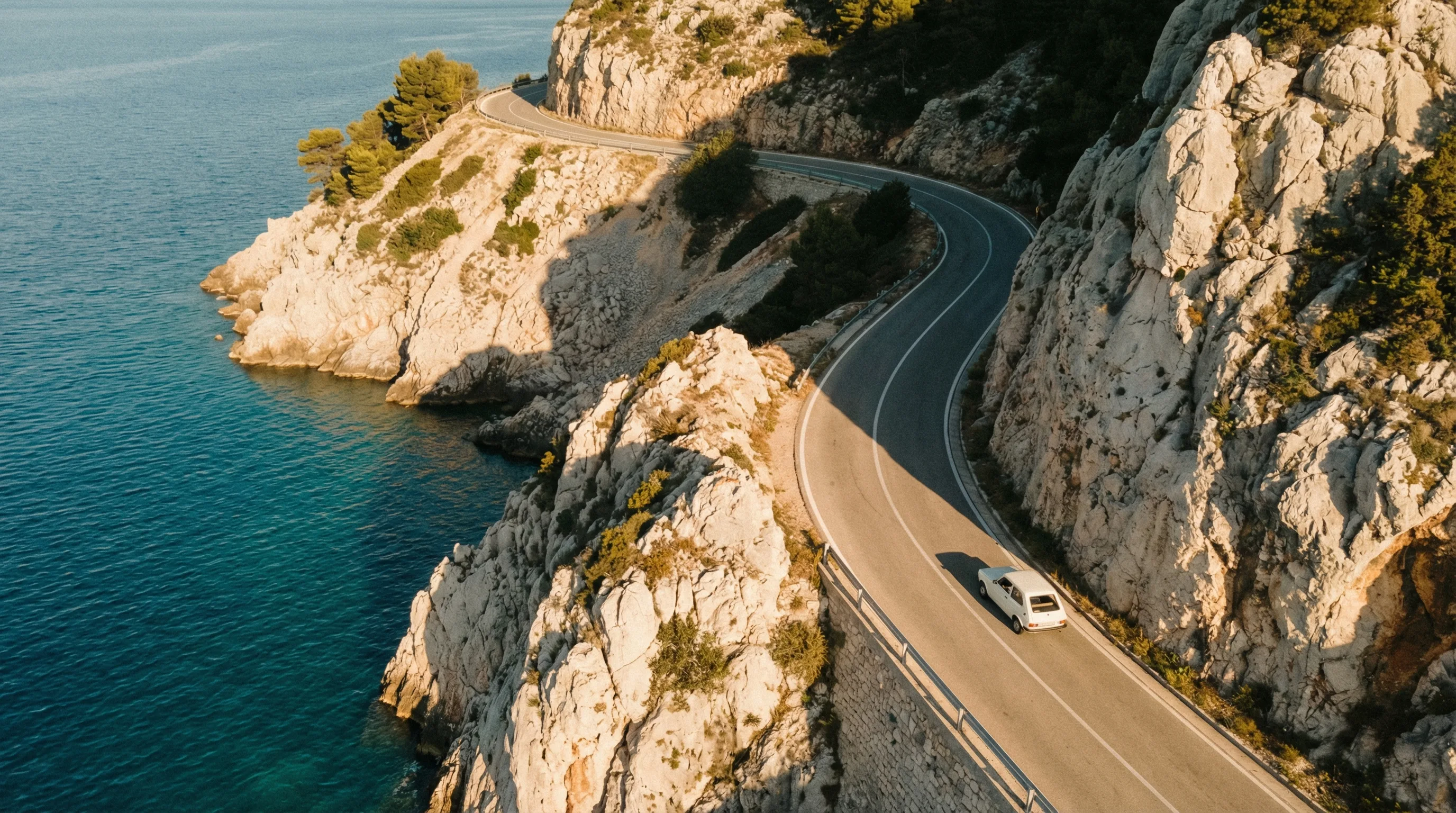
Adriatic Coast: Dubrovnik to Tirana
The limestone walls of Dubrovnik were still catching the last of the morning light when we pointed the car south and left Croatia behind. Fourteen days later we parked in Tirana, sunburned and slightly confused by Albanian traffic circles, with 980 km of coastline, two border crossings, and roughly forty espressos behind us. This is the route that takes you from the polished Adriatic of Croatia through the dramatic fjords of Montenegro and deep into Albania, where the coast gets wilder and the roads get more interesting.
We designed this itinerary as a two-week trip, but you can compress it to ten days if you skip the Albanian Alps detour. We would not recommend skipping it. The route works best from May to October, though July and August bring crowds to Dubrovnik and Budva that can turn parking into a competitive sport.
Route Overview
| Segment | Distance | Drive Time | Border Crossings |
|---|---|---|---|
| Dubrovnik to Kotor | 93 km | 2-3 hours | 1 (Croatia-Montenegro) |
| Kotor to Budva | 22 km | 30 min | 0 |
| Budva to Lake Skadar | 65 km | 1.5 hours | 0 |
| Lake Skadar to Shkoder | 45 km | 1-1.5 hours | 1 (Montenegro-Albania) |
| Shkoder to Theth | 70 km | 3 hours | 0 |
| Theth/Valbona to Berat | 180 km | 4-5 hours | 0 |
| Berat to Tirana | 120 km | 2-2.5 hours | 0 |
| Total | ~980 km | ~20 hours driving | 3 |
Tip: Drive times in Albania are consistently longer than Google Maps suggests. A road that looks like a 2-hour drive on paper often takes 3 once you factor in livestock crossings, roadworks, and the occasional Mercedes doing 140 in the opposite lane.
Days 1-2: Dubrovnik, Croatia
You probably already know Dubrovnik is expensive and crowded. Both things are true. It is also spectacular, and starting your Adriatic road trip anywhere else would feel like skipping the overture.
Park the car at one of the garages outside the Old Town walls (Parking Ilija or Parking Dubac are the least painful at around EUR 5-8 per hour) and explore on foot. Walk the city walls in the early morning before the cruise ship passengers arrive – the ticket is EUR 35, which sounds steep until you are standing above the Adriatic with the terracotta rooftops glowing below and no one elbowing you for a selfie spot.
On day two, take the cable car up Mount Srd for the panoramic view over the Old Town and the Elaphiti Islands. If you have time, drive 20 minutes north to Trsteno Arboretum, a genuinely peaceful garden that doubles as a Game of Thrones filming location for the handful of people who still care about that.
Tip: If you are renting your car in Dubrovnik and plan to return it in Tirana (or anywhere in Albania), confirm the one-way drop-off fee before booking. Not all agencies allow cross-border drop-offs, and those that do charge EUR 200-500 for the privilege. Check our car rental guide for agencies that handle this well.
Where to Stay in Dubrovnik
Skip the Old Town for sleeping – the value-to-noise ratio is terrible. Stay in Lapad or Gruz, 15-20 minutes by bus from the Old Town, and you will pay half the price for twice the space. Budget EUR 80-120 per night for a decent apartment.
Day 3: Dubrovnik to Kotor
This is one of the finest coastal drives in Europe, and it starts the moment you leave Dubrovnik.
The road south from Dubrovnik briefly crosses into Bosnia at Neum – a 9 km strip of Bosnian coastline that splits Croatia in two. Technically this means two extra border crossings, though both are usually quick (5-15 minutes each). Have your passport ready and don’t look surprised.
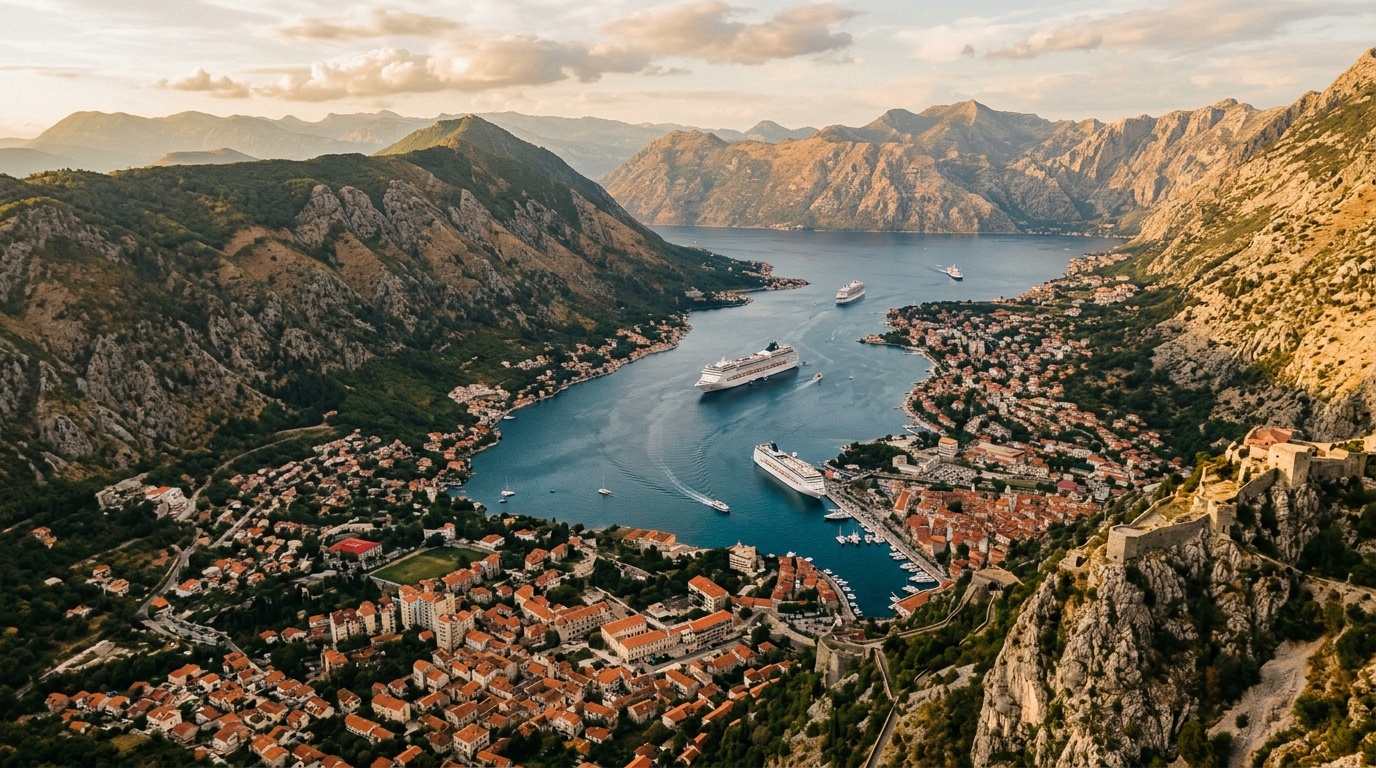
After re-entering Croatia and then crossing into Montenegro at the Karasovici border, the Bay of Kotor opens up in front of you. This is where the coastline stops being pretty and starts being absurd. The bay is essentially a fjord – steep limestone walls dropping into dark blue water, with medieval towns wedged into every available flat space.
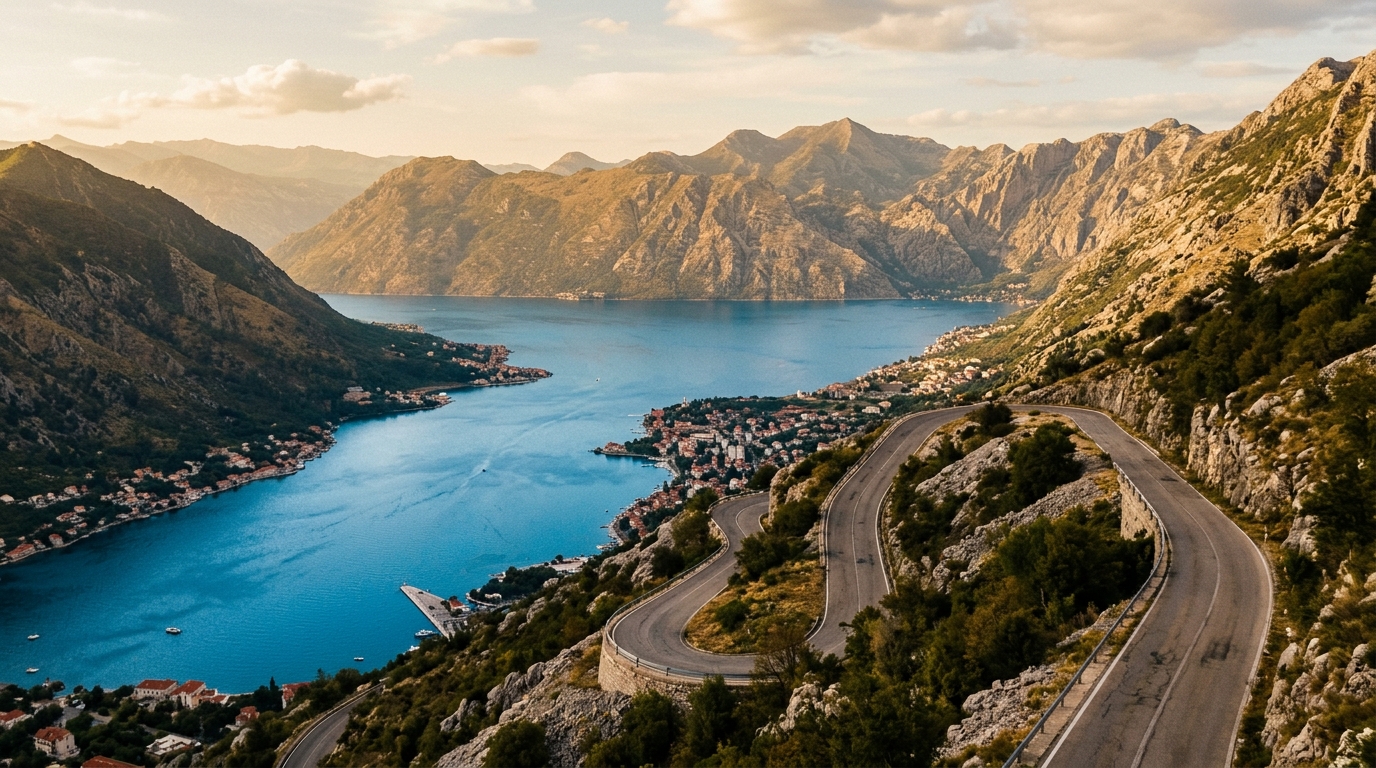
The drive around the inner bay takes about an hour if you don’t stop, which you won’t manage. Perast is the mandatory pause – a one-street town with two tiny islands floating just offshore. From Perast, you can take a boat to Our Lady of the Rocks (EUR 5, 5 minutes) or just sit at a waterfront cafe and stare at the view like everyone else.
The Bay of Kotor is what happens when a Norwegian fjord and an Italian coastal town have a baby and raise it in the Balkans.
You can either drive the full loop around the bay or take the Kamenari-Lepetane ferry (EUR 4.50 per car, runs every 15 minutes) to cut across and save 45 minutes. The full loop is more scenic. The ferry is more fun.
Kotor Old Town
Kotor itself is compact and walkable. Park outside the walls (Parking Benovo, EUR 1.20/hour) and enter through the main gate. The fortress hike to San Giovanni is 1,350 steps – do it in the late afternoon when the heat fades and the sunset light hits the bay.
Tip: The Croatia-Montenegro border at Karasovici can back up badly in July and August, with waits of 1-2 hours. If you are traveling in peak summer, cross early in the morning (before 8 AM) or consider the alternative crossing at Debeli Brijeg, which is less used.
Days 4-5: Budva and Sveti Stefan
From Kotor, the road to Budva hugs the coast and takes 30 minutes. Budva has the nightlife and the beaches. Sveti Stefan, 8 km further south, has the iconic island connected to the mainland by a narrow causeway. You cannot visit the island itself (it is a private Aman resort now), but the view from the mainland beach is free and worth the detour.
Budva’s Old Town is a smaller, less crowded version of Dubrovnik’s. The beaches around Budva – Mogren, Becici, Jaz – are a mix of free stretches and sunbed rentals (EUR 10-20 per day for two loungers and an umbrella).
| Beach | Type | Access | Notes |
|---|---|---|---|
| Mogren | Pebble/sand | 10 min walk from Old Town | Two connected beaches, small tunnel between them |
| Jaz | Pebble | 3 km from Budva | Free parking, festival venue in summer |
| Becici | Sand | 2 km from Budva | Long beach, good for families |
| Sveti Stefan beach | Sand/pebble | 8 km south | Free public side, paid Aman side |
Days 6-7: Lake Skadar
Drive inland from Budva toward Cetinje and then down to Lake Skadar. The road from Cetinje to the lake drops through a series of switchbacks with views over the water that make pulling over mandatory.
Lake Skadar is the largest lake in the Balkans, shared between Montenegro and Albania. The Montenegrin side has boat tours (EUR 20-40 per person for a 3-hour trip), wine tasting at the Crmnica vineyards, and some of the best birdwatching in southeastern Europe – 280 species, including the Dalmatian pelican if your timing is right.
Stay in Virpazar, the main village on the lake, where guesthouses run EUR 30-50 per night. The village has a handful of restaurants serving lake fish (carp and bleak) and the local Vranac wine, which is surprisingly good for something most people have never heard of.
Tip: If you have a kayak or can rent one in Virpazar (EUR 15-20 for a half day), paddling through the water lily channels on the northern shore early in the morning is one of the quietest, most beautiful experiences on this entire route.
Day 8: Lake Skadar to Shkoder, Albania
The Montenegro-Albania border at Hani i Hotit is 45 km from Virpazar and rarely has long waits (15-30 minutes in summer). This is the crossing where you leave the organized, EU-aspiring Montenegro and enter Albania, where things get more lively.
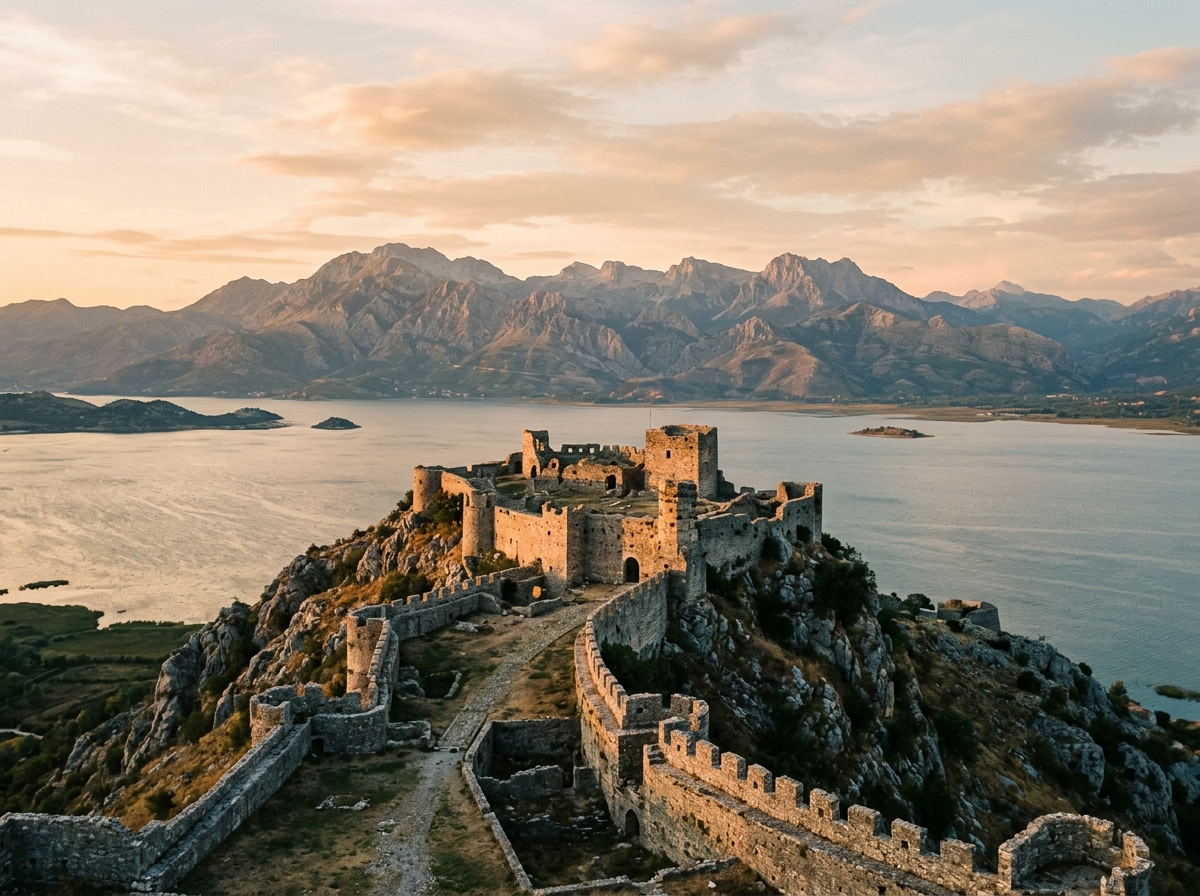
Shkoder is Albania’s fourth-largest city and the gateway to the Albanian Alps. The Rozafa Castle, sitting on a hill above the convergence of two rivers and the lake, is worth a couple of hours. The legend behind its name is dark enough that we won’t spoil it here – read the plaque when you arrive.
The pedestrian street Rruga Kole Idromeno has cafes, the Marubi National Museum of Photography (one of the oldest photo archives in the Balkans), and a relaxed evening atmosphere that feels nothing like what you might expect from Albania if you have been reading the wrong travel forums.
Practical Details: Entering Albania by Car
- You need a Green Card (international insurance certificate) for your rental car. Confirm with your rental company before you cross.
- If your rental does not cover Albania, you can buy short-term Albanian insurance at the border for EUR 30-50.
- Albanian roads are improving fast, but GPS estimated drive times are often optimistic by 30-50%.
- Fuel is slightly cheaper in Albania than Montenegro. Fill up after the border.
See our full border crossings guide for current wait times and tips.
Days 9-10: Theth and Valbona (Albanian Alps)
This is the detour that turns a good road trip into a great one. From Shkoder, the road to Theth is 70 km of mountain switchbacks on a road that was unpaved until recently. As of 2025, it is mostly paved but narrow, and the last 15 km still require careful driving. An SUV is helpful here but not strictly necessary – we did it in a Skoda Octavia and only regretted it twice.
Theth is a mountain village with stone towers, a 30-meter waterfall, and the Blue Eye – a natural spring pool of surreal turquoise color nestled in the forest. The hike from the village to the Blue Eye takes about an hour each way.
The classic move is to hike from Theth to Valbona over the Valbona Pass (6-7 hours, moderate difficulty), then take the Lake Koman ferry back. The ferry ride through the narrow canyon is often compared to a fjord cruise, and for once the comparison is not lazy – it genuinely looks like Norway, if Norway had concrete bunkers on the hillsides.
Tip: The Theth-Valbona hike is doable without a guide, but the trail markings can be unreliable. Consider hiring a local guide (EUR 40-60 for the day) or at minimum download the trail on Maps.me or AllTrails before you lose cell signal, which happens about 20 minutes outside Shkoder.
| Option | Duration | Notes |
|---|---|---|
| Theth only (drive in, drive out) | 1 day | Doable as day trip from Shkoder |
| Theth + Blue Eye hike | 1.5 days | Overnight in Theth guesthouse (EUR 25-35 with meals) |
| Theth to Valbona hike + Koman ferry | 2 days | Car stays in Shkoder, ferry from Fierze back |
| Valbona only (from Shkoder via Koman) | 1.5 days | Ferry + overnight in Valbona |
Days 11-12: Berat
The drive from Shkoder (or Tirana, if you returned from the Alps that way) to Berat takes 3-4 hours on roads that alternate between surprisingly good highway stretches and single-lane passages through olive groves. Berat is worth every kilometer.
Berat is called the City of a Thousand Windows, and you will understand why the moment you see the Ottoman houses climbing the hillside, each one stacked slightly above the last, their large windows all facing the river. The effect is a wall of glass and white plaster that looks intentionally designed but is actually just centuries of people wanting a nice view.
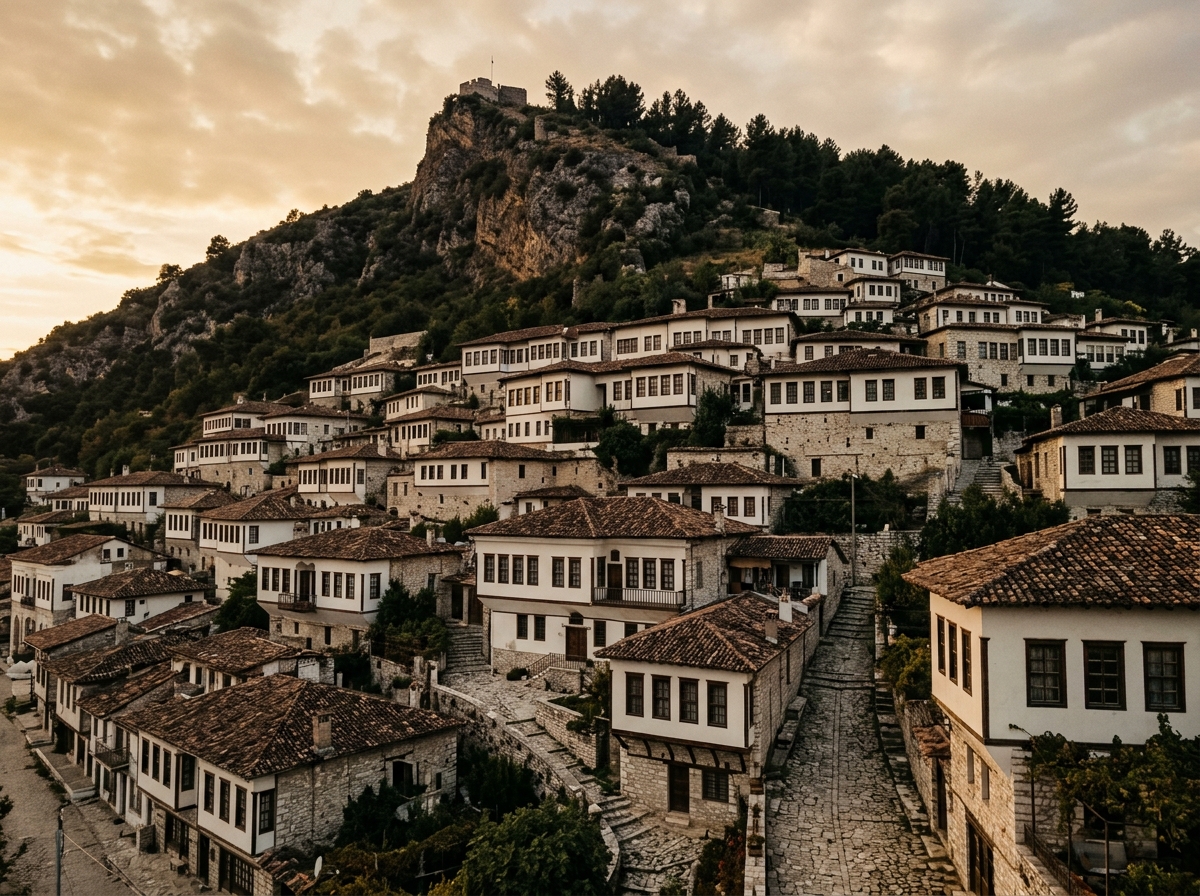
The castle quarter (Kalaja) is still inhabited – real people live in the fortress, which makes wandering its narrow streets feel less like a museum and more like accidentally walking through someone’s neighborhood. Because you are. The Onufri Museum inside the castle has a collection of 16th-century icons by the Albanian master Onufri, whose use of a particular shade of red became his signature.
Down by the river, the Mangalem quarter on the east bank and the Gorica quarter on the west bank are connected by a 1780 Ottoman bridge. Walk both sides. Eat at one of the restaurants along the river and order tavë kosi (lamb baked in yogurt) because you are in the city that supposedly invented it.
Berat is what happens when a city gets a UNESCO listing but nobody tells the tourists. Give it two days – you will have the castle quarter almost to yourself.
Osum Canyon Side Trip
If you have a car and a spare half-day, drive 25 km south of Berat to the Osum Canyon. The road follows the river through a canyon with walls up to 80 meters high. There are rafting trips (EUR 25-35 per person) available from April to June when the water level is right.
Days 13-14: Tirana
The final 120 km from Berat to Tirana takes about 2 hours on the SH4 highway. Tirana is not a beautiful city in the conventional sense – it is loud, slightly chaotic, and painted in aggressive colors that Edi Rama (the artist-turned-prime-minister) imposed on the communist-era apartment blocks. But it has energy, good food, and the kind of recent history that deserves your attention.
Start with Bunk’Art 1 and 2. These are art installations inside former communist bunkers – Bunk’Art 1 is in a massive Cold War nuclear bunker on the outskirts of the city; Bunk’Art 2 is smaller and centrally located, inside a bunker near Skanderbeg Square. Both cost EUR 3-4 and are genuinely moving.
Skanderbeg Square is the center of everything. It was redesigned in 2017 and is now a vast, clean pedestrian space surrounded by the national museum, the opera house, and the Et’hem Bey Mosque. The Blloku district, south of the square, is where Tirana eats, drinks, and stays out too late – it was the exclusive residential area for communist party elite until 1991, which explains the large houses that are now bars and restaurants.
| Tirana Highlights | Time Needed | Cost |
|---|---|---|
| Bunk’Art 1 (nuclear bunker) | 2 hours | EUR 4 |
| Bunk’Art 2 (central bunker) | 1 hour | EUR 3 |
| Skanderbeg Square & mosque | 1 hour | Free |
| National History Museum | 2 hours | EUR 3 |
| Blloku district walk & dinner | Evening | Varies |
| Grand Park and artificial lake | 1 hour | Free |
Tip: Tirana taxis are cheap (EUR 2-4 for most rides within the center) but use only metered taxis or the app “Speed Taxi.” If a driver quotes you a fixed price, find another driver.
Budget Breakdown
| Category | Daily Estimate | 14-Day Total |
|---|---|---|
| Accommodation (2 people) | EUR 50-90 | EUR 700-1,260 |
| Fuel (~980 km total) | – | EUR 120-160 |
| Food (restaurants + groceries) | EUR 30-50 | EUR 420-700 |
| Activities & entrance fees | EUR 10-20 | EUR 140-280 |
| Border insurance (Albania) | – | EUR 30-50 |
| Parking (various) | – | EUR 40-70 |
| Total per person | – | EUR 1,200-1,800 |
Prices drop significantly once you cross into Albania. A meal for two in Dubrovnik costs about the same as a full day of eating in Berat.
Practical Information
Car Rental
Rent in Dubrovnik and drop off in Tirana if your agency allows it. If not, rent in Dubrovnik, drive the route, and fly back from Tirana – one-way flights to Dubrovnik via budget airlines are often EUR 40-80. See our car rental guide for agencies that allow cross-border driving into Albania.
Best Time to Drive
May-June and September-October are ideal. The weather is warm, the roads are dry, the Theth road is open, and the crowds are manageable. July and August work but bring heat, cruise ship crowds in Dubrovnik, and packed beaches along the Montenegro coast.
November-April is possible for the coastal sections but the Albanian Alps are inaccessible due to snow, and Lake Skadar can be flooded.
Insurance and Documents
- EU or international driving license accepted in all three countries
- Green Card (international insurance) required for Albania – confirm with your rental agency
- Vehicle registration document and rental agreement always in the car
- Some rental companies in Croatia explicitly prohibit taking the car into Albania – check before you book
Read our full driving guide for country-by-country rules.
Road Conditions
| Country | Road Quality | Key Challenges |
|---|---|---|
| Croatia | Excellent | Toll roads, expensive fuel |
| Montenegro | Good to moderate | Narrow coastal roads, aggressive local drivers |
| Albania | Variable | Unpredictable surfaces, livestock, optimistic GPS times |
What to Drive Next
Finished this route and still have time? Consider the Grand Balkan Circuit for the full experience, or the Albanian Riviera Loop if the Albanian coast left you wanting more. If you are heading back north, the Heart of the Balkans: Sarajevo to Ohrid connects neatly from Tirana through Macedonia and into Bosnia.