Julian Alps to Adriatic: Slovenia to Montenegro
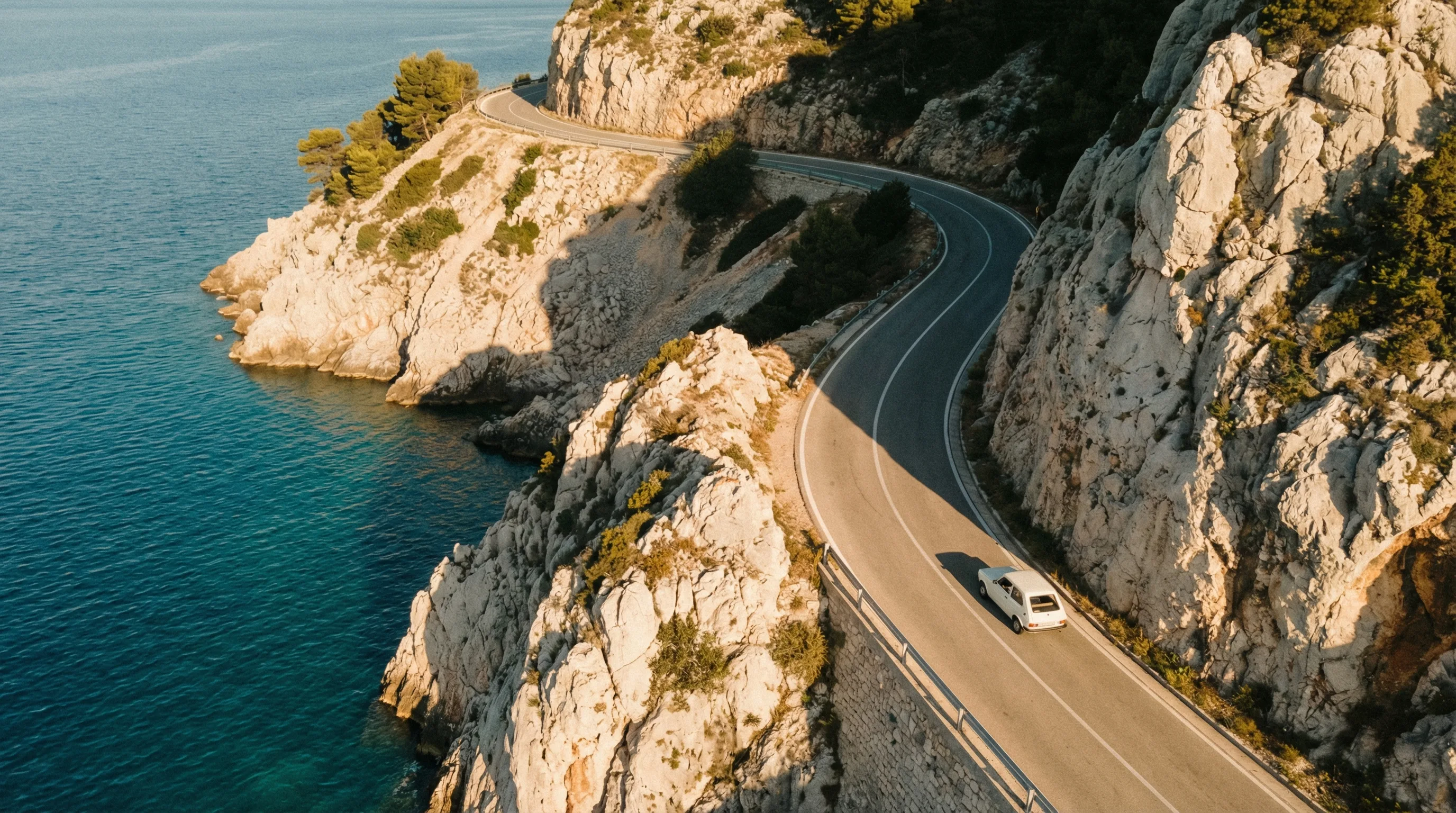
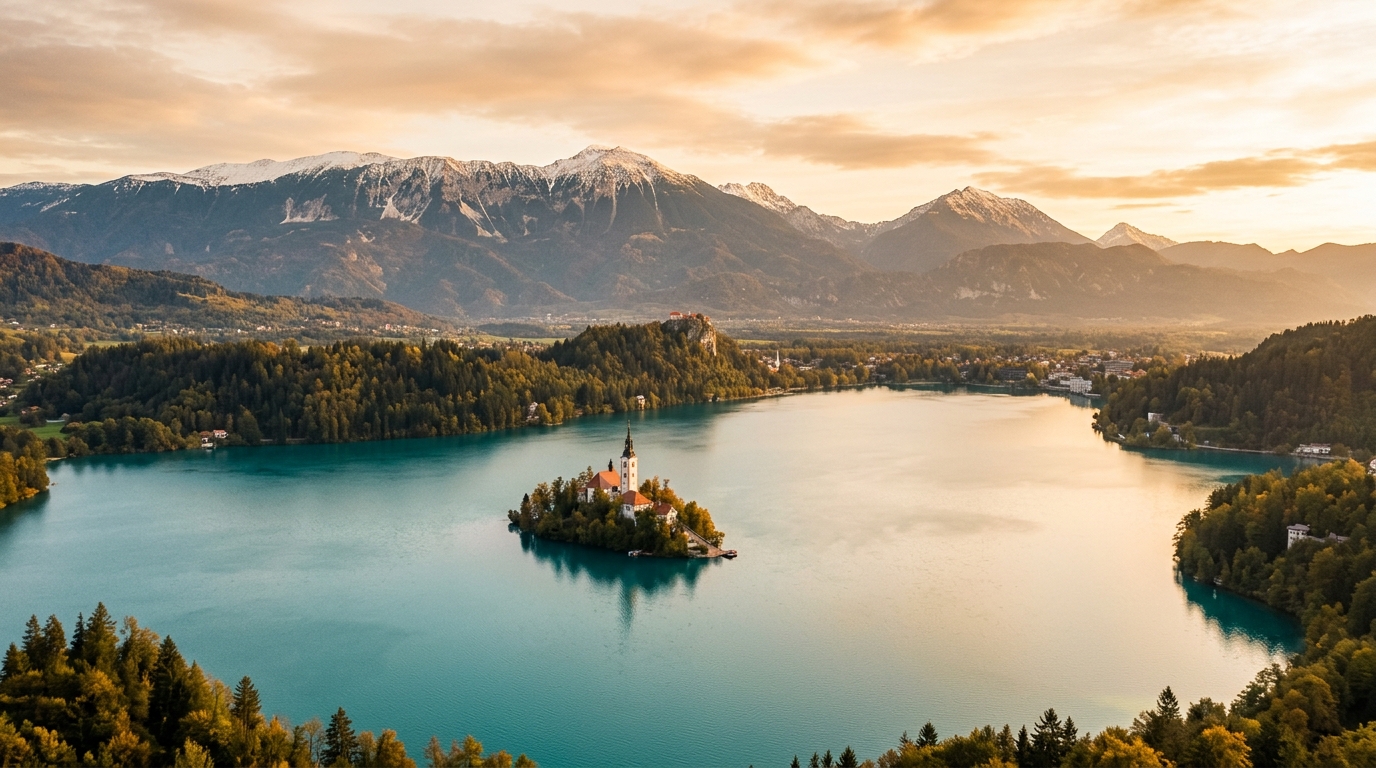
We started this trip staring at snow-capped peaks reflected in a glacial lake at 475 meters above sea level. Twelve days later, we were floating in the Adriatic at exactly zero meters, sunburned and slightly amazed that a 1,100 km drive south could contain so many different versions of Europe. Alpine passes with 50 numbered hairpins. Waterfalls cascading into turquoise lakes. A Roman emperor’s retirement palace that became a living city. Medieval walls above the sea. A fjord that should not exist this far south. And a coastline that just kept going, each stretch more absurd than the last.
This is the route that connects the Julian Alps of Slovenia to the Bay of Kotor in Montenegro, threading through Croatia’s Dalmatian coast along the way. It is the Balkans’ greatest hits played at a comfortable pace – two weeks of driving, eating, swimming, and wondering why you ever went to the French Riviera when this was right here the whole time.
Route Overview
| Segment | Distance | Drive Time | Border Crossing |
|---|---|---|---|
| Ljubljana to Bled | 55 km | 45 min | – |
| Bled to Vrsic Pass to Bovec | 85 km | 2.5 hours | – |
| Bovec to Plitvice (via Ljubljana-Zagreb) | 250 km | 4 hours | Slovenia-Croatia |
| Plitvice to Zadar | 130 km | 2 hours | – |
| Zadar to Split | 160 km | 2 hours | – |
| Split to Dubrovnik | 230 km | 3.5 hours | (Neum/Bosnia transit) |
| Dubrovnik to Kotor | 93 km | 2.5 hours | Croatia-Montenegro |
| Kotor to Budva | 22 km | 30 min | – |
| Total | ~1,100 km | ~20 hours driving | 2 |
Tip: Buy the Slovenian e-vignette online before arriving (EUR 16 for 7 days at evinjeta.dars.si). Driving on Slovenian motorways without one carries a EUR 300 fine. Croatian toll stations accept card and cash at each booth. Montenegro has no tolls.
Days 1-2: Ljubljana and Lake Bled
Ljubljana is a city that punches well above its weight. The car-free Old Town along the Ljubljanica River, the hilltop castle connected by funicular, Joze Plecnik’s Central Market with its colonnaded riverbank – it all fits into one energetic afternoon. Park at the Kongresni trg or NUK garage (EUR 1-2/hour) and walk everything.
What makes Ljubljana special is the scale. It is a capital city with the atmosphere of a university town. The outdoor cafes along the river fill up by noon and stay full until midnight, the food market runs every Friday in summer, and the whole center can be crossed on foot in 15 minutes. It is organized, clean, and the espresso costs EUR 1.50 – which is the price you pay for being in the Balkans’ most Central European country.
On day two, drive 55 km to Lake Bled. The island with the church, the castle on the cliff, the Julian Alps in the background – you know the photo. Go anyway. Rent a traditional pletna boat (EUR 15/person) or swim to the island if you want to earn it. The lake loop walk (6 km, flat) takes 90 minutes and is the best way to see the light change across the water.
Bled Castle above the lake costs EUR 15 and has a museum, a wine cellar, and the view that explains why Austro-Hungarian aristocrats built their summer homes here. The traditional Bled cream cake (kremsnita) at the Park Hotel’s terrace is not optional – it is been the local specialty since the 1950s, and the recipe has not changed because it does not need to.
| Bled Costs | Price |
|---|---|
| Pletna boat to island | EUR 15/person |
| Bled Castle entry | EUR 15 |
| Kremsnita at Park Hotel | EUR 5 |
| Lake loop walk | Free |
| Vintgar Gorge (4 km from Bled) | EUR 10 |
Tip: Vintgar Gorge (Soteska Vintgar), 4 km from Bled, is a wooden boardwalk through a limestone gorge with waterfalls and pools. It costs EUR 10, takes about 90 minutes, and closes in winter. Go early to avoid crowds.
Day 3: Vrsic Pass and the Soca Valley
This is the day the road becomes the destination. The Vrsic Pass (1,611 m) connects Kranjska Gora to the Soca Valley via 50 numbered hairpin turns – 24 on the way up, 26 on the way down. Each turn has a stone marker, and by turn 15 you will understand why Slovenians consider this their national driving road.
The road was built by Russian prisoners of war during World War I, and a Russian chapel at the summit commemorates those who died in an avalanche during construction. The pass is narrow, mostly single-lane on the hairpins, and requires patience with oncoming traffic. Pull into the passing bays and let faster cars go. The views from the top – Julian Alps peaks in every direction – are compensation for any stress on the way up.
The descent into the Soca Valley drops you into a different world. The Soca River is a shade of emerald green that looks artificial and is not. If you have time, stop at the Great Soca Gorge near Bovec, where the river narrows between rock walls into pools of improbable color. Bovec itself is an adventure sports hub – rafting, kayaking, zip-lining – and a good lunch stop.
The Vrsic Pass is open from May to October, weather permitting. Check conditions before driving – snow can close the road into late May. The hairpins are cobbled (original World War I stone), which gets slippery in rain. Drive in second gear and keep your headlights on.
| Vrsic Pass Details | Information |
|---|---|
| Altitude | 1,611 m |
| Hairpin turns | 50 (numbered) |
| Road surface | Cobbled hairpins, asphalt between |
| Open season | May - October |
| Drive time (Kranjska Gora to Bovec) | 1.5-2 hours |
| Fuel | Fill up in Kranjska Gora – nothing on the pass |
Days 4-5: Plitvice Lakes
From the Soca Valley, you have two routing options to reach Croatia’s Plitvice Lakes:
Option A: Return through Ljubljana and take the A1 motorway to Zagreb, then south to Plitvice (about 4 hours total, mostly motorway). This is faster and less taxing after the mountain driving.
Option B: Cross into Italy briefly via the Predel Pass, then enter Croatia through the Istrian coast and drive south inland. This adds 1-2 hours but includes the Istrian wine country if you are interested in a detour.
We took Option A, reasoning that our necks needed a break from hairpins.
Plitvice Lakes National Park is 16 lakes connected by waterfalls, terraced into a forested canyon, with wooden boardwalks threading between them. The Lower Lakes circuit is the most photogenic – turquoise water pouring over travertine barriers with the canyon walls rising above. The full loop takes 4-6 hours.
Arrive before 9 AM in summer to avoid the thickest crowds. Tickets are EUR 23.50-39.80 depending on season (buy online – mandatory in peak season). With two days, do the Lower Lakes on day one and the Upper Lakes on day two. The upper section is less crowded, more forested, and has a different character that rewards a slower pace.
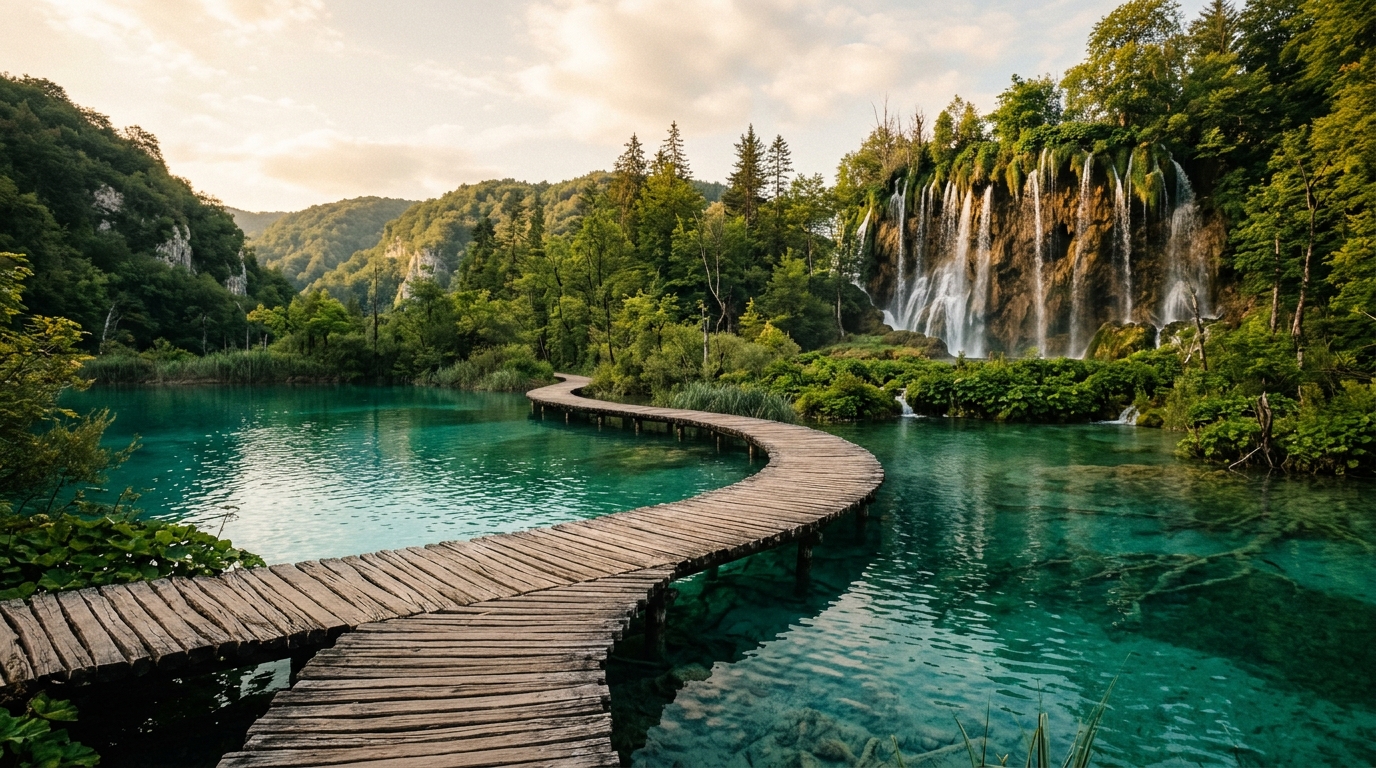
Stay in one of the guesthouses outside the park. Rastoke, a village built on waterfalls 25 km away, is worth the drive – and worth a walk through the village itself, where the river flows under and through the houses in a way that feels engineered by someone with a very specific vision.
Tip: The Plitvice boardwalks are wheelchair-accessible on the lower circuits, but the full loop involves some steep sections and stairs. Waterproof shoes are helpful – the boardwalks get splashed.
Day 6: Zadar
The drive from Plitvice to Zadar (130 km, about 2 hours) descends from the highland to the coast. The moment you see the Adriatic, the trip changes character. From here to Montenegro, the sea is always to your right, and the light takes on that particular Mediterranean quality that makes everything look better than it probably is.
Zadar is the Dalmatian city that most people skip on their way to Split or Dubrovnik, and that is a mistake. The Old Town sits on a peninsula, surrounded by Roman ruins, medieval churches, and two of the most creative public art installations in Europe.
The Sea Organ (Morske orgulje) is a set of marble steps along the waterfront with organ pipes underneath that are played by the waves. The sound is eerie, meditative, and completely unique – it changes with the weather and the tide. Next to it, the Sun Salutation (Pozdrav Suncu) is a 22-meter glass circle embedded with solar cells that light up in patterns after dark. Together, they make Zadar’s waterfront one of the most memorable in the Mediterranean.
The Roman Forum in the center is one of the oldest in the eastern Adriatic (1st century BC), and the Church of St. Donatus (9th century) next to it is a distinctive round church that now serves as a concert venue. Alfred Hitchcock reportedly said that Zadar had the best sunset in the world, and while that is hard to verify, the sunset from the Sea Organ steps is genuinely excellent.
| Zadar Highlights | Time | Cost |
|---|---|---|
| Sea Organ + Sun Salutation | 1 hour | Free |
| Old Town walk + Roman Forum | 2 hours | Free |
| Church of St. Donatus | 30 min | EUR 5 |
| Museum of Ancient Glass | 1 hour | EUR 6 |
| Sunset from the waterfront | Until it is dark | Free |
Days 7-8: Split
The Zadar-to-Split coastal drive (160 km, 2 hours) is mostly motorway with the option to take the old coastal road through Sibenik for a longer but more scenic route. Sibenik’s cathedral (UNESCO-listed) is worth a 30-minute stop if you take the coastal option.
Split is built inside and around the ruins of Diocletian’s Palace, a 4th-century Roman emperor’s retirement compound that the city absorbed over the centuries. The result is a living archaeological site where you can buy groceries in a Roman basement. The Peristil courtyard, the central gathering space, is surrounded by restaurants and by Corinthian columns that are genuinely 1,700 years old.
Walk the palace interior, get lost in the narrow streets (you will – the layout is deliberately confusing), and emerge at the Riva promenade where the city faces the sea and the islands beyond. Marjan Hill, the forested peninsula west of the Old Town, is Split’s breathing space – climb to the top for views, or follow the southern path to Kasjuni beach.
On day two, drive 27 km to Trogir, a tiny UNESCO-listed island town connected to the mainland by a bridge. Same Venetian architecture as Split, none of the crowds. You can walk end to end in 20 minutes, have lunch by the harbor, and be back in Split for an evening on the Riva.
| Split Costs | Price |
|---|---|
| Diocletian’s Palace (exterior) | Free |
| Cathedral + bell tower | EUR 8 |
| Marjan Hill | Free |
| Lunch at konoba in center | EUR 10-15 |
| Day trip to Trogir | EUR 3-5 fuel |
| Apartment in Varos | EUR 50-80/night |
Split is where the road trip shifts from sightseeing mode to coastal mode. The pace slows, the swimsuit comes out, and the afternoon plans start involving phrases like “maybe we just stay at the beach.”
Days 9-10: Dubrovnik
The Split-to-Dubrovnik drive (230 km, 3.5 hours) is one of Croatia’s finest coastal stretches. The road passes through the Makarska Riviera, crosses the Peljesac peninsula, and hits the Neum corridor – a 9 km stretch of Bosnia that interrupts Croatia’s coastline. Two quick border crossings (5-15 minutes each) and you are back in Croatia.
Dubrovnik is the most photographed city on this route, and it earned every pixel. The city walls walk (EUR 35, allow 1.5-2 hours) is the essential experience – do it early morning before the cruise ship crowds arrive. The Mount Srd cable car gives you the aerial perspective (EUR 27 return), and the view at sunset turns the Old Town into a postcard that actually looks better in person.
On day two, take a boat to Lokrum Island (EUR 20 return, 15 minutes from the Old Town harbor). The island has a botanical garden, a monastery ruin, a saltwater lake for swimming, and an optional nude beach. It is the antidote to Dubrovnik’s intensity – peaceful, green, and completely car-free.
Budget EUR 60-100 per day in Dubrovnik for accommodation and food. This is the most expensive stop on the entire route, and there is no getting around it. Stay in Lapad or Gruz (15-20 minutes by bus from Old Town) for half the price of a room inside the walls.
Tip: The Dubrovnik-Kotor border crossing at Karasovici backs up badly in July-August, with waits of 1-2 hours. Cross before 8 AM or after 6 PM. The alternative crossing at Debeli Brijeg is less used.
Days 11-12: Kotor and Budva, Montenegro
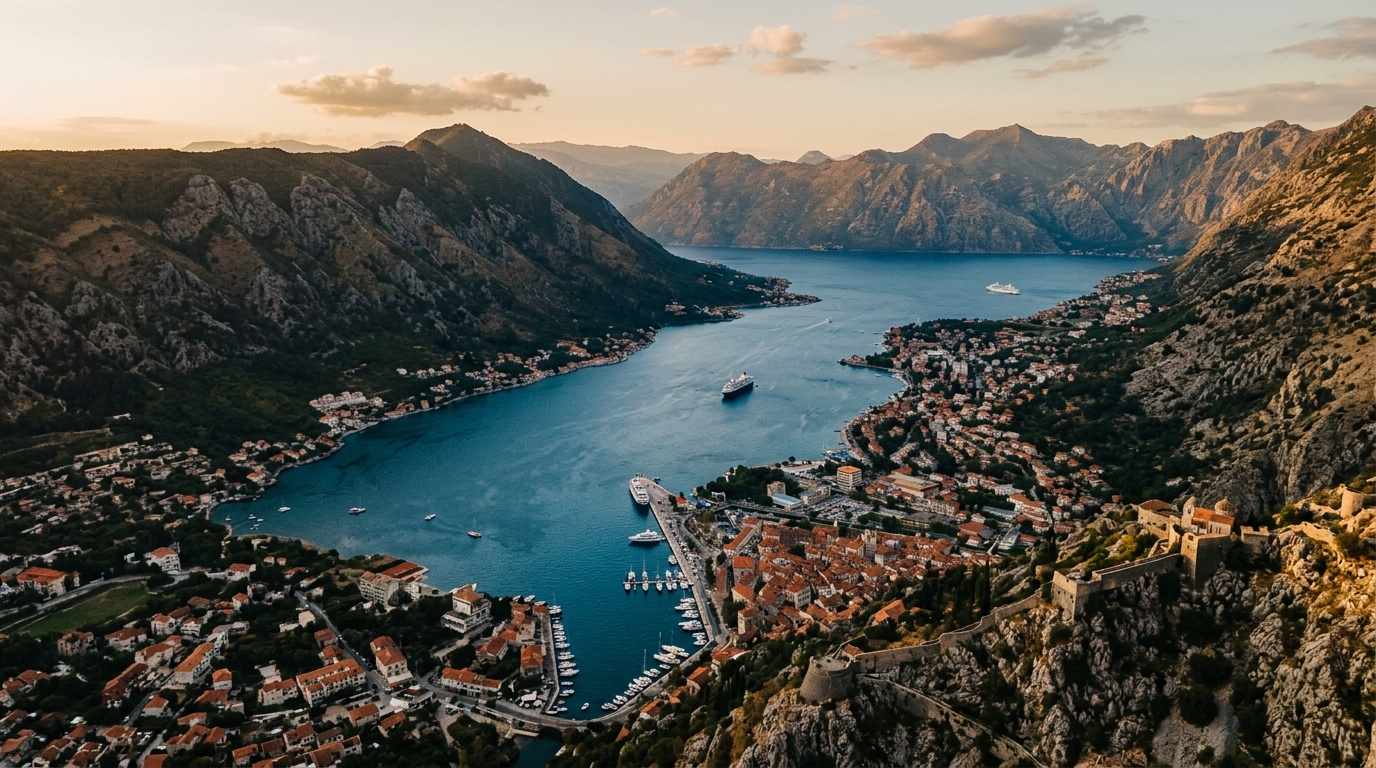
The Dubrovnik-to-Kotor drive (93 km, 2-2.5 hours) crosses the Croatia-Montenegro border and then follows the Bay of Kotor – a fjord-like inlet where steep limestone walls drop into dark blue water with medieval towns at every flat spot.
Perast is the mandatory stop: a one-street Baroque town with two tiny islands just offshore. Take the boat to Our Lady of the Rocks (EUR 5, 5 minutes) or just sit at a waterfront cafe and wonder how something this beautiful can be this cheap.
Kotor’s Old Town is compact, medieval, and atmospheric. The fortress hike to San Giovanni (1,350 steps) is the defining Kotor experience – do it in the late afternoon when the heat fades and the sunset light hits the bay. The cats of Kotor are famous, numerous, and completely indifferent to your admiration.
On day twelve, drive 22 km south to Budva for the beaches and the Montenegrin Riviera. Budva’s Old Town is a smaller, less crowded version of Dubrovnik’s. The beaches – Mogren, Becici, Jaz – range from pebble to sand, and sunbed rental runs EUR 10-20 for two loungers.
Drive 8 km further south to Sveti Stefan – the photogenic island connected to the mainland by a causeway, now a private Aman resort you cannot visit but can photograph from the public beach. The view is free and worth every kilometer.
| Kotor & Budva Costs | Price |
|---|---|
| Kotor Old Town | Free |
| San Giovanni fortress hike | EUR 8 |
| Boat to Our Lady of the Rocks (Perast) | EUR 5 |
| Budva Old Town | Free |
| Beach sunbeds (2 loungers + umbrella) | EUR 10-20 |
| Apartment in Kotor | EUR 40-70/night |
| Apartment in Budva | EUR 35-60/night |
The Bay of Kotor is what happens when the landscape decides to show off. Twelve days of driving, and this is how the route ends – with a fjord that has no business existing this far south.
Budget Breakdown
| Category | Daily Estimate | 12-Day Total |
|---|---|---|
| Accommodation (2 people) | EUR 55-90 | EUR 660-1,080 |
| Fuel (~1,100 km) | – | EUR 130-170 |
| Tolls (Slovenia vignette + Croatia) | – | EUR 50-80 |
| Food (restaurants + groceries) | EUR 30-50 | EUR 360-600 |
| Activities & entrance fees | EUR 10-20 | EUR 120-240 |
| Parking (various cities) | – | EUR 50-80 |
| Total per person | – | EUR 1,400-2,200 |
The cost curve drops as you move south. Slovenia is moderate, Croatia (especially Dubrovnik) is the expensive stretch, and Montenegro is noticeably cheaper. A dinner that costs EUR 35 in Dubrovnik costs EUR 15 in Kotor.
Practical Information
Car Rental
Rent in Ljubljana and drop off in Podgorica or Budva. One-way fees between Ljubljana and Montenegro are typically EUR 150-300 depending on the agency. Most major agencies allow Slovenia-Croatia-Montenegro routing without issue – Bosnia is the country that causes insurance headaches, and you only transit Neum briefly. See our car rental guide for recommendations.
A standard car (Golf, Octavia, or similar) handles this entire route comfortably. The Vrsic Pass is the most demanding road, and it is paved throughout.
Vignettes and Tolls
| Country | Toll System | Cost |
|---|---|---|
| Slovenia | E-vignette (7 days) | EUR 16 |
| Croatia | Pay at each toll station | ~EUR 25-35 total |
| Montenegro | No tolls | Free |
Best Time to Drive
Late May to mid-June is the sweet spot: warm weather, all mountain passes open, fewer crowds, reasonable prices. September is equally good with warmer water.
July-August works but brings serious crowds to Dubrovnik, Split, and Budva, plus heat (35C+) that makes city walking less pleasant. The Vrsic Pass and Plitvice are at peak capacity.
October is fine for the coast but the Vrsic Pass may close due to early snow, and Plitvice hours are reduced.
Documents
- Valid passport
- Driving license (EU works everywhere; non-EU carry IDP)
- Green Card (international vehicle insurance)
- Rental agreement allowing cross-border travel
- Slovenian e-vignette (purchased online)
Read our driving guide for country-by-country rules and our border crossings guide for crossing details.
What to Drive Next
From Budva, the Adriatic Coast: Dubrovnik to Tirana continues south through Albania if you want more coastline. The Grand Balkan Circuit covers much of this same coastal stretch but adds the Balkan interior through Albania, North Macedonia, and Serbia. Or head inland from Montenegro to Sarajevo and follow the Heart of the Balkans route through Bosnia, Serbia, and North Macedonia.