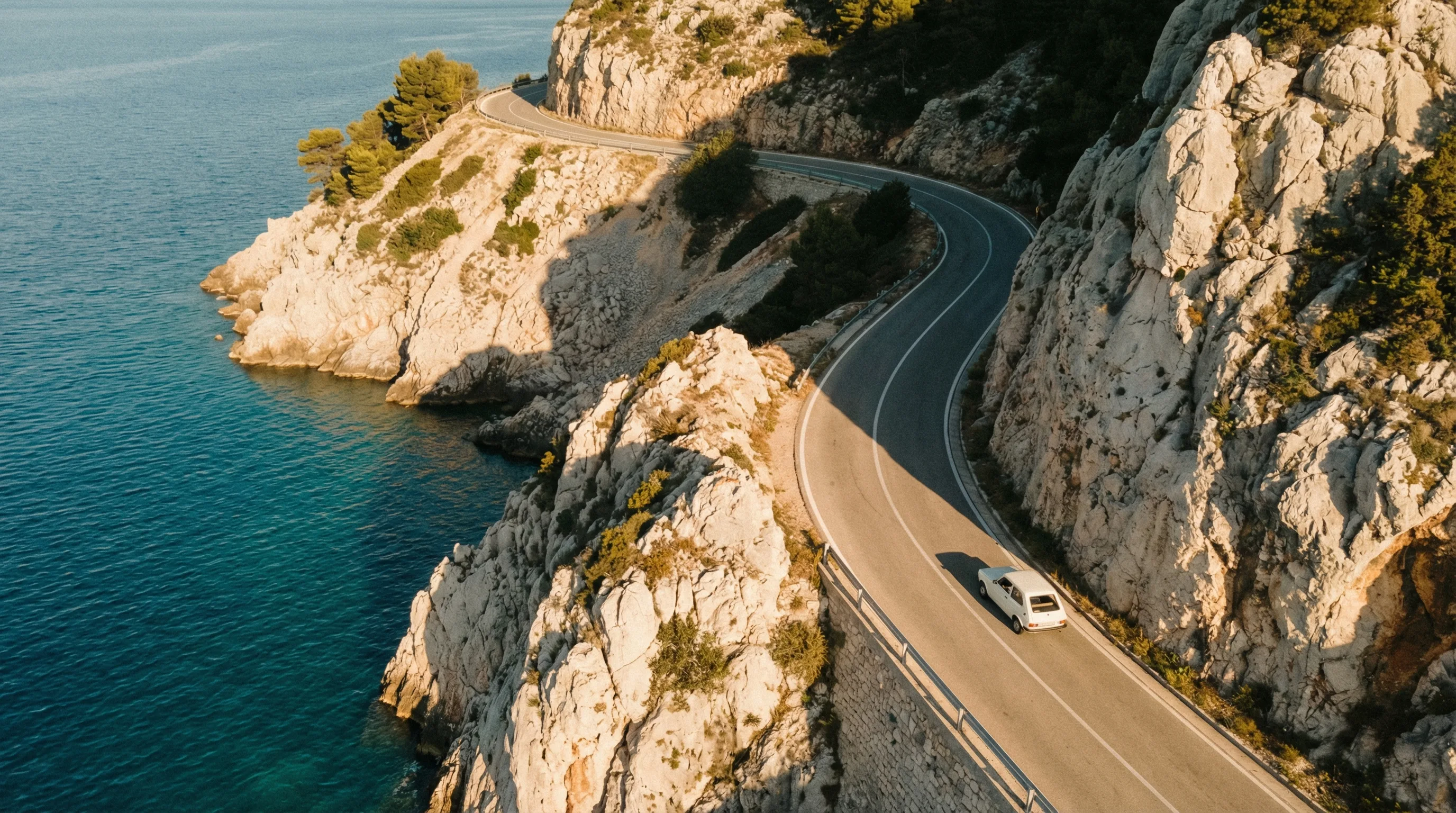
Transylvania Road Trip
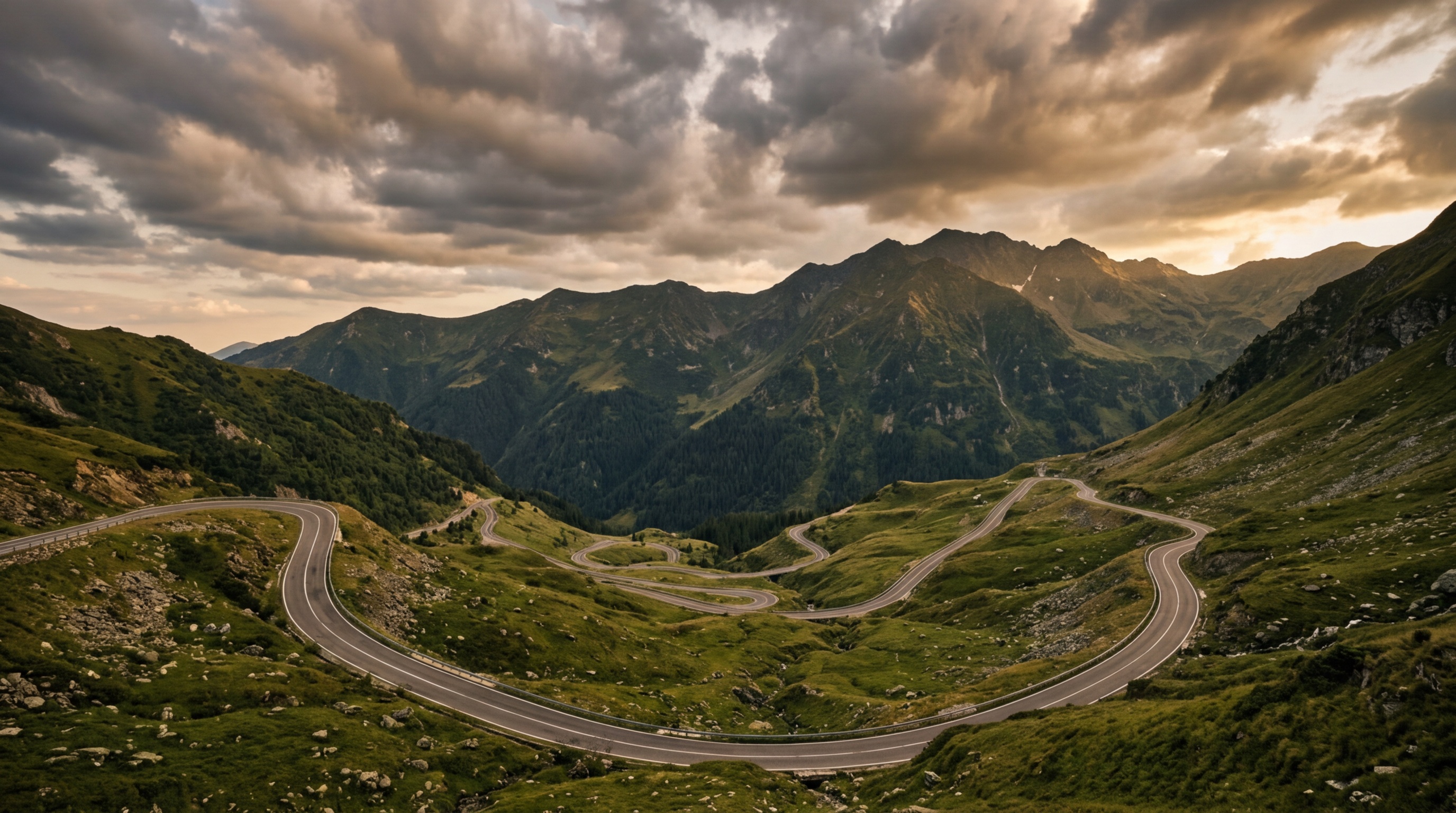
Somewhere on the Transfagarasan highway, above the tree line, with the road corkscrewing into clouds ahead and the Carpathian ridge falling away on both sides, we pulled over for the fourth time in 20 minutes. Not because the car needed a rest but because we did – every new switchback revealed something that demanded stopping, staring, and accepting that yes, Top Gear was not exaggerating when they called this the best road in the world.
Romania is the Balkans’ best-kept driving secret, and Transylvania is the reason. A 10-day loop from Bucharest takes you through medieval citadels that look like they were built for a film set, Carpathian passes that rival anything in the Alps, Saxon villages with fortified churches, and castles – the kind with turrets, battlements, and just enough Dracula mythology to keep things entertaining. The distance is a modest 1,200 km, which means short drives between stops and long days exploring.
This is a single-country route. No border crossings, no insurance complications, no currency changes. Just one car, one language (plus a phrase book you probably won’t use because Romanians speak better English than you expect), and roads that range from modern motorway to mountain passes that were carved into the Carpathians by sheer determination.
Route Overview
| Segment | Distance | Drive Time | Road Type |
|---|---|---|---|
| Bucharest to Brasov | 170 km | 2.5-3 hours | Motorway + national road |
| Brasov to Bran/Rasnov | 30 km | 40 min | National road |
| Bran to Sighisoara | 120 km | 2.5 hours | National road (mountain) |
| Sighisoara to Sibiu | 95 km | 1.5-2 hours | Motorway + national road |
| Sibiu to Transfagarasan summit | 110 km | 3-4 hours | Mountain pass (DN7C) |
| Transfagarasan to Curtea de Arges | 60 km | 1.5 hours | Descent + national road |
| Curtea de Arges to Bucharest | 165 km | 2.5 hours | National road + motorway |
| Total loop | ~1,200 km | ~20 hours driving | Mixed |
Tip: The Transfagarasan highway (DN7C) is only open from late June to late October, weather permitting. The exact dates change every year – check the Romanian road authority (CNAIR) website before planning. If you are traveling in May or early June, the pass may still be closed, and you will need to loop around via the Olt Valley instead.
Day 1: Bucharest
Bucharest is not a city that makes you fall in love at first sight. It is sprawling, chaotic, and still visibly scarred by Ceausescu’s demolition of the historic center to build his Palace of the Parliament – the second-largest administrative building in the world after the Pentagon, and arguably the most absurd.
But Bucharest has grown into its contradictions. The Old Town (Centru Vechi) is now a lively district of restaurants, bars, and bookshops, occupying the streets that survived the communist bulldozers. The village atmosphere of the Lipscani area at night – outdoor tables, cheap beer, live music – is one of the warmest welcomes in southeastern Europe.
Start with the Palace of the Parliament (book the tour online, EUR 8, runs every 30 minutes). Whether you find it impressive or horrifying depends on your tolerance for marble, but the scale is undeniable. Then walk through the Old Town to the Stavropoleos Monastery, a tiny 18th-century church hidden among the bars. The National Village Museum (Muzeul Satului), an open-air collection of traditional houses from every Romanian region, is excellent if you want to understand the country you are about to drive through.
| Bucharest Highlights | Time | Cost |
|---|---|---|
| Palace of the Parliament tour | 1.5 hours | EUR 8 |
| Old Town walk | 2 hours | Free |
| Stavropoleos Monastery | 20 min | Free |
| Village Museum (Muzeul Satului) | 2 hours | EUR 4 |
| Romanian Athenaeum (exterior) | 15 min | Free |
| Dinner in Centru Vechi | Evening | EUR 10-20 |
Tip: Bucharest traffic is genuinely bad. If you are picking up your rental car at Otopeni airport, drive directly to your accommodation and do all sightseeing on foot or by metro. The metro costs EUR 0.60 per ride and covers the main attractions.
Days 2-3: Brasov
The drive from Bucharest to Brasov (170 km) takes 2.5-3 hours, passing through the Prahova Valley and climbing into the Carpathians. The road quality is decent – mostly E60/DN1, a well-maintained two-lane national road that becomes a motorway for the first stretch out of Bucharest.
Brasov is the city that proves Transylvania is not just about castles and Dracula. Enclosed by forested mountains on three sides, with a Gothic church at its center and Habsburg-era buildings lining the main square, it looks like a city that was designed to be photographed. It probably was – the Saxon settlers who built it in the 13th century had strong opinions about urban planning.
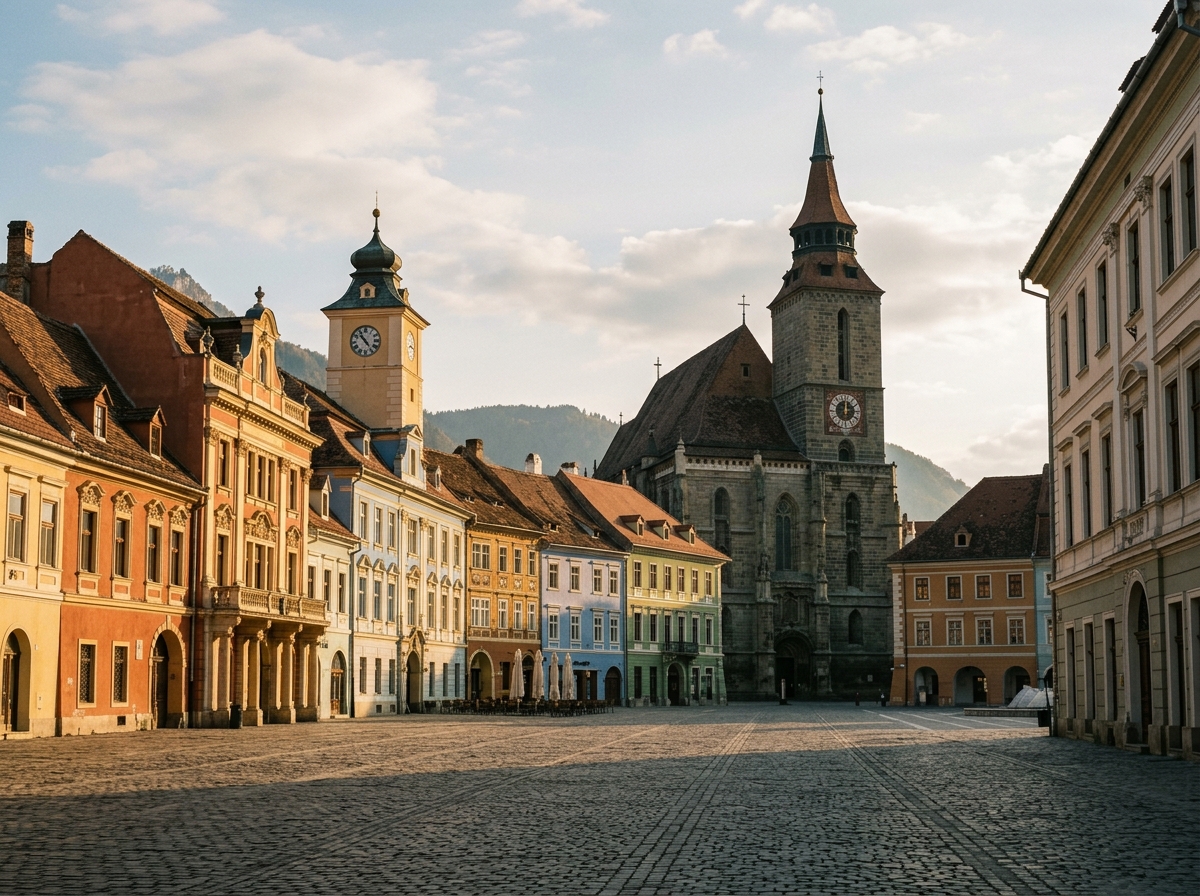
Council Square (Piata Sfatului) is the center of everything: cafes, the town hall, and the History Museum. The Black Church (Biserica Neagra), the largest Gothic church in southeastern Europe, got its name from a 1689 fire that blackened the walls. Inside, it holds one of Europe’s largest collections of Anatolian rugs, donated by German merchants over the centuries – an unexpected connection between Saxons and Ottomans.
Walk or drive up Tampa Mountain (there is a cable car from Centru, EUR 5 return) for the view over the red rooftops and the surrounding Carpathians. The Hollywood-style BRASOV sign at the top is kitschy but the panorama behind it is not.
On day two, drive 12 km to Poiana Brasov, Romania’s most popular ski resort, which in summer becomes a hiking and mountain biking hub. The trails through the surrounding beech forests are well-marked and vary from easy walks to full-day hikes. Alternatively, spend the day exploring the Saxon fortified churches within a 30-minute drive: Prejmer (the best-preserved, UNESCO-listed) and Harman are both worth an hour each.
Brasov is the kind of place where you plan to stay one night and end up staying three. We split the difference at two, which felt almost adequate.
Where to Eat in Brasov
Romanian food is hearty, meat-heavy, and excellent. In Brasov:
- Sergiana – traditional Romanian restaurant on Piata Sfatului, touristy but good. Try sarmale (cabbage rolls) or mici (grilled meat rolls).
- Bistro de l’Arte – a step up in sophistication, modern Romanian cuisine, reasonable prices.
- La Ceaun – in the Schei neighborhood, slower pace, cooked-in-a-cauldron dishes.
Budget EUR 8-15 for a full meal with a drink.
Day 4: Bran, Rasnov, and Peles Castle
This is castle day, and it is a good one.
Bran Castle (30 km from Brasov, 40 minutes) is marketed as “Dracula’s Castle,” which is historically questionable – Vlad the Impaler may have been imprisoned here briefly, or may have passed through, or may never have visited at all. The connection is thin, but the castle is real, perched on a rock above the village, looking exactly like you imagine a Transylvanian castle should look. Entry is EUR 10, and the interior is more about Queen Marie of Romania (who actually lived here) than about vampires.
Rasnov Citadel (15 km from Bran) is a medieval fortress on a hilltop above the town. It is less famous than Bran but arguably more atmospheric – partly restored, partly ruined, with a courtyard that gives you a sense of what life inside a Transylvanian fortress actually felt like. Entry is EUR 5.
In the afternoon, drive north to Peles Castle in Sinaia (45 km from Bran, 1 hour). This is the one that will surprise you. Built in the 1870s for the Romanian royal family, Peles is a German Renaissance palace set against a forested mountainside, with 160 rooms filled with stained glass, carved walnut, Murano chandeliers, and the general aesthetic of someone who had excellent taste and unlimited money. It is widely considered the most beautiful castle in Romania, and it earns the title.
| Castle | Distance from Brasov | Entry | Time Needed | Highlight |
|---|---|---|---|---|
| Bran Castle | 30 km | EUR 10 | 1-1.5 hours | The “Dracula” castle, hilltop position |
| Rasnov Citadel | 18 km | EUR 5 | 1 hour | Medieval ruins, panoramic views |
| Peles Castle | 50 km | EUR 12 | 1.5-2 hours | Royal palace, stunning interiors |
Tip: Peles Castle is closed on Mondays and Tuesdays. Check the schedule before driving out. In peak season, book a tour slot online – walk-ins can face 1-2 hour waits.
Days 5-6: Sighisoara
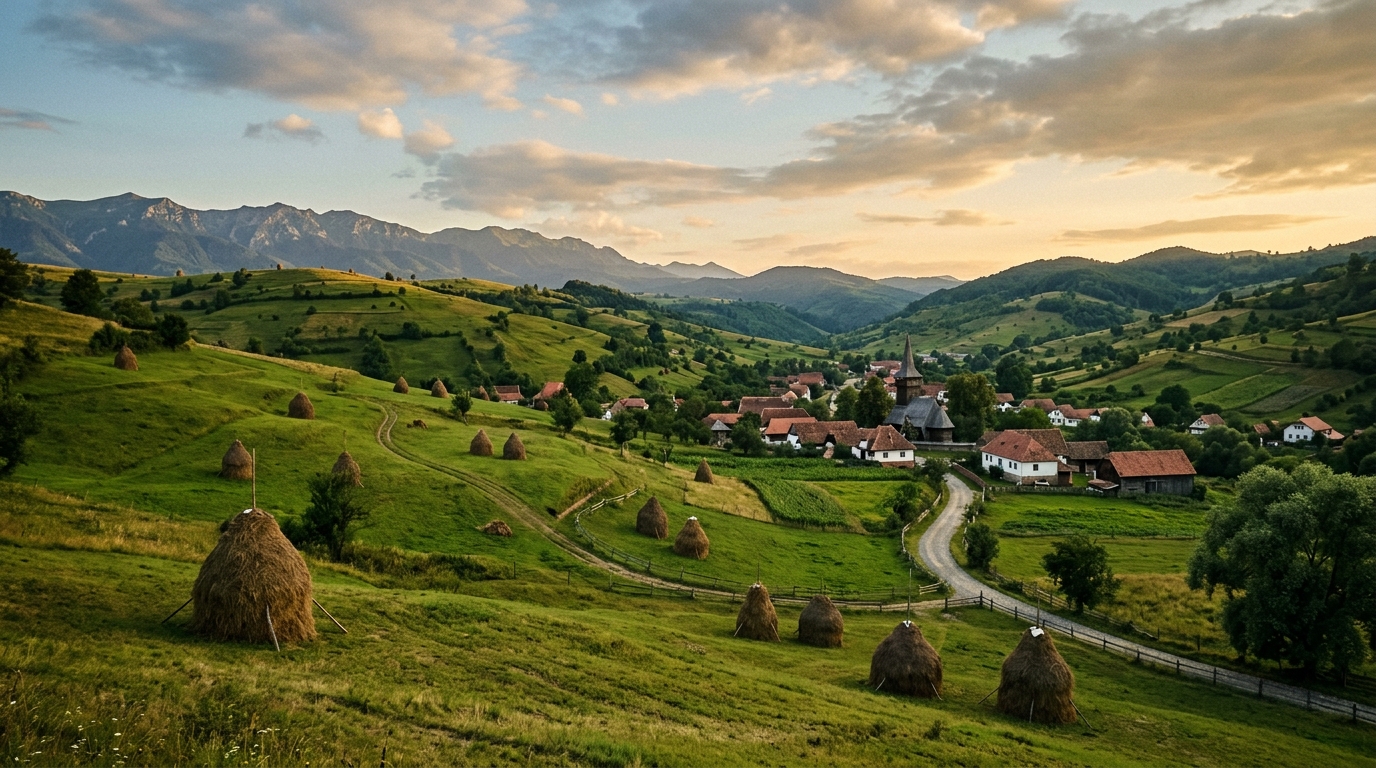
The drive from Brasov to Sighisoara (120 km, about 2.5 hours) takes you deeper into the Transylvanian Plateau, through rolling hills dotted with hay stacks and horse-drawn carts. This part of Romania moves at a pace that feels out of time – villages with painted gates, fortified churches, and no chain stores for miles.
Sighisoara is the poster town of Transylvania. The medieval citadel is UNESCO-listed, painted in pastel colors, and still inhabited – people live behind those 800-year-old walls, which gives the place a reality that most preserved old towns lack. The Clock Tower (EUR 4, climb to the top for the best view), the covered staircase up to the Church on the Hill, and the narrow lanes between leaning houses are the main attractions. The house where Vlad the Impaler was born (or at least where his father lived) is now a restaurant. The food is decent but the historical irony is better.
On day two, take a half-day trip to the Saxon fortified churches around Sighisoara. These are the reason this region is on the UNESCO list – medieval communities of German settlers (Transylvanian Saxons) built churches surrounded by defensive walls, storerooms, and towers that could withstand Ottoman sieges.
| Fortified Church | Distance from Sighisoara | Entry | Highlight |
|---|---|---|---|
| Biertan | 30 km | EUR 4 | Largest, triple-walled, famous door lock |
| Viscri | 40 km | EUR 3 | Remote village, Prince Charles connection |
| Saschiz | 12 km | EUR 3 | Hilltop fortress, less crowded |
Viscri deserves special mention. This tiny village, with its fortified church and painted houses, was championed by King Charles III (then Prince Charles), who bought and restored properties here. The village is remote (the last stretch is unpaved), quiet, and feels like stepping into the 18th century. The church interior has a beautiful wooden gallery and faded medieval frescoes.
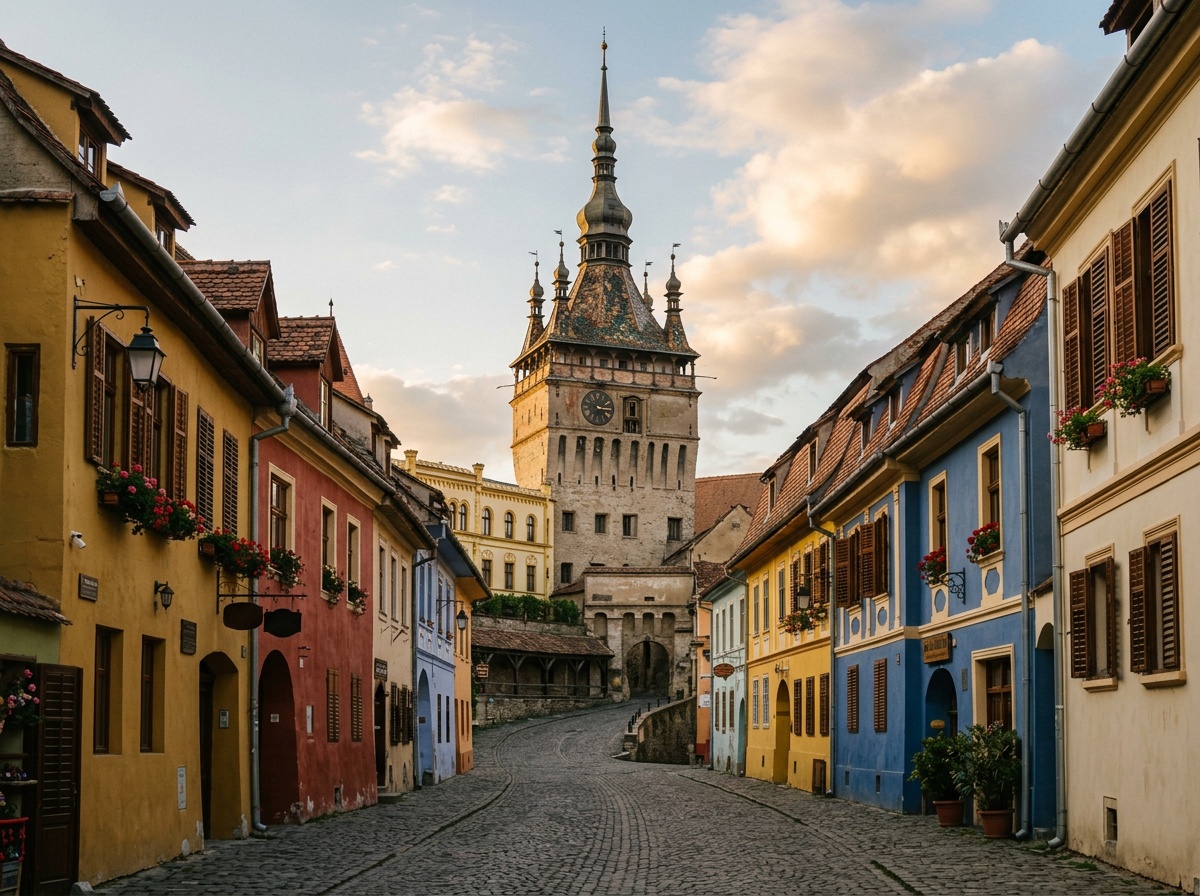
Sighisoara at 7 AM, before the day-trippers arrive, is one of the quietest places in Europe. The fog lifts off the rooftops, the clock mechanism clanks into gear, and you have a medieval citadel to yourself.
Days 7-8: Sibiu
Sibiu (95 km from Sighisoara, 1.5-2 hours) is the cultural capital of Transylvania and probably the most livable city in Romania. It was European Capital of Culture in 2007, and the investment shows: the Grand Square (Piata Mare) is immaculate, the cafe culture is strong, and the city has an unhurried confidence that bigger Romanian cities lack.
The Grand Square is anchored by the Brukenthal National Museum (EUR 6, excellent European art collection in a Baroque palace) and the Catholic church. Walk through to the Little Square (Piata Mica) and cross the Bridge of Lies – supposedly, it creaks if you tell a lie while standing on it. The metal bridge has been silently judging tourists since the 1850s.
The houses of Sibiu are famous for their “eyes” – dormer windows in the rooftops that genuinely look like they are watching you. They appear on every Sibiu postcard, and after walking a few blocks, you start to understand why people find them either charming or unsettling.
ASTRA Open-Air Museum (4 km south of the city, EUR 5) is one of the best ethnographic museums in Europe. Spread over 96 hectares of forest and meadow, it contains over 300 traditional buildings – houses, churches, mills, workshops – relocated from every corner of Romania. Budget 2-3 hours and bring comfortable shoes.
On day two, drive to the Marginimea Sibiului villages southwest of the city – traditional Romanian pastoral communities that maintain sheep farming and textile traditions. Or save your energy for tomorrow, because the Transfagarasan awaits.
Where to Eat in Sibiu
- Crama Sibiul Vechi – vaulted cellar, traditional Transylvanian dishes, reasonable prices
- Kulinarium – modern bistro on the Grand Square, better for lunch
- Syndicat Gourmet – upscale but not overpriced, Romanian with international touches
Budget EUR 8-15 per meal.
Tip: Sibiu hosts a Christmas market in December that is considered one of the best in Romania. If you are driving this loop in late November or December (when the Transfagarasan is closed), the Christmas market is a worthy consolation prize.
Day 9: The Transfagarasan and Curtea de Arges
This is the day you came for.
The Transfagarasan highway (DN7C) is a 90 km road that crosses the Fagaras Mountains at 2,042 meters. It was built in the 1970s by Ceausescu as a military road after the 1968 Soviet invasion of Czechoslovakia made him worry about a similar incursion through the Carpathian passes. The military logic was questionable. The driving road that resulted is extraordinary.
From Sibiu, drive south to the village of Cartisoara, where the DN7C begins its climb. The first stretch winds through forest, gentle and deceptive. Then the switchbacks begin – tight hairpins climbing above the tree line, with each turn revealing more of the Fagaras ridge. The road narrows, the drop-offs steepen, and the scenery becomes progressively more absurd.
Balea Lake (Balea Lac) sits at the summit, a glacial lake at 2,034 meters surrounded by rocky peaks. There is a chalet, a cable car station, and in winter an ice hotel. In summer, it is a good place to stop, stretch your legs, and look back at the road you just climbed. The view down the northern slope – the switchbacks you just drove stitched into the mountainside – is the photo that everyone takes and that always looks good.
The southern descent is steeper and more dramatic. The road passes through a tunnel near the summit and then drops through another series of switchbacks before reaching the Vidraru Dam – a 166-meter-high concrete arch dam holding back a turquoise reservoir. There is a parking area with views of both the dam wall and the reservoir stretching into the mountains behind it.
The Transfagarasan does not need hyperbole. It is a 90 km road through the tallest mountains in Romania, built by a dictator as a military escape route, and it happens to be one of the most spectacular drives on the planet. Start early, drive slowly, stop often.
From the southern base of the Transfagarasan, continue to Curtea de Arges (about 40 minutes), a small town with a monastery that is considered the finest piece of Byzantine architecture in Romania. The white stone exterior is carved with elaborate floral patterns that look more like lace than stone. Entry is free.
Transfagarasan Practical Details
| Detail | Information |
|---|---|
| Open season | Late June to late October (dates vary yearly) |
| Total length | 90 km |
| Drive time (without stops) | 2.5-3 hours |
| Drive time (with stops) | 5-7 hours |
| Fuel stations | None on the pass itself – fill up in Sibiu or Cartisoara |
| Speed limit | 30-40 km/h on switchbacks |
| Hazards | Fog, livestock, cyclists, tourists stopping in the road |
| Cell signal | Intermittent to none above tree line |
Tip: Start the Transfagarasan by 8 AM to avoid the traffic that builds by midday. The northern approach from Sibiu is less crowded than the southern approach from Curtea de Arges. The switchbacks look even better in morning light.
Day 10: Return to Bucharest (with Optional Corvin Castle Detour)
The direct drive from Curtea de Arges to Bucharest is 165 km and takes about 2.5 hours on the DN7C and then the A1 motorway.
If you have energy for one more castle – and this is the one you should not skip – add a detour to Corvin Castle (Castelul Corvinilor) in Hunedoara. This requires driving west from Sibiu rather than south to the Transfagarasan on day 9, so it works best if you rearrange the itinerary slightly: Sibiu to Corvin Castle (170 km, 2.5 hours), then back east to the Transfagarasan approach on day 9 or 10.
Corvin Castle is a Gothic-Renaissance fortress that looks like it was designed for a fantasy novel. Towers, drawbridge, pointed arches, a Knights’ Hall with a rose-marble fountain, and a dungeon that supposedly held Vlad the Impaler for seven years. If Peles is the beautiful castle, and Bran is the famous castle, Corvin is the dramatic one. Entry is EUR 9.
| Corvin Castle Detour | Detail |
|---|---|
| Distance from Sibiu | 170 km |
| Drive time | 2.5 hours |
| Entry fee | EUR 9 |
| Time needed | 1.5-2 hours |
| Best combined with | Day 7 (drive from Sighisoara to Corvin, then to Sibiu) |
If you skip the Corvin detour, the day-10 drive back to Bucharest is straightforward and leaves time for a final lunch in Curtea de Arges or a stop in Pitesti before returning the car.
Budget Breakdown
| Category | Daily Estimate | 10-Day Total |
|---|---|---|
| Accommodation (2 people) | EUR 40-60 | EUR 400-600 |
| Fuel (~1,200 km) | – | EUR 100-140 |
| Tolls (motorway vignette) | – | EUR 4 (10-day rovinieta) |
| Food (restaurants + groceries) | EUR 20-35 | EUR 200-350 |
| Castle entries & museums | EUR 5-15 | EUR 80-150 |
| Parking (various cities) | – | EUR 20-40 |
| Total per person | – | EUR 800-1,300 |
Romania is one of the cheapest countries in the EU for travelers. Accommodation outside Bucharest is remarkably affordable, and restaurant meals rarely exceed EUR 15 even in tourist areas. The Romanian motorway vignette (rovinieta) costs just EUR 4 for 10 days – buy it online at roviniete.ro before you start driving.
Practical Information
Car Rental
Bucharest Otopeni airport has all major rental agencies. A standard car (VW Golf, Skoda Octavia, or similar) is perfectly fine for this entire route, including the Transfagarasan – the road is paved and maintained, just steep and winding. Budget EUR 25-40 per day.
If you are combining this with a wider Balkan trip (the Grand Balkan Circuit, for instance), note that Romania-to-Serbia or Romania-to-Bulgaria cross-border driving is generally allowed by rental agencies, but confirm in advance. See our car rental guide for details.
Road Conditions
Romanian roads are a mixed bag:
- Motorways (A1, A3): Modern, well-maintained, limited stretches (Romania’s motorway network is still expanding)
- National roads (DN): Two-lane, generally good surface, but overtaking is tricky and trucks are slow
- Mountain passes (Transfagarasan, Transalpina): Well-paved but narrow, steep, and demanding in bad weather
- Village roads: Watch for horse-drawn carts, which share the road as a matter of daily life, not quaint tradition
Speed cameras are common on national roads, particularly near towns. The speed limit drops to 50 km/h in urban areas and 30 km/h in some villages – respect these, as fines are processed even for foreign plates.
Best Time to Drive
Late June to September is the primary window, defined almost entirely by the Transfagarasan opening date. If the pass is your main objective, call CNAIR or check local news before confirming your dates.
October is beautiful for the colors (autumn in the Carpathians is spectacular) but the Transfagarasan may close early if snow comes sooner than expected.
May to mid-June works for everything except the Transfagarasan – you can still do Brasov, Sighisoara, Sibiu, and the castles, but you will need to take the Olt Valley (E81) instead of the mountain pass.
Fuel and Driving
- Fuel costs approximately EUR 1.45-1.60 per liter (petrol/diesel similar)
- Fuel stations are frequent on national roads and in cities; carry a full tank for the Transfagarasan
- Romanian drivers can be aggressive overtakers on two-lane roads – stay in your lane and let them pass
- Headlights are mandatory at all times (day and night)
- Blood alcohol limit is 0.0% – zero tolerance, no exceptions
Read our full Romania driving guide for more detail.
What to Drive Next
From Bucharest, you can connect to the rest of the Balkans in several ways. The Grand Balkan Circuit starts in Ljubljana but Belgrade is a 6-hour drive from Bucharest if you want to join it partway. The Black Sea to Adriatic route crosses from Bulgaria’s coast through Serbia and Bosnia to Dubrovnik – add a detour from Bucharest to Sofia (350 km, 4 hours) and you are on your way.
Or stay in Romania. The Transalpina highway (DN67C), parallel to the Transfagarasan and 30 km west, is equally spectacular and far less crowded. The Maramures region in the north has wooden churches, the Merry Cemetery, and some of the most traditional village life in Europe. Romania alone could fill a month of driving, and this 10-day loop is just the beginning.