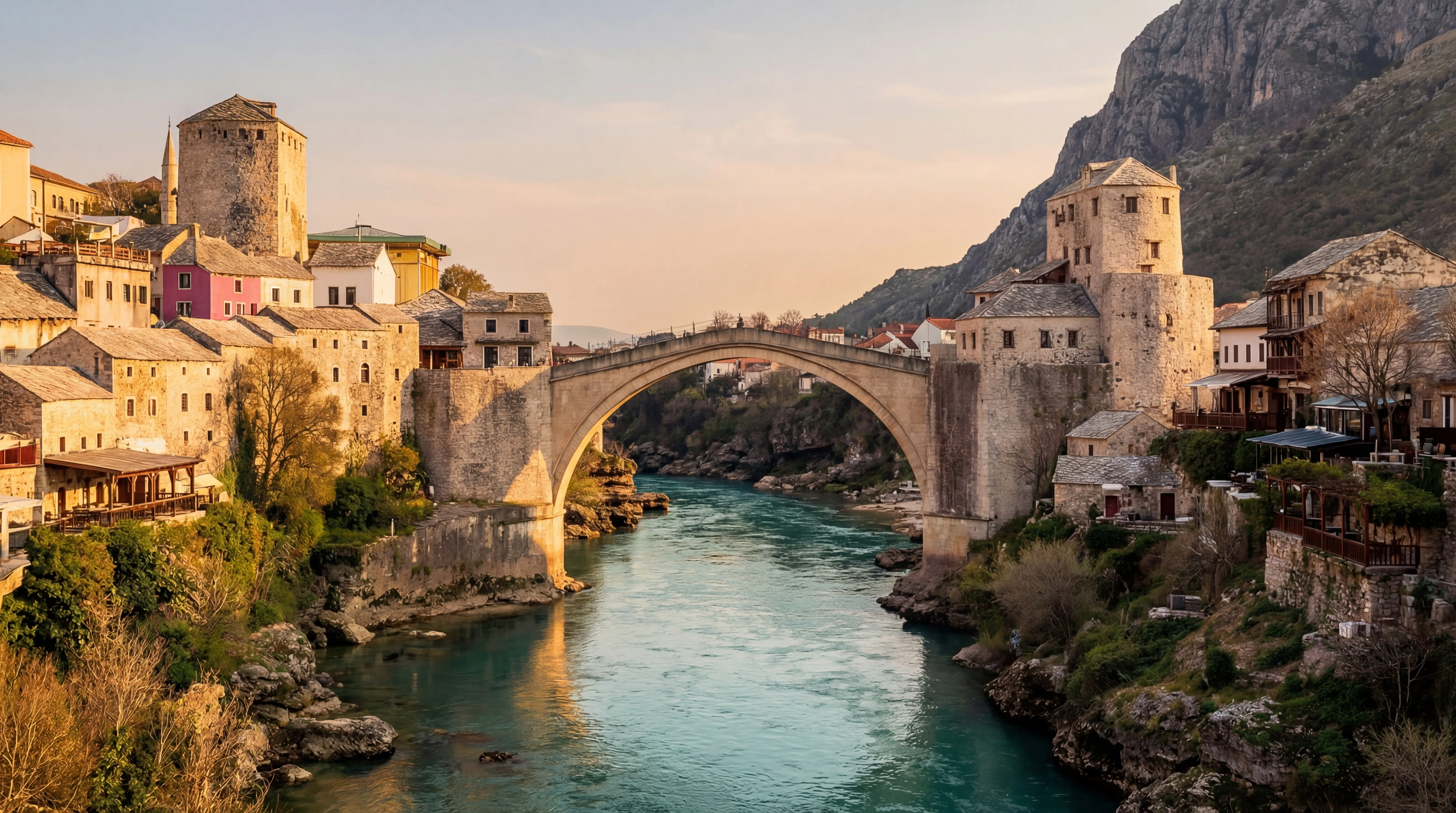
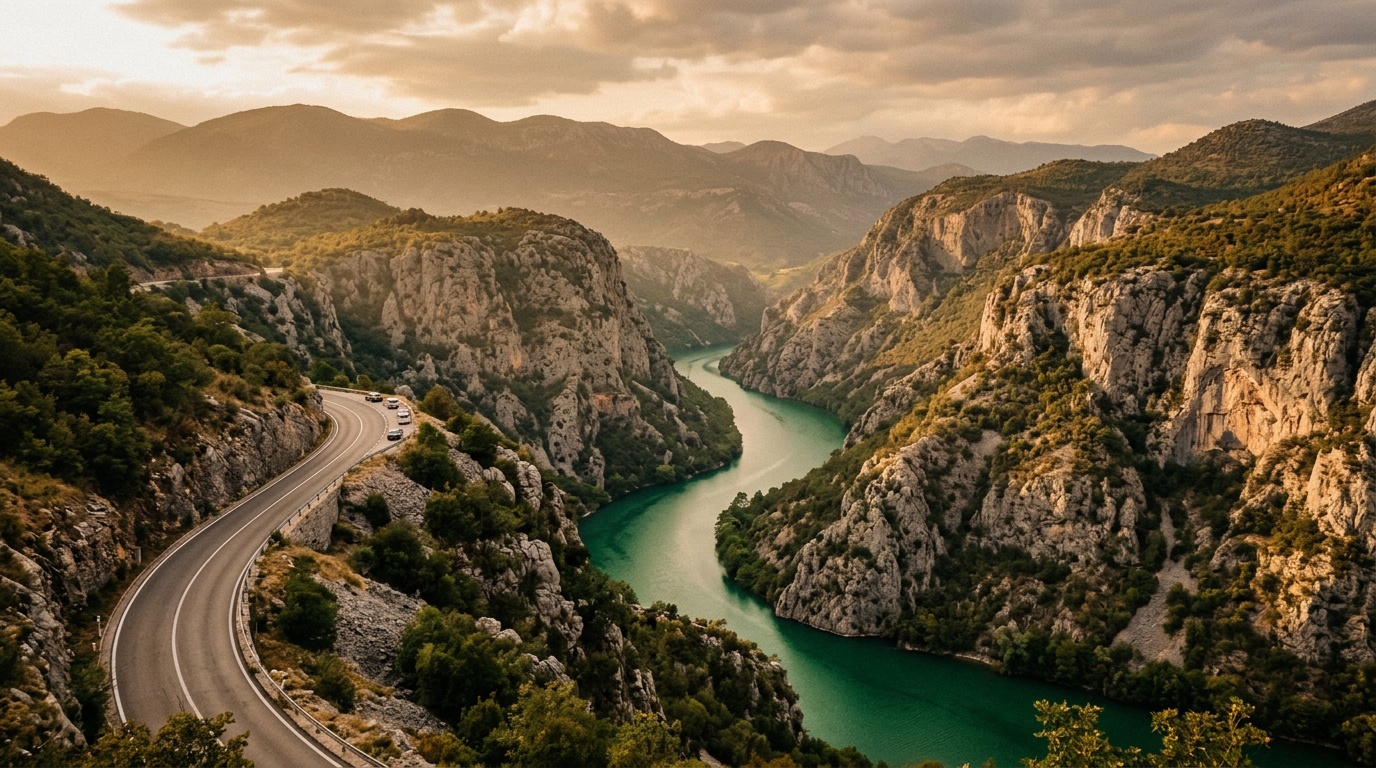
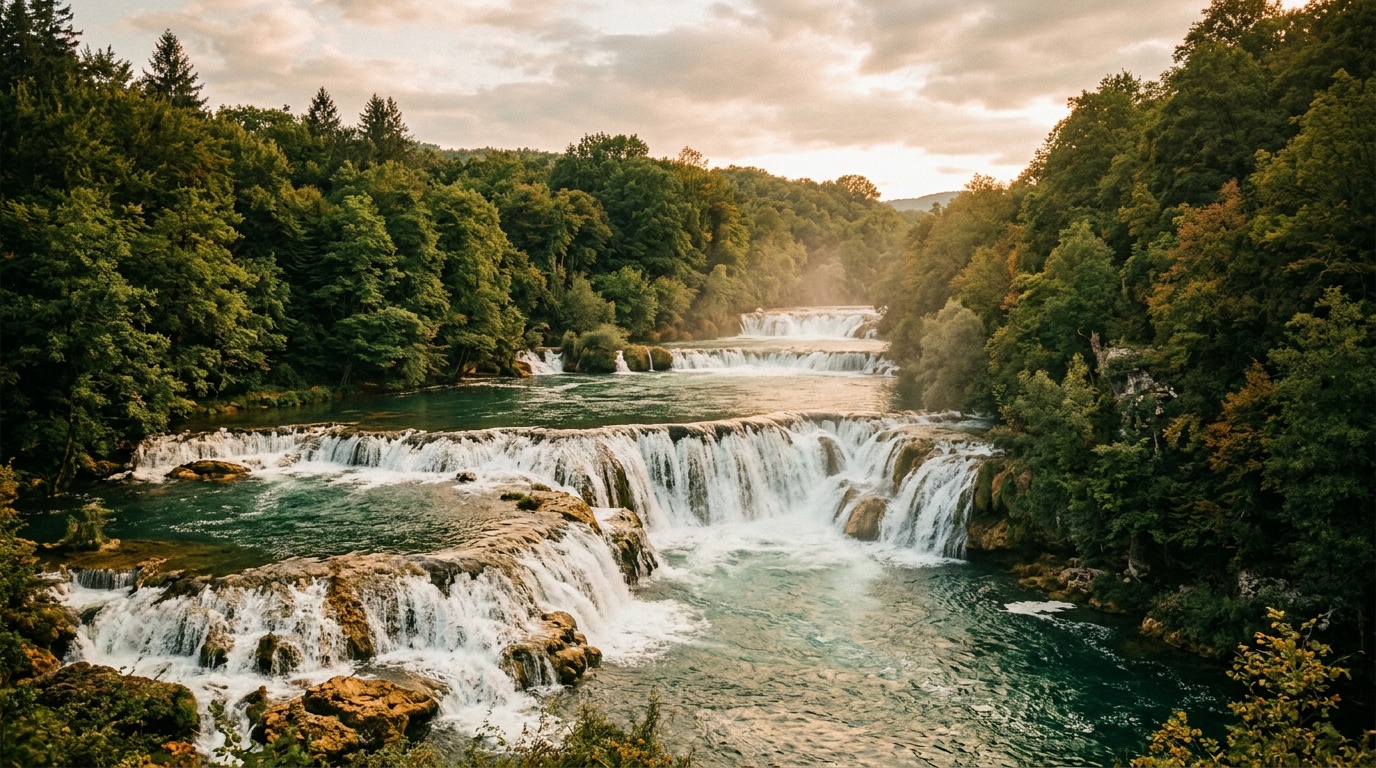
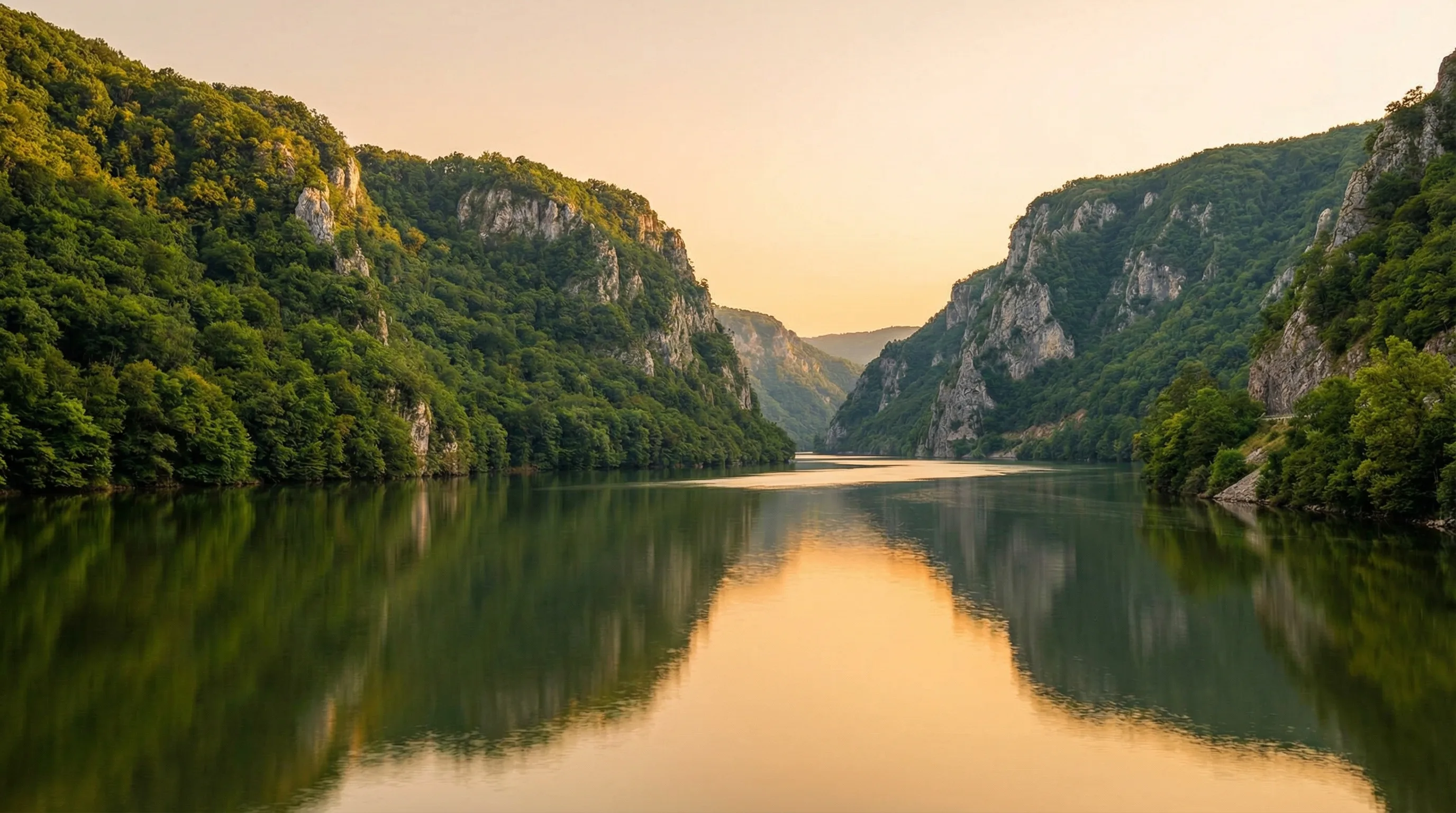
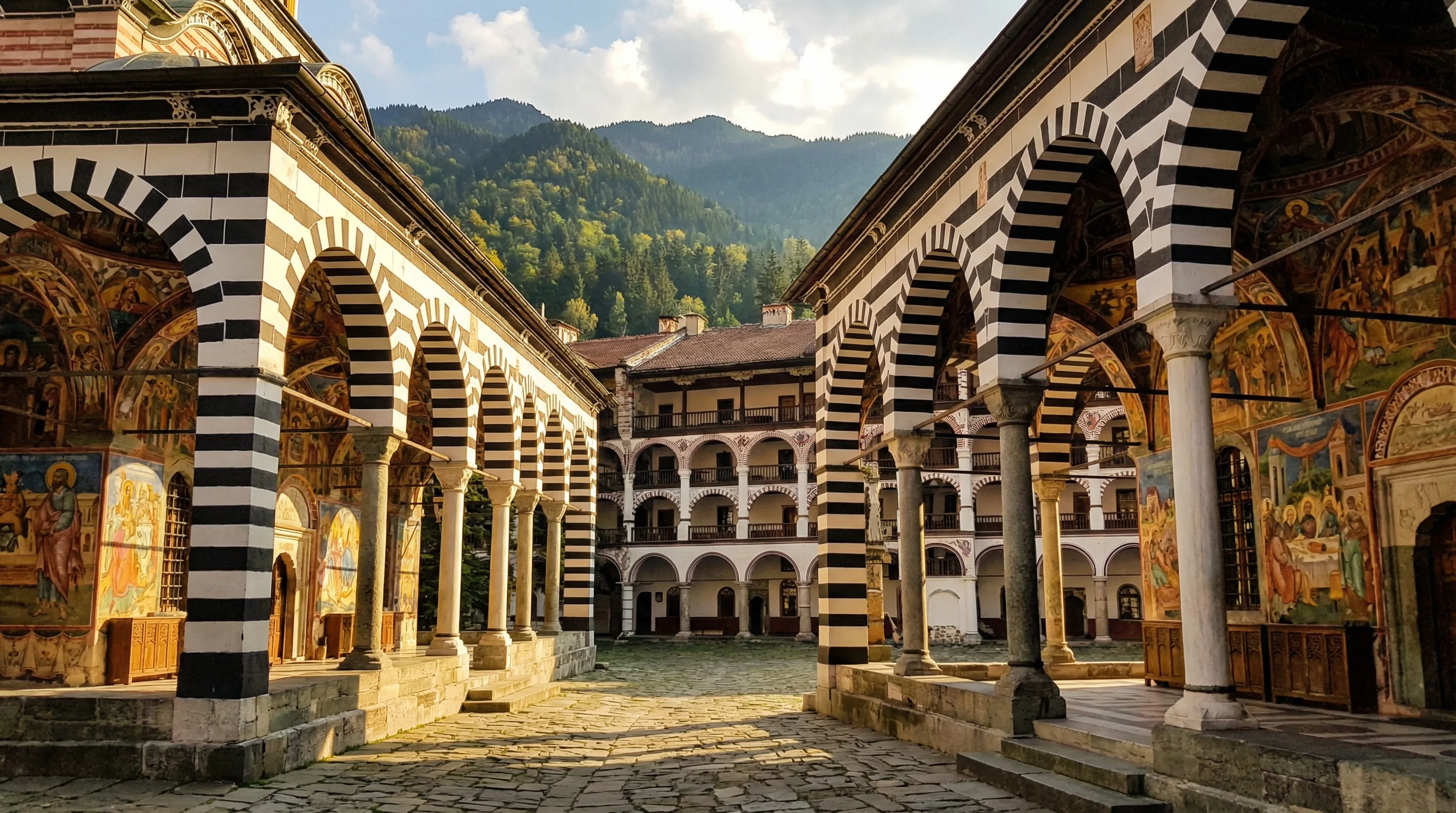
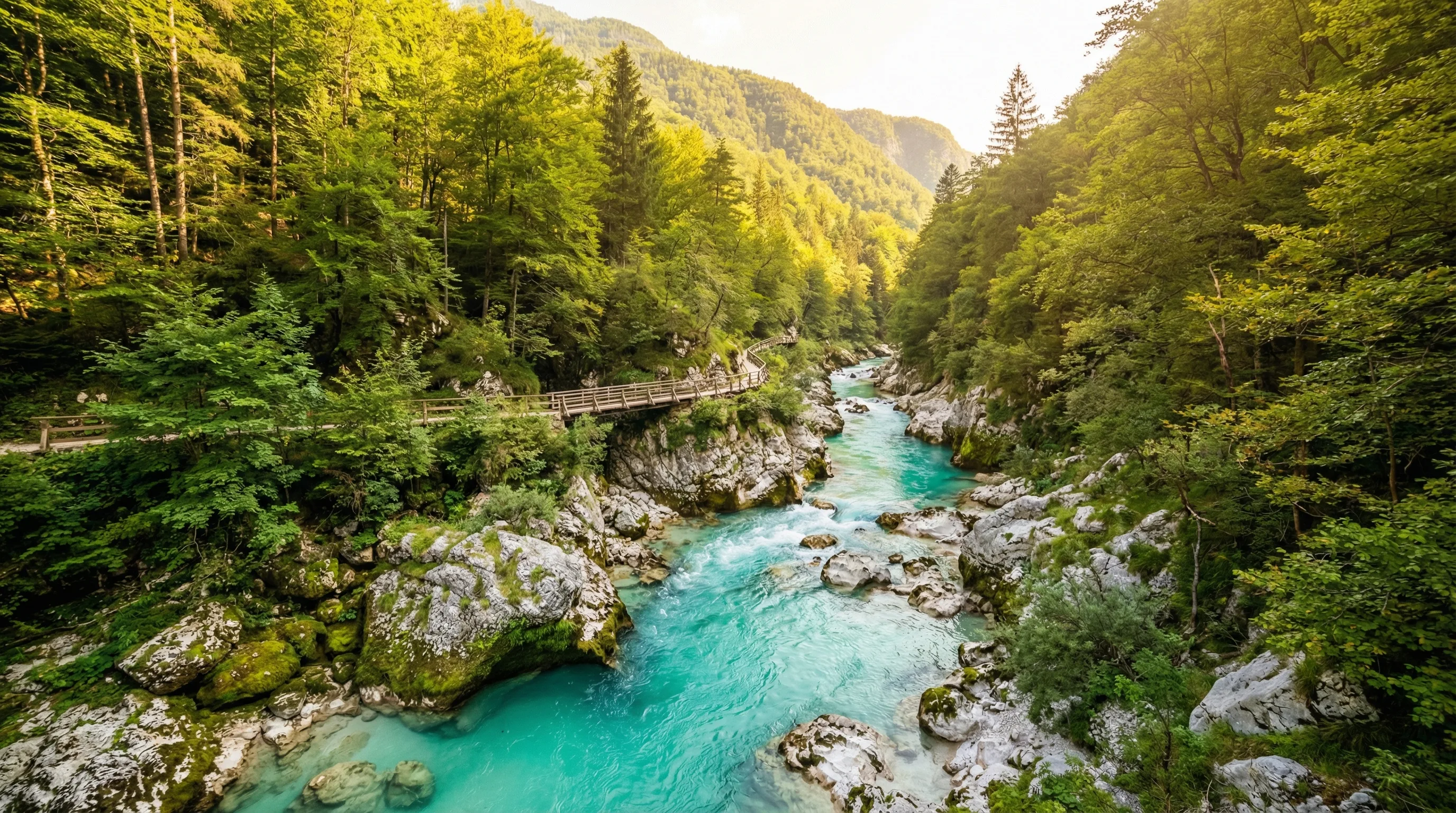
Bosnia and Herzegovina is the country that makes you understand why the Balkans have a reputation. Not the political reputation — the driving one. This is a land of canyons, river valleys, and mountain passes where the road clings to a cliff wall above a river so green it looks digitally enhanced. We have driven from Sarajevo to Mostar through the Neretva canyon more times than we can count, and the drive never gets ordinary. The country has two political entities (the Federation of Bosnia and Herzegovina and Republika Srpska) but the driving rules are the same across both. No tolls, no vignettes, cheap fuel, and scenery that makes you pull over every few kilometers. The only trade-off is pace — the roads here are rarely fast, and that turns out to be exactly the point.
Road Conditions
Bosnia has no motorway network to speak of. A few short highway segments exist — a stretch of the A1 near Sarajevo, pieces of road connecting to the Croatian border — but the vast majority of driving happens on two-lane roads through mountains and along river valleys.
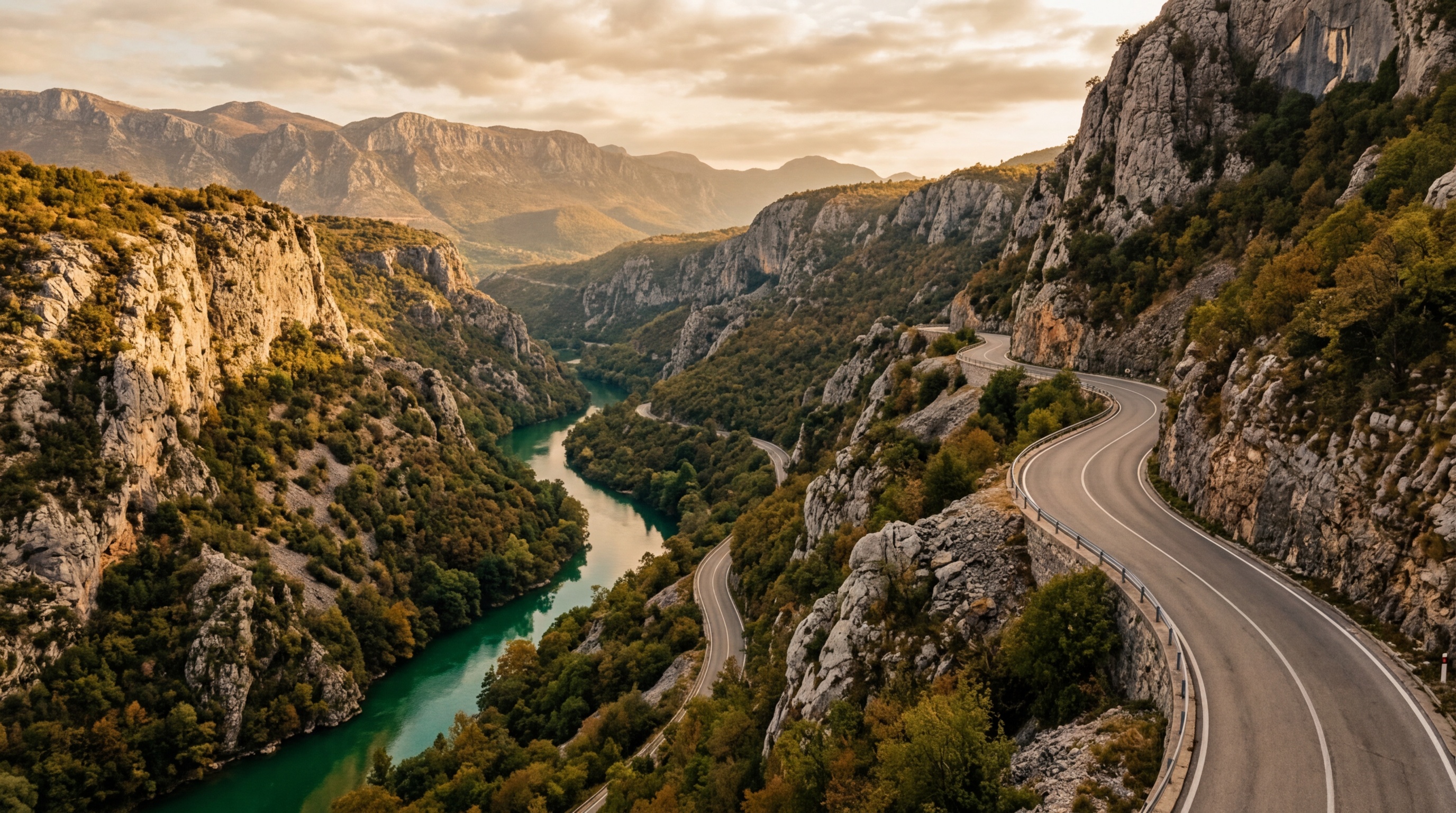
The main routes (M17 Sarajevo to Mostar, M5 toward Banja Luka, M18 through the Drina valley) are in reasonable condition: asphalt intact, lines painted, curves banked. They are also slow, winding, and shared with trucks that take up most of the road. A 130 km drive that looks like 90 minutes on a map will take you two hours or more.
Secondary roads range from acceptable to adventurous. Roads in rural Republika Srpska can be potholed. Mountain roads around Lukomir village (the highest inhabited village in Bosnia) turn to gravel. The road to Prokosko Lake is an unpaved track that requires high clearance.
None of this is dangerous — it just requires attention. Drive at the speed the road dictates, not the speed the sign allows, and you will be fine. A standard car handles all main routes. An SUV is useful only if you plan to explore the most remote mountain areas.
Tip: The Sarajevo to Mostar drive (M17) through the Neretva canyon is one of the finest two hours of driving in Europe. Do not rush it.
Speed Limits & Rules
| Road Type | Speed Limit |
|---|---|
| Motorways | 130 km/h |
| Main roads | 80 km/h |
| Rural roads | 60 km/h |
| Urban areas | 50 km/h |
Required equipment:
- Reflective vest
- Warning triangle
- First-aid kit
- Spare bulb set
- Tow rope
- Headlights on at all times from November through March
Blood alcohol limit: 0.03% — near-zero tolerance. Enforcement is inconsistent but the consequences of a violation are serious: fines start at BAM 300 (roughly EUR 150).
The 130 km/h motorway limit is mostly theoretical — you will rarely find a road where it applies. On the M-roads where you actually drive, 80 km/h is the limit and often faster than conditions allow. Police radar checks are common at town entrances, especially on the M17 between Jablanica and Mostar.
Fuel & Costs
Bosnia uses the Convertible Mark (BAM), pegged to the Euro at roughly 1.95 BAM = 1 EUR. Fuel is noticeably cheaper here than in Croatia or Montenegro.
| Fuel Type | Average Price |
|---|---|
| Eurosuper 95 | ~2.50 BAM/L (~EUR 1.28/L) |
| Diesel | ~2.45 BAM/L (~EUR 1.25/L) |
| LPG | ~1.20 BAM/L (~EUR 0.62/L) |
Energopetrol, Hifa, and NIS Petrol are the main chains. Stations are frequent along the M-roads and in towns. In the mountains between Sarajevo and Gorazde, or on the way to Lukomir, fill up before you leave the last town.
Credit cards are accepted at most stations on main routes, but smaller stations in rural areas may be cash-only. Withdraw BAM at an ATM rather than exchanging at the border — the rates are better.
Bosnia has no tolls and no vignette system. Combined with the cheapest fuel in the western Balkans, it is an excellent country for budget road trips.
Parking
Sarajevo: paid parking in the center costs BAM 2/hour (roughly EUR 1). The Bascarsija area (Old Town) has very limited parking — use the garage at BBI Centar or the lot near the National Museum and walk. Street parking in residential neighborhoods above Bascarsija is free but involves steep hills and narrow alleys.
Mostar: park in the lots along the Neretva before the Old Bridge area. Expect BAM 3-5 for the day. The streets in the old town are pedestrian-only.
Jajce, Travnik, Banja Luka: parking is easier and cheaper. Street parking in most smaller towns is free or BAM 1/hour.
Tip: In Sarajevo, do not park in the tram lanes — they look like parking spaces but they are not, and towing is swift.
Insurance & Documents
EU/EEA driving licenses are valid. Non-EU license holders should carry an International Driving Permit.
Third-party insurance is mandatory. Bosnia is included on most EU green cards — check the back of yours for “BIH.” If Bosnia is excluded, you will need to purchase short-term insurance at the border (roughly BAM 50 / EUR 25 for two weeks).
Rental cars from Croatia are generally allowed into Bosnia (confirm with your agency), but some agencies charge a cross-border fee of EUR 20-50. Rental agencies exist in Sarajevo and Mostar with competitive rates if you prefer to rent locally.
Vehicle registration documents must be carried at all times. Police checkpoints are uncommon but they do occur, and officers will ask for license, registration, and insurance.
For the full insurance comparison, see our driving guide.
Country Articles
Read more about specific drives in Bosnia:
- Sarajevo to Mostar Drive — the iconic Neretva canyon route
- Una National Park by Car — waterfalls and river drives in the northwest
Routes Through Bosnia
Bosnia appears in several of our cross-border itineraries:
- Heart of the Balkans: Sarajevo to Ohrid — through central Bosnia and into Macedonia
- Belgrade to Dubrovnik — crossing Bosnia east to west
- Grand Balkan Circuit — Bosnia as part of the full loop
For all border crossing details, see our border crossings guide.