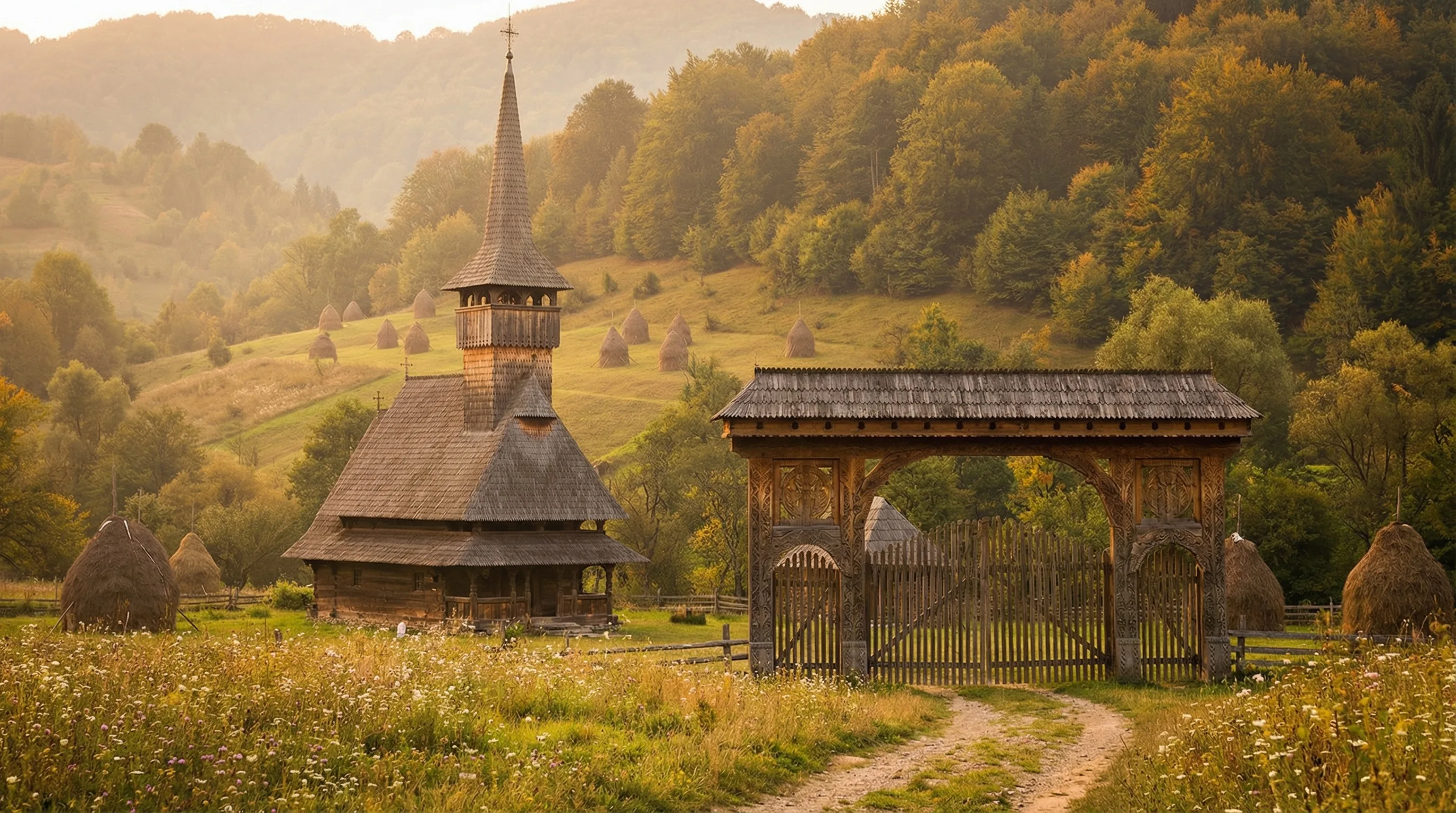
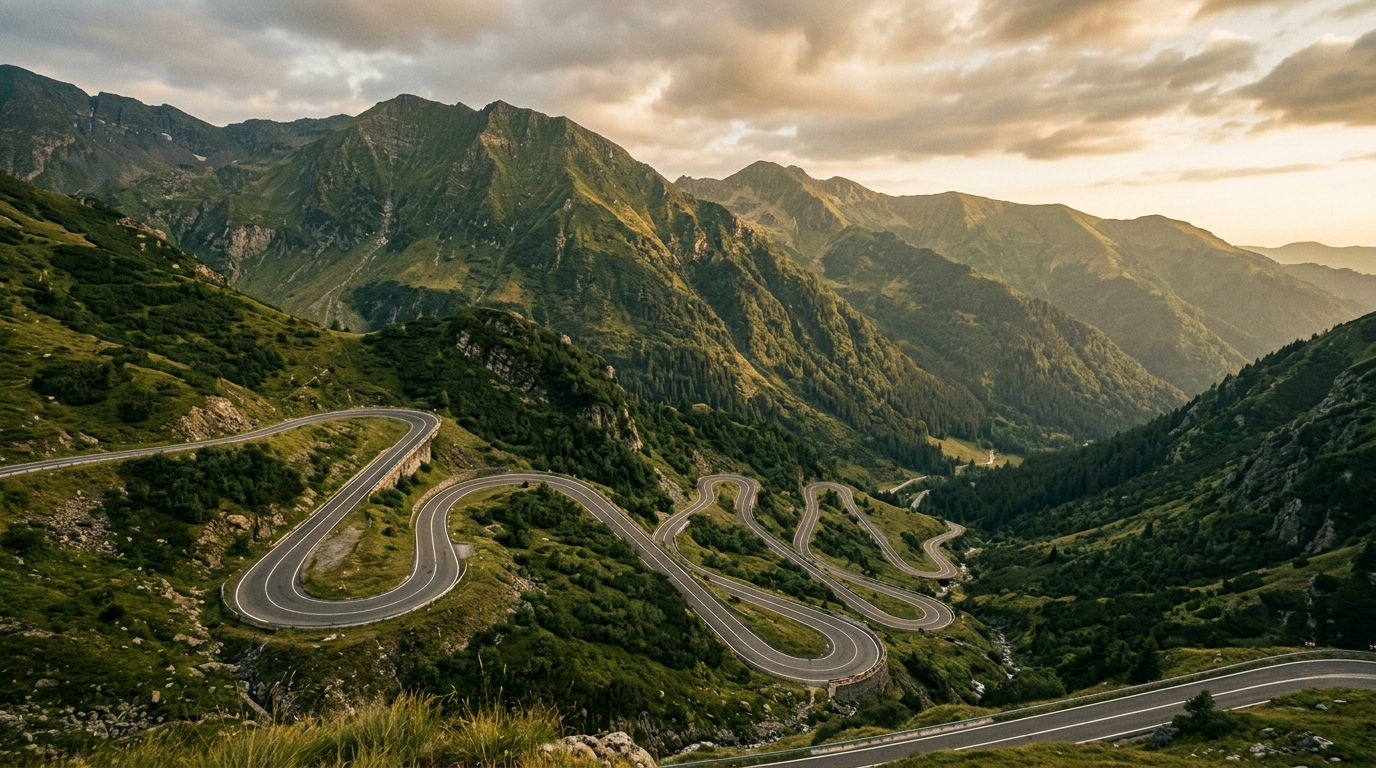
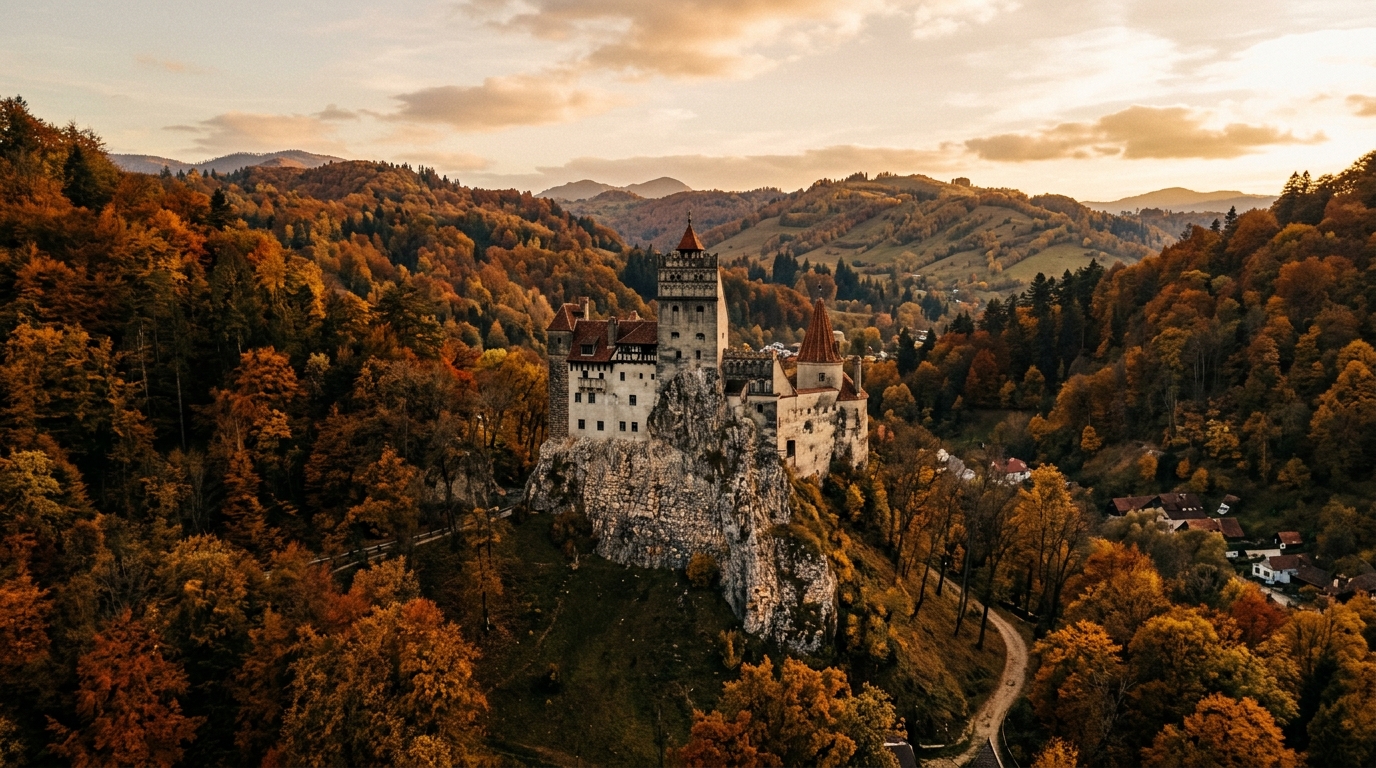
Romania has the best driving road in Europe and it knows it. The Transfagarasan gets all the headlines — deservedly — but reduce Romania to that single road and you miss the point entirely. We have spent weeks driving this country across multiple trips, and what keeps pulling us back is the sheer variety: Carpathian passes that corkscrew through forests so dense the GPS loses signal, Transylvanian plateaus where you cruise past fortified churches without seeing another car, and the flat Wallachian plains where the highway runs ruler-straight for a hundred kilometers. Romania rewards the driver who wanders, and it does not charge much for the privilege.
Road Conditions
Romania’s motorway network is expanding but still limited. The A1 from Bucharest toward Pitesti and the A3 from Bucharest to Ploiesti are proper highways — smooth, well-marked, and fast. Beyond these corridors, the motorway system has gaps. The long-promised Transylvania motorway is being built in sections, but for now, crossing between Bucharest and Cluj-Napoca still involves national roads for significant stretches.
National roads (marked DN) are where you will spend most of your time. These range from excellent (the DN7 through the Olt Valley, the DN1 between Brasov and Sibiu) to tolerable (narrow two-lanes with heavy truck traffic and limited overtaking opportunities). The DN1 between Bucharest and Ploiesti, in particular, is notorious for congestion and accidents — take the A3 motorway instead.
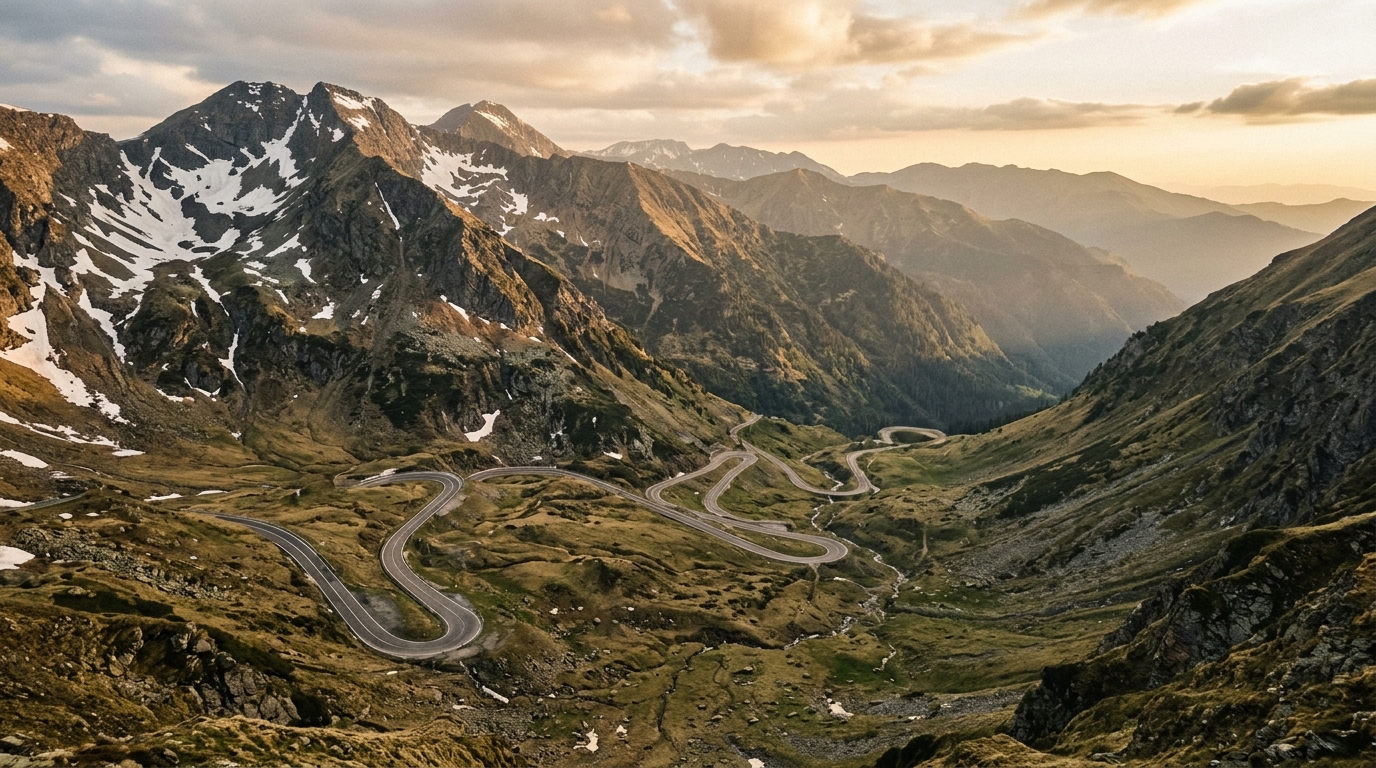
Mountain passes are the real draw. The Transfagarasan (DN7C) is open roughly from late June through October, depending on snow conditions. The Transalpina (DN67C) is equally dramatic and slightly less crowded. The road through the Bicaz Gorge in the Eastern Carpathians is narrow and thrilling. All of these are well-surfaced but demand respect — hairpin turns, steep gradients, and occasional fog are standard.
Rural roads in Maramures and Bucovina can be narrow and shared with horse-drawn carts. This is not a safety concern so much as a speed adjustment — and part of the charm.
Speed Limits & Rules
| Zone | Speed Limit |
|---|---|
| Urban areas | 50 km/h |
| Open roads | 90 km/h (100 km/h for expressways) |
| Motorways | 130 km/h |
Required equipment: reflective vest, warning triangle, first-aid kit. Headlights must be on at all times year-round on roads outside urban areas. Seatbelts are mandatory. The blood alcohol limit is 0.00% — zero tolerance, no exceptions. This is strictly enforced, and penalties include criminal charges.
Speed cameras are everywhere. Romania uses fixed cameras, mobile radar, and average speed detection systems on national roads. Some are well-signposted; many are not. The police also operate handheld radar from unmarked vehicles. Fines start at RON 580 (~EUR 115) for exceeding the limit by 10-20 km/h and escalate quickly. We cannot overstate this: Romania is serious about speed enforcement.
Winter tires are mandatory from November 1 through March 31 on all roads. In mountain areas, chains may be required — carry them if driving passes between November and April.
Fuel & Costs
Fuel infrastructure is good across Romania. You will find stations from Petrom (OMV), Mol, Lukoil, Rompetrol, and Socar in all cities and along major roads. In the Carpathian mountains and deep Maramures, stations are less frequent — top up before heading into passes.
| Item | Cost |
|---|---|
| Euro 95 petrol | ~RON 7.00-7.50/L (~EUR 1.40-1.50) |
| Diesel | ~RON 7.10-7.60/L (~EUR 1.42-1.52) |
| LPG | ~RON 3.50-3.80/L (~EUR 0.70-0.76) |
Romania uses the Leu (RON). Card payment works at all chain stations and most independent ones. ATMs are widespread. Despite bordering the eurozone, Romania is not in it — euros are generally not accepted for everyday purchases.
Rovinieta (E-Vignette)
Romania requires a rovinieta (electronic vignette) for all national roads and motorways. Purchase it online at roviniete.ro before entering the country. Options: 7 days (RON 16 / ~EUR 3.20 for cars), 30 days (RON 32 / ~EUR 6.40), 90 days, or annual.
The rovinieta is linked to your license plate number. There is nothing to print or display — enforcement is fully automated via cameras. The fine for driving without one is approximately EUR 100-250 depending on vehicle type.
At under EUR 4 for a week, the rovinieta is essentially free. Just buy it.
Tip: The rovinieta website works but can be slow. Buy it a day before your trip to avoid scrambling at the border. Mobile payment options are also available through partner apps like PayPoint.
Parking
Bucharest parking is chaotic and expensive by Romanian standards. Central areas use a zone system with rates of RON 5-10/hour. The parking app ePark is your best option — it covers most zones and saves you from feeding meters. Shopping malls (Baneasa, AFI Cotroceni) offer free parking with purchase.
Brasov has a well-organized system with several large parking lots outside the Old Town (Livada Postei is the most convenient). The center is largely pedestrianized. Rates are around RON 3-5/hour.
Sibiu, Cluj-Napoca, and Timisoara all have manageable parking situations — paid zones in the center, free parking within a 10-minute walk. In smaller Transylvanian towns, parking is rarely a problem.
At mountain attractions (Transfagarasan viewpoints, Bran Castle, Peles Castle), expect paid parking lots that charge RON 10-20 per visit. Arrive early in high season — these lots fill up.
Insurance & Documents
EU driving licenses are accepted. Carry an IDP if your license uses a non-Latin script. Vehicle registration and proof of insurance are mandatory at all times.
The European Green Card is valid for Romania. Check that RO is not crossed out. Border insurance is available for purchase, typically EUR 50-80 for two weeks, but it is simpler to arrange before arrival.
If renting a car, cross-border policies vary significantly between agencies. Not all allow travel into Moldova or Ukraine. Confirm in writing before departing. CDW is recommended — while main roads are good, potholes on secondary routes can damage rims and tires.
For comprehensive rules across the region, see our driving guide.
Explore Romania
The Transfagarasan Highway guide is our most detailed article — opening dates, best stops, and how to time your drive. The Transylvania Castles road trip covers Bran, Peles, and Corvin in a three-day circuit with routes and parking details.
Routes Through Romania
The Transylvania Loop is dedicated to Romania — ten days of Carpathian passes, fortified churches, and the Transfagarasan. The Grand Balkan Circuit passes through Romania between Bulgaria and Hungary. The Black Sea to Adriatic route connects Bulgaria with Serbia via Romania’s southwestern corner. See our border crossings guide for current wait times at all Romanian borders.