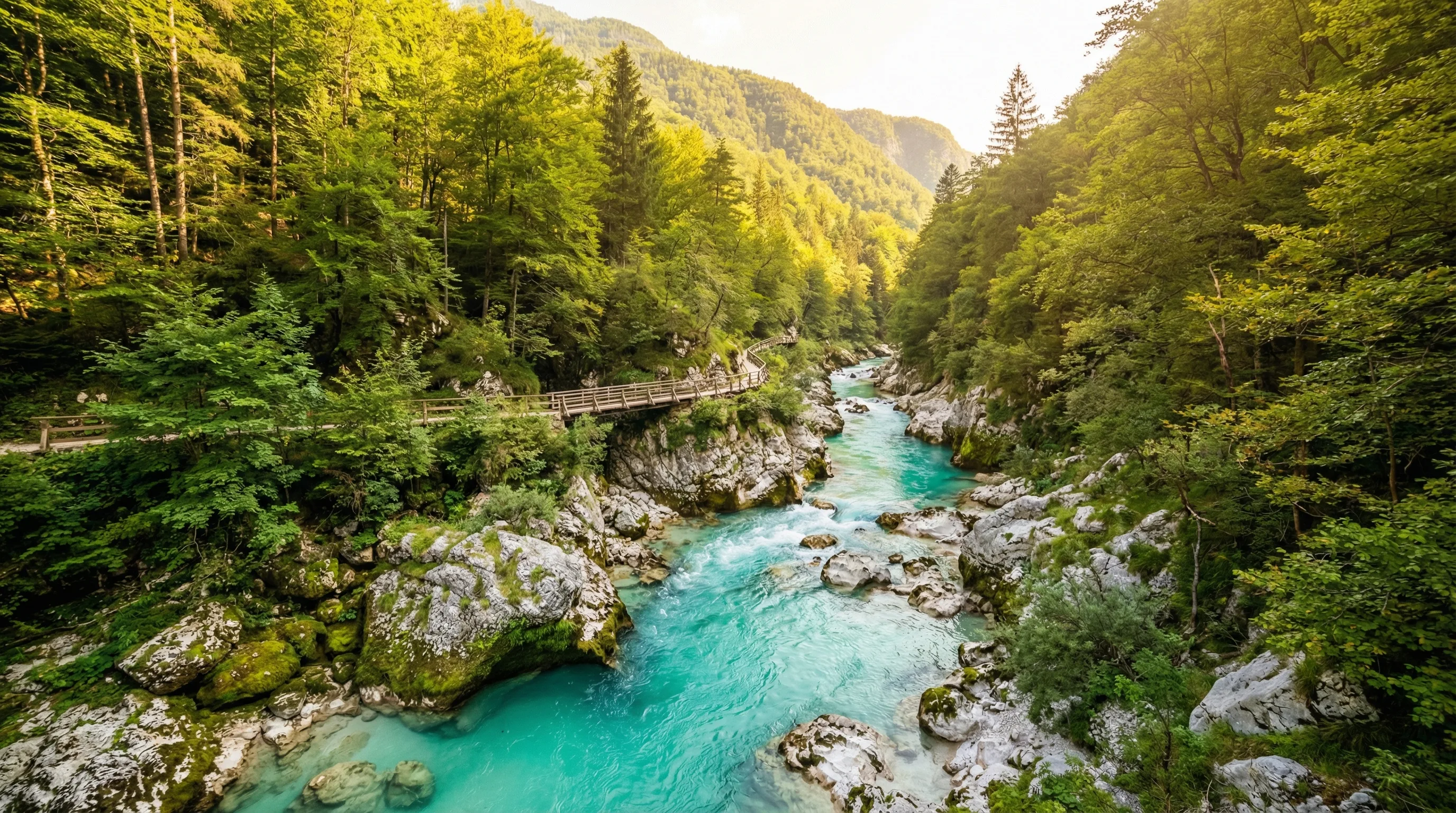
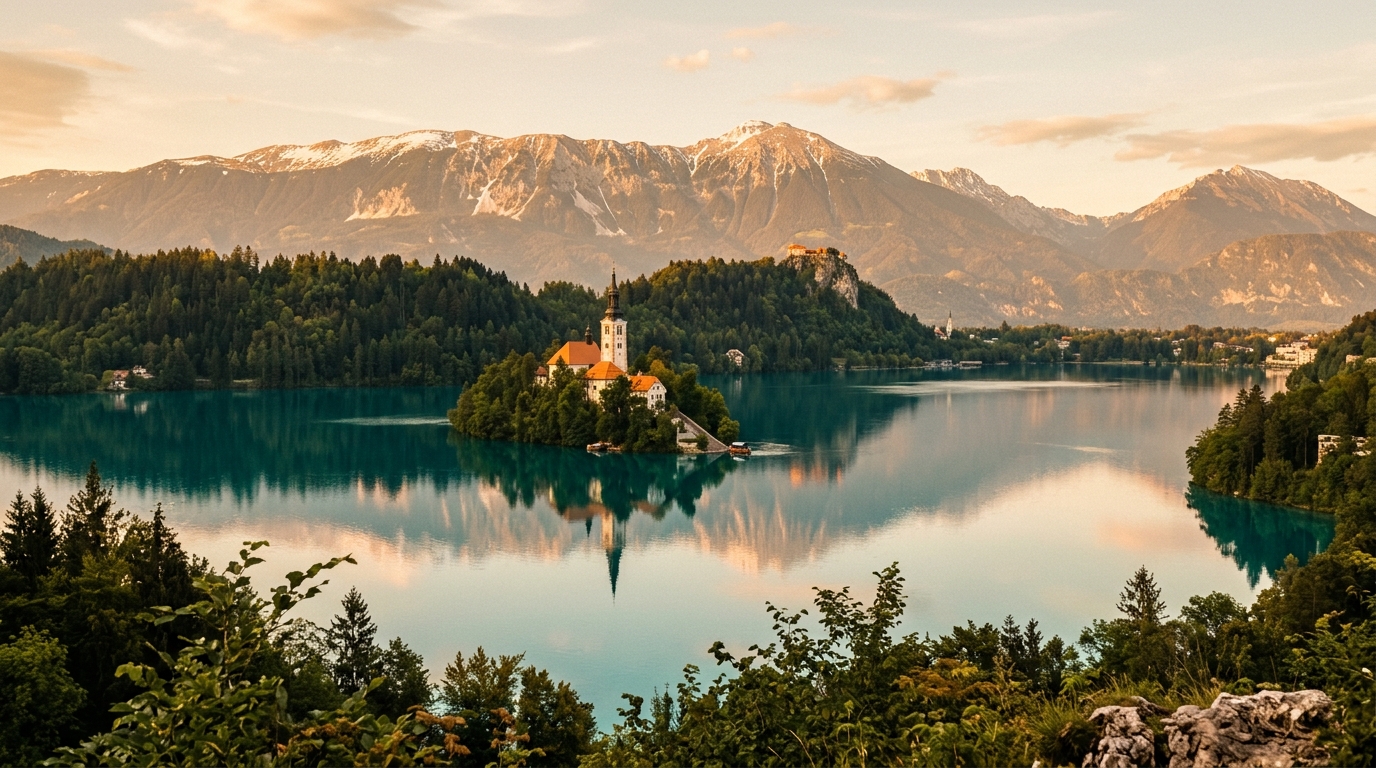
Slovenia is the country that makes you wonder why anyone drives through it on the way to somewhere else. We did exactly that the first time — Ljubljana to Zagreb, motorway the whole way, two hours, done. The second time, someone mentioned the Vrsic Pass, and that was the end of any plans to leave quickly. For a country smaller than New Jersey, Slovenia has an absurd concentration of alpine passes, emerald rivers, hilltop castles, and roads so well-maintained they feel like a personal insult to every other country in the region. It is also the only Balkan country that uses the Euro, which makes the mental arithmetic of refueling considerably simpler.
Road Conditions
Slovenia has some of the best roads in all of southeastern Europe. The motorway network (marked with green signs and the prefix A) connects Ljubljana with all four borders efficiently — the A1 heads southwest to the Italian border and northeast to Maribor and Austria, while the A2 runs northwest toward the Karavanke Tunnel and southeast toward Croatia. These are modern, well-lit, and beautifully maintained highways.
Regional roads are equally impressive. The two-lane routes through the Soca Valley, around Lake Bohinj, and through the Karst region are smooth, well-marked, and scenic enough that you may lose track of where you meant to stop. Guardrails exist where they should. Road markings are visible. Potholes are rare.
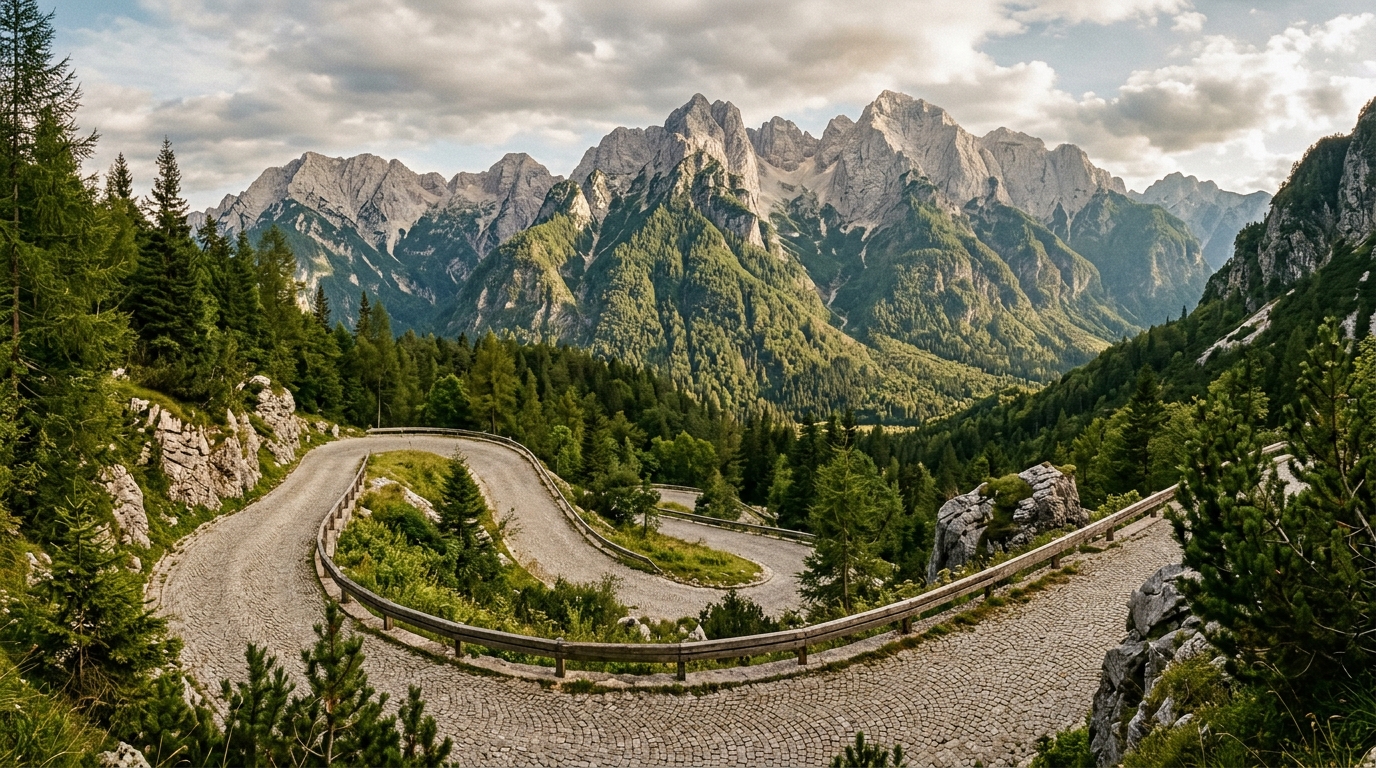
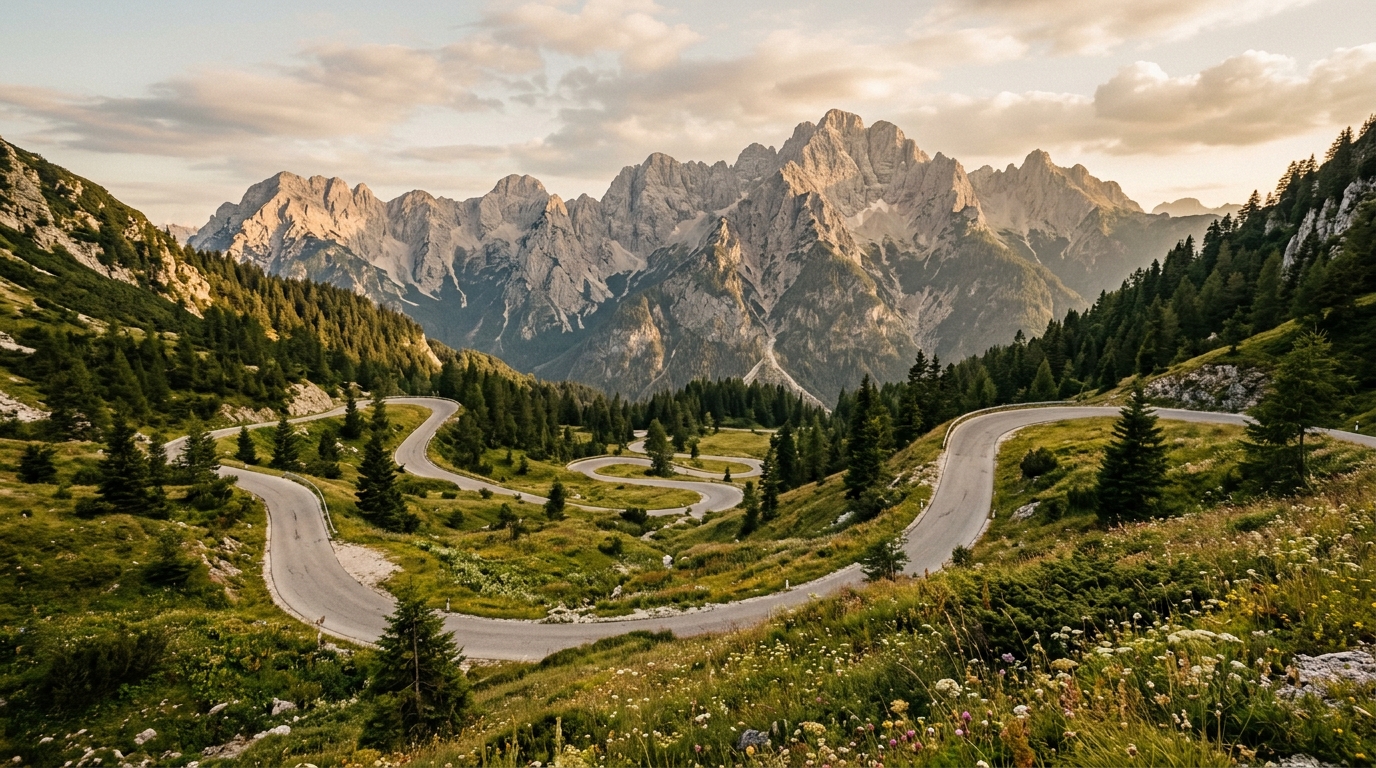
The only challenging roads are the high mountain passes — and they are challenging by design, not neglect. The Vrsic Pass (1,611 meters) features 50 numbered hairpin turns with cobblestone surfaces on the steepest sections. The Mangart Road climbs to 2,055 meters on a narrow single-track with passing places. These passes are open roughly from May through October, depending on snow. Both are extraordinary driving experiences if you respect the gradients and the altitude.
Winter driving in Slovenia is straightforward. Motorways are salted and plowed efficiently. Mountain passes close seasonally but main routes stay open. The Karavanke Tunnel to Austria operates year-round.
Speed Limits & Rules
| Zone | Speed Limit |
|---|---|
| Urban areas | 50 km/h |
| Open roads | 90 km/h |
| Expressways | 110 km/h |
| Motorways | 130 km/h |
Required equipment: reflective vest (one per passenger), warning triangle, first-aid kit. Headlights must be on at all times year-round. Seatbelts are mandatory front and rear. The blood alcohol limit is 0.05% (0.00% for drivers under 21 and professional drivers).
Slovenia enforces speed limits with fixed cameras and mobile radar. Fines are proportionate to the infraction — from EUR 40 for minor violations up to EUR 1,200 for exceeding the limit by more than 50 km/h. Points are tracked and accumulate if you hold a Slovenian license, but foreign drivers receive fines only.
Winter tires are mandatory from November 15 through March 15, or whenever winter conditions exist outside that period. The requirement is M+S marking with minimum 3mm tread depth.
Fuel & Costs
Fuel prices in Slovenia are government-regulated and updated every two weeks. This means prices are the same at every station — there is no point shopping around. Stations are plentiful on motorways and in all towns.
| Item | Cost |
|---|---|
| Euro 95 petrol | ~EUR 1.48-1.55/L |
| Diesel | ~EUR 1.50-1.58/L |
| LPG | ~EUR 0.75-0.85/L |
Slovenia uses the Euro, so no currency conversion is needed if you are coming from Italy, Austria, or the eurozone in general. Card payment works everywhere — even the smallest mountain hut tends to have a terminal. ATMs are in every town but you will rarely need cash except for parking meters in smaller villages.
Slovenia is the most expensive fuel stop in the Balkans, but still noticeably cheaper than Italy or Austria. Fill up here if you are heading south toward Croatia.
E-Vinjeta (Vignette)
Slovenia requires an electronic vignette (e-vinjeta) for all motorways and expressways. Since 2022, the old windshield sticker system has been replaced by a fully digital system linked to your license plate.
Purchase your e-vinjeta online at evinjeta.dars.si before entering the country. Options: weekly (EUR 15), monthly (EUR 30), or annual (EUR 110). The vignette activates on the date you specify at purchase — not the purchase date.
Enforcement is automated via license plate cameras on all motorway entries. The fine for driving without a valid e-vinjeta is EUR 300-800.
Tip: If you are only driving local roads and mountain passes, you technically do not need the vignette. The Vrsic Pass, the road around Lake Bohinj, and the Soca Valley route are all on regional roads. But the moment you touch a green-signed motorway, you need it. At EUR 15 for a week, it is not worth the risk.
Parking
Ljubljana has a well-organized parking system. The Park & Ride facility at Dolgi Most (near the motorway exit) costs just EUR 1.50/day and is connected to the city center by bus. In the center itself, Zone 1 costs EUR 1.20/hour with a 2-hour limit. The Kongresni trg underground garage is the most convenient paid option.
Bled is compact and walkable, but parking is tight in summer. The main parking lot below the castle costs EUR 6-10 for a full day. Arrive before 10am in July-August, or use the free lot on the eastern edge of town and walk 15 minutes.
Bohinj has ample parking at various trailheads. Most charge EUR 5-10/day during the season. The lot at the Savica Waterfall is small and fills early on weekends.
In the Soca Valley (Bovec, Kobarid), parking is generally free and easy outside of peak weekends. Piran on the coast is a different matter — the town is essentially car-free. Use the parking garage at the entrance (Fornace) and walk in. There is no other sensible option.
Insurance & Documents
EU driving licenses are valid. Slovenia is in the EU and Schengen, so document checks at borders with Italy, Austria, and Hungary are rare (though possible). The Croatian border is a non-Schengen crossing where you will need to show documents.
Standard EU insurance and Green Card cover you. If renting a car, Slovenia is usually included in any European rental agreement without additional fees — it is one of the easiest Balkan countries for rentals.
CDW is recommended as standard practice, though you are less likely to need it here than elsewhere in the region. Slovenian roads are forgiving.
For all the details on cross-border insurance and documentation, see our driving guide.
Explore Slovenia
The Vrsic Pass driving guide walks you through all 50 hairpins with the history, the stops, and the technique. Our Ljubljana to Bled and Bohinj guide covers the classic half-day drive from the capital to the two lakes, including the parking strategy that actually matters.
Routes Through Slovenia
The Slovenia to Montenegro route starts here, heading from the Julian Alps through Croatia to the Adriatic. The Grand Balkan Circuit begins and ends in Slovenia. Check our border crossings guide for current wait times — though on the Schengen borders with Italy, Austria, and Hungary, you will rarely notice you have crossed at all.