Black Sea to Adriatic: Crossing the Balkans East to West
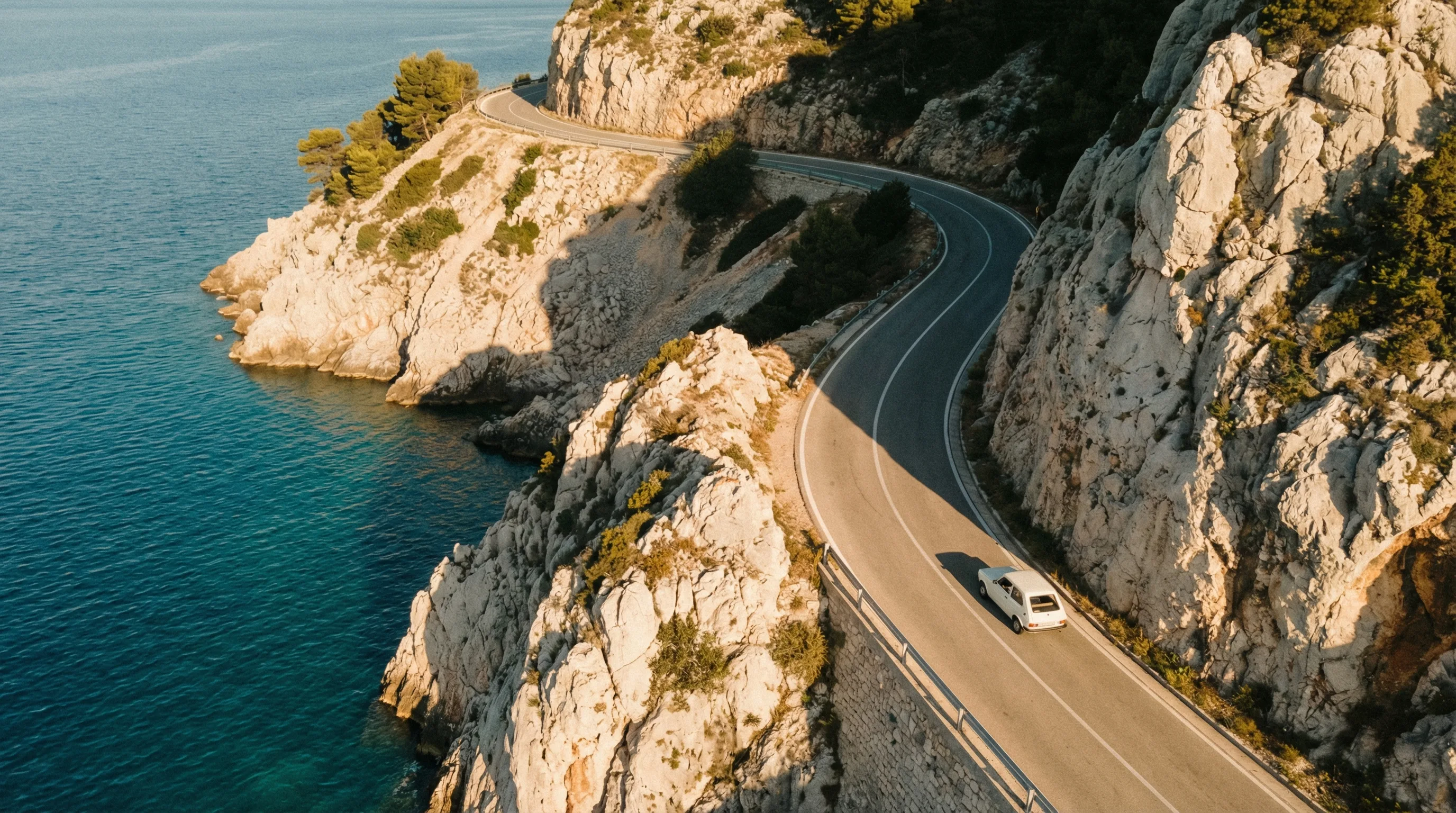
We picked up the car in Sofia on a Tuesday morning, drove west for two weeks, and parked it in Dubrovnik on a Monday evening with 1,500 km on the odometer and a lingering rakia warmth somewhere behind the sternum. In between, the Balkans did what the Balkans do: they changed everything every few hours. Bulgarian monasteries gave way to Serbian fortress towns. The flat Danube plain rose into Bosnian mountain valleys. Ottoman bridges appeared over green rivers. And then, on the last day, the Adriatic materialized – flat, blue, and impossibly bright after a fortnight of mountains.
This is the east-to-west crossing, the route that slices through the middle of the peninsula from Bulgaria’s edge to Croatia’s coast. Four countries, three border crossings, and a cultural gradient that shifts from Orthodox cathedrals to Catholic ones, from Cyrillic script to Latin, from ayran to espresso. It is the route that shows you how the Balkans work: not as a single thing, but as a sequence of different worlds stitched together by mountain roads.
Route Overview
| Segment | Distance | Drive Time | Border Crossing |
|---|---|---|---|
| Sofia to Plovdiv | 150 km | 1.5-2 hours | – |
| Plovdiv to Nis | 200 km | 3.5 hours | Bulgaria-Serbia |
| Nis to Belgrade | 240 km | 2.5 hours | – |
| Belgrade to Sarajevo | 300 km | 5 hours | Serbia-Bosnia |
| Sarajevo to Mostar | 130 km | 2.5 hours | – |
| Mostar to Dubrovnik | 140 km | 2.5 hours | Bosnia-Croatia |
| Total | ~1,500 km | ~22 hours driving | 3 |
Tip: Bulgaria requires a motorway vignette (e-vignette, BGN 15 / ~EUR 8 for 7 days, purchased at bgtoll.bg). Serbia uses a pay-per-station toll system on motorways. Bosnia and Croatia have no vignettes – Croatia charges at each toll station, Bosnia is toll-free on most routes.
Days 1-2: Sofia
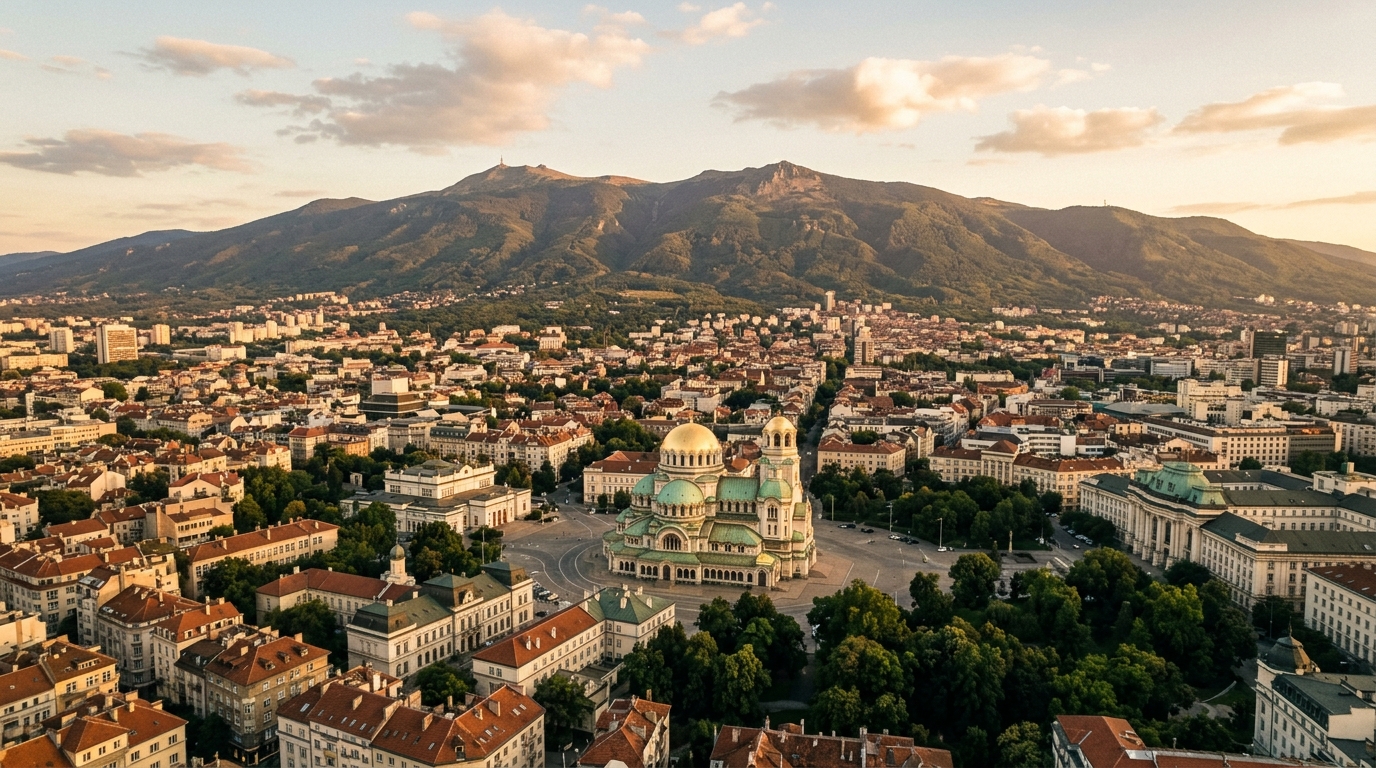
Sofia is the kind of capital that surprises people who arrive expecting nothing. The city sits in a basin surrounded by mountains – Vitosha peaks at 2,290 m just 30 minutes from the center – and the urban landscape is a collision of Roman ruins, Ottoman mosques, Orthodox churches, communist-era apartment blocks, and new glass towers. It is not polished. It is interesting.
Start with the Alexander Nevsky Cathedral, the gold-domed church that dominates Sofia’s skyline. The exterior is impressive. The interior – dim, incense-heavy, with icons and frescoes covering every surface – is genuinely moving. The crypt below (EUR 3) holds Bulgaria’s best collection of Orthodox icons, some dating to the 12th century.
Walk south along Vitosha Boulevard, Sofia’s main pedestrian street, to the National Palace of Culture (NDK), then loop back through the city center: the Rotunda of St. George (a 4th-century Roman church, the oldest building in Sofia, tucked inside a modern courtyard), the Banya Bashi Mosque (the only functioning mosque in the city), and the Central Market Hall for lunch.
On day two, drive 10 km south to Boyana Church, a UNESCO World Heritage Site. The 13th-century frescoes inside are considered among the finest medieval art in Eastern Europe – 89 scenes with naturalistic faces that predated the Italian Renaissance by a century. Entry is EUR 5 and visits are limited to 15 minutes (book ahead in summer).
If weather permits, spend the afternoon on Vitosha Mountain. The Aleko hut is reachable by car or gondola, and the trails from there range from easy walks to full-day summit hikes. Even a 30-minute walk above the tree line gives you views over Sofia and the Thracian plain that make the city feel much more significant.
| Sofia Highlights | Time | Cost |
|---|---|---|
| Alexander Nevsky Cathedral + crypt | 1.5 hours | Free / EUR 3 crypt |
| Vitosha Boulevard walk | 1 hour | Free |
| Rotunda of St. George | 20 min | Free |
| Boyana Church | 30 min | EUR 5 |
| National History Museum | 2 hours | EUR 5 |
| Vitosha Mountain (gondola + walk) | Half day | EUR 8 gondola |
Where to Eat in Sofia
Bulgarian food is hearty, slow-cooked, and cheap. Hadjidragana Tavern in the center serves excellent traditional dishes in a setting that involves too much wood paneling and just enough atmosphere. Supa Star does gourmet Bulgarian soups in a modern space. Made in Home is where the brunch crowd goes. Budget EUR 6-12 for a full meal.
Try shopska salad (tomato, cucumber, pepper, onion, buried under grated white cheese – the Bulgarian national dish in all but name), kavarma (slow-cooked meat and vegetable stew), and banitsa (flaky cheese pastry, best from a street bakery for EUR 0.50).
Tip: Sofia’s metro covers the airport and the main sights. A single ticket is EUR 0.80. If you are picking up your rental car at the airport, consider exploring the city first by metro and collecting the car on day two when you head to Plovdiv.
Days 3-4: Plovdiv
The drive from Sofia to Plovdiv (150 km, 1.5-2 hours) is Bulgaria’s best motorway – the Trakia highway, smooth, fast, and boring in the best possible way. Plovdiv is the opposite of boring.
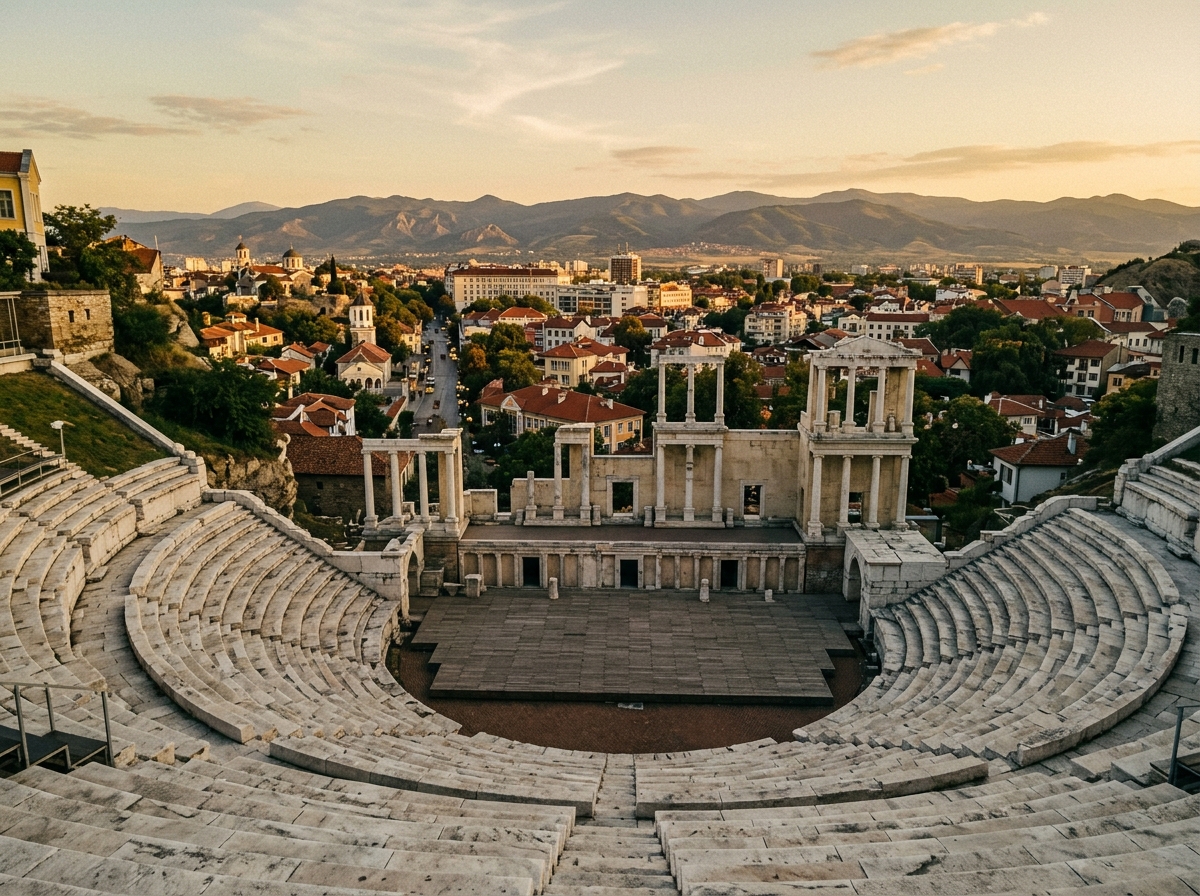
Plovdiv claims to be the oldest continuously inhabited city in Europe, which is a claim shared by approximately fifteen other cities, but in Plovdiv’s case the archaeological evidence is hard to argue with. The Old Town sits on three hills (Plovdiv originally had seven, but four were dismantled for building material – a very Balkan approach to urban planning), and the streets are lined with 19th-century Revival houses with painted facades, overhanging upper floors, and courtyards that open into unexpected spaces.
The Roman Theatre (2nd century AD) is the centerpiece: a 7,000-seat amphitheater carved into the hillside, still used for concerts and events. You can sit on the original marble seats and look out over the city to the Rhodope Mountains beyond. Entry is EUR 3.
The Kapana district (the Trap) is Plovdiv’s creative quarter – narrow streets between the Old Town and the center that were once a crafts area and now hold cafes, galleries, studios, and bars. This is where Plovdiv feels youngest and most alive, and where the EUR 2-3 craft beer prices make it clear you are not in Western Europe.
Day Trip: Shipka Pass and the Valley of Roses
If you have a spare half-day (and you should), drive north from Plovdiv to the Shipka Pass (120 km round trip, about 3 hours driving). The pass crosses the Stara Planina (Balkan Mountains) at 1,185 m and is the site of a critical 1877 battle between Bulgarian-Russian forces and the Ottoman army. The Shipka Memorial at the summit is a Soviet-era tower with panoramic views, and the story of the battle – outnumbered defenders holding the pass through brutal winter fighting – is foundational to Bulgarian national identity.
On the way back, the Valley of Roses around Kazanlak produces 85% of the world’s rose oil. If you are driving in May or June, the fields are in bloom and the air smells absurdly good. The Rose Museum in Kazanlak (EUR 3) explains the distillation process. The rest of the year, the valley is pleasant agricultural countryside.
| Plovdiv Costs | Price |
|---|---|
| Roman Theatre entry | EUR 3 |
| Old Town walk | Free |
| Lunch in Kapana | EUR 5-8 |
| Craft beer in Kapana | EUR 2-3 |
| Apartment | EUR 25-40/night |
| Shipka Memorial | EUR 3 |
Plovdiv is the city that proves Bulgaria is more than a beach destination. Two days is enough for the essentials but not enough for the city to let you go willingly.
Day 5: Plovdiv to Nis, Serbia
The drive from Plovdiv to Nis (200 km, about 3.5 hours) crosses the Bulgaria-Serbia border at Kalotina / Gradinje. The Bulgarian side involves a stretch of motorway followed by a decent two-lane road. The border crossing takes 15-30 minutes on a normal day.
Nis is covered in detail in our Heart of the Balkans route, but the essentials: Skull Tower (dark, important, EUR 1.50), Nis Fortress (park-like, free, pleasant), and a grilled-meat dinner at any of the rostiljnica grill houses around the fortress. Nis is Serbia’s third city and one of its most historically dense – Constantine the Great was born here, and the Roman ruins at Mediana (3 km from center) prove it.
One night is enough in Nis. Check into an apartment (EUR 25-40), eat pljeskavica, and rest before Belgrade.
Tip: At the Bulgaria-Serbia border, make sure your vehicle insurance (Green Card) covers both countries. If you rented in Bulgaria, confirm Serbia is listed on the rental agreement before you leave Sofia.
Days 6-8: Belgrade
The Nis-to-Belgrade motorway (240 km, 2.5 hours) is Serbia’s main artery – well-maintained, properly signed, and the fastest road on this entire itinerary. Belgrade appears gradually at the end: suburbs, tower blocks, and then the confluence of the Sava and Danube rivers where Europe’s most underrated capital begins.
Belgrade is not pretty. It says this about itself with a kind of pride. The city has been destroyed 44 times and rebuilt each time with whatever architectural philosophy was fashionable (or mandatory) at the moment. The result is a patchwork of Ottoman remnants, Habsburg elegance, communist brutalism, and new glass towers. But the energy compensates for the aesthetics – Belgrade runs on a frequency that makes other European capitals feel half-asleep.
Three days allows you to experience Belgrade properly:
Kalemegdan Fortress – at the confluence of the two rivers. Part Roman, part medieval, part Ottoman, entirely magnificent at sunset. The views from the Victor monument across the water are the defining Belgrade panorama.
Skadarlija – the bohemian quarter, a single cobbled street of Serbian restaurants where live music starts around 9 PM and the rakija never stops flowing. Touristy, yes. Also genuinely fun.
Ada Ciganlija – a river island turned urban beach. In summer, half of Belgrade is here: swimming, cycling, playing basketball, or doing absolutely nothing on the grass. Entry is free, bike rental EUR 5.
Nightlife – Belgrade’s floating bars (splavovi), permanently moored barges on the Sava, become clubs after midnight. The city’s nightlife reputation is earned and maintained nightly. Budget EUR 10-30 for a night out depending on your threshold for excess.
Day Trip: Novi Sad
If three days in Belgrade feels like one too many for the city, spend day 7 on a Novi Sad day trip (80 km north, 1 hour). Serbia’s second city is calmer, prettier, and anchored by the Petrovaradin Fortress – a massive 18th-century fortification above the Danube that hosts the EXIT music festival every July. The fortress is free to explore, the Old Town below it is walkable in an hour, and the drive along the Danube through the Fruska Gora hills passes several medieval Serbian monasteries.
| Belgrade Costs | Price |
|---|---|
| Apartment in Dorcol/Vracar | EUR 40-70/night |
| Serbian meal for two with wine | EUR 20-30 |
| Coffee on Knez Mihailova | EUR 1.50-2.50 |
| Kalemegdan Fortress | Free |
| Night at splavovi | EUR 10-30 |
| Novi Sad day trip (fuel + parking) | EUR 15-20 |
Belgrade does not end. It just gets later. Leave at least one night for the splavovi, and do not plan anything that requires being awake before noon the next day.
Days 9-10: Sarajevo
The Belgrade-to-Sarajevo drive (300 km, about 5 hours) is the longest single stretch on this route. The road crosses into Bosnia at the Zvornik / Mali Zvornik border (the crossing straddles the Drina River), then winds through the Bosnian countryside into the valley where Sarajevo sits.
The Serbia-Bosnia border is generally quick (15-20 minutes), but the Bosnian road from the border to Sarajevo is not a motorway – it is a two-lane road through mountains, and the last hour involves tight turns and tunnels. Start early.
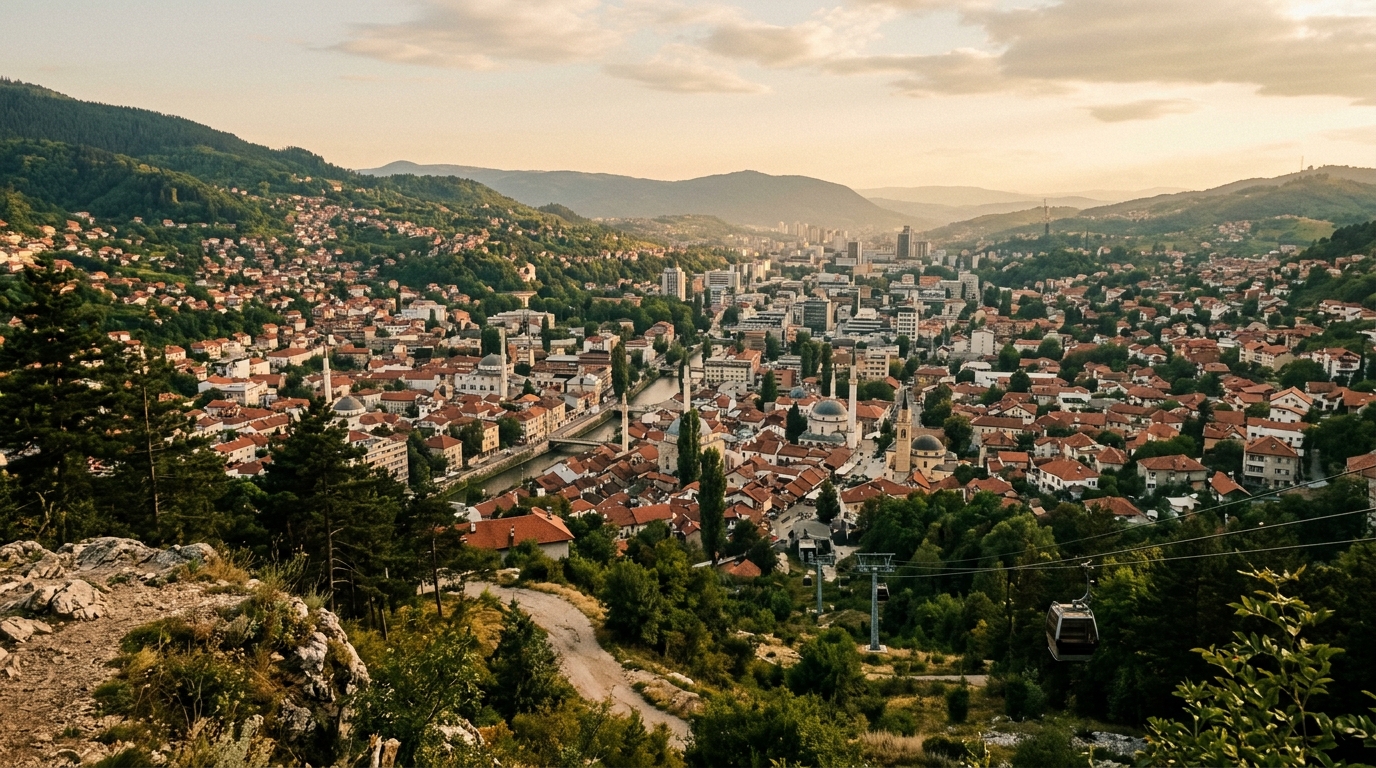
Sarajevo is covered in full in our Heart of the Balkans route. The essentials for two days: Bascarsija bazaar (Ottoman heart of the city, cevapi at Zeljo or Hodza), Latin Bridge (Franz Ferdinand assassination site), Tunnel of Hope (siege history, EUR 5), and the Trebevic Cable Car with the abandoned Olympic bobsled track at the top.
Sarajevo is one of the most emotionally complex cities in Europe. The Ottoman, Austro-Hungarian, Yugoslav, and wartime layers are all visible within a 15-minute walk, and the city does not hide any of them. Two days gives you the physical sights. Understanding what happened here takes longer, and the city is patient about that.
Tip: Bosnian convertible marks (BAM) are pegged to the euro at roughly 2:1. ATMs are everywhere in Sarajevo. Some restaurants in tourist areas accept euros, but at unfavorable rates.
Days 11-12: Mostar
The Sarajevo-to-Mostar drive (130 km, about 2.5 hours) follows the Neretva River through a canyon that narrows and deepens as you head south. The road is two-lane, winding, and increasingly dramatic – the river below shifts from green to turquoise, and the limestone walls rise on both sides. This is one of the best driving stretches in Bosnia, and the temptation to stop at every layby is real.
Mostar exists in the imagination of most travelers as a single image: the Stari Most (Old Bridge), a 16th-century Ottoman arch spanning the Neretva 24 meters above the water. The bridge was destroyed in 1993 during the Bosnian War and rebuilt in 2004 using the same local stone and Ottoman construction techniques. It is a UNESCO World Heritage Site and, more than that, a symbol of something that the city is still working out.
The bridge divers are part of the Mostar experience. Local men have been jumping from the bridge for centuries, and the tradition continues as a paid spectacle – they collect money from tourists until the amount is sufficient (usually EUR 25-30 in the bucket), then leap. The 24-meter fall into cold river water is not something we recommend attempting.
The Old Town on both sides of the bridge is a compact area of Ottoman houses, coppersmith workshops, rug shops, and restaurants. The Koski Mehmed Pasha Mosque (EUR 3) has a minaret you can climb for the best view of the bridge. The Crooked Bridge (Kriva Cuprija), a smaller Ottoman bridge 200 meters upstream, is less famous and more peaceful.
Day Trips from Mostar
| Destination | Distance | Drive Time | Highlights |
|---|---|---|---|
| Kravice Waterfalls | 40 km | 45 min | 25m cascade into swimming pool, EUR 7 entry |
| Blagaj Tekke | 12 km | 15 min | Dervish monastery at river source, built into cliff |
| Pocitelj | 30 km | 25 min | Fortified medieval village above Neretva |
| Stolac | 35 km | 30 min | Radimlja necropolis (medieval tombstones) |
Kravice Waterfalls deserve the half-day. The Trebizat River drops 25 meters in a wide crescent into a natural swimming pool surrounded by trees. In summer, you can swim at the base of the falls. Entry is EUR 7 and there is a bar – which is the kind of detail that makes Bosnia genuinely lovable.
Blagaj Tekke is a 16th-century Dervish monastery built into a cliff at the source of the Buna River. The turquoise water emerges from a cave at the base of a 200-meter rock face, and the monastery hangs above it. It is one of the most photogenic sites in Bosnia and takes 30 minutes to visit.
| Mostar Costs | Price |
|---|---|
| Stari Most walk | Free |
| Koski Mehmed Pasha Mosque + minaret | EUR 3 |
| Cevapi at Tima-Irma | EUR 3-5 |
| Kravice Waterfalls entry | EUR 7 |
| Blagaj Tekke entry | EUR 3 |
| Apartment in Old Town | EUR 30-50/night |
The Stari Most looks best in late afternoon light, when the stone turns warm and the shadows from the surrounding buildings create depth. Photograph it from the east bank for the classic angle, from the west bank for the less-seen perspective.
Days 13-14: Dubrovnik
The Mostar-to-Dubrovnik drive (140 km, about 2.5 hours) crosses from Bosnia into Croatia at the Metkovic border (15-20 minutes typical). The road follows the Neretva valley south through a landscape of fruit orchards and vineyards before hitting the Croatian coast.
Dubrovnik is the finale, and it knows how to play the part. The limestone walls, the terracotta rooftops, the Adriatic stretching south to nothing – after two weeks of inland mountains, the first sight of it from the coastal road above the city is the kind of moment that makes the entire trip click.
City walls walk (EUR 35, 1.5-2 hours) – do it early morning. Mount Srd cable car (EUR 27 return) – late afternoon for sunset. Lokrum Island (EUR 20 return boat, 15 min) – for swimming, botanical gardens, and quiet. The Old Town streets between these activities are for coffee, ice cream, and accepting that EUR 5 for a cappuccino is the price of sitting inside a UNESCO site.
Two days in Dubrovnik is the right amount: enough to see the essential sights without the claustrophobia that sets in when cruise ship passengers outnumber residents (which happens by 10 AM on busy days).
| Dubrovnik Costs | Price |
|---|---|
| City walls walk | EUR 35 |
| Mount Srd cable car | EUR 27 |
| Lokrum Island boat | EUR 20 |
| Coffee in Old Town | EUR 3-5 |
| Apartment in Lapad/Gruz | EUR 70-110/night |
| Dinner in Old Town | EUR 25-40 |
Tip: Stay in Lapad or Gruz, not inside the Old Town walls. The price difference is 40-60%, the bus takes 15 minutes, and you will sleep better without the noise of the Stradun pedestrian traffic below your window.
Budget Breakdown
| Category | Daily Estimate | 14-Day Total |
|---|---|---|
| Accommodation (2 people) | EUR 40-75 | EUR 560-1,050 |
| Fuel (~1,500 km) | – | EUR 170-220 |
| Tolls (Bulgaria vignette + Serbia + Croatia) | – | EUR 30-50 |
| Food (restaurants + groceries) | EUR 25-45 | EUR 350-630 |
| Activities & entrance fees | EUR 10-20 | EUR 140-280 |
| Parking (various cities) | – | EUR 50-80 |
| Total per person | – | EUR 1,200-2,000 |
The cost gradient on this route is dramatic. Bulgaria and Bosnia are among the cheapest countries in Europe for travelers. Serbia is moderate. Dubrovnik is expensive by any standard. Plan your splurges accordingly – save on accommodation in Sofia and Plovdiv, spend on that walls walk in Dubrovnik.
Practical Information
Car Rental
Rent in Sofia and drop off in Dubrovnik. One-way fees for this four-country crossing run EUR 200-400 depending on the agency. The key constraint is finding an agency that covers all four countries on the insurance. Some Bulgarian agencies restrict cross-border travel – confirm Bulgaria, Serbia, Bosnia, and Croatia are all listed on the rental agreement before you drive off the lot. See our car rental guide for agencies that handle multi-country Balkan rentals.
A standard car handles the entire route. The roads are paved throughout, and the Bosnian mountain sections, while winding, are well-maintained two-lane roads.
Currencies
Four countries, three currencies:
- Bulgaria: Bulgarian Lev (BGN), pegged to EUR at ~1.95:1
- Serbia: Serbian Dinar (RSD), ~117:1 EUR
- Bosnia: Convertible Mark (BAM), pegged to EUR at ~1.95:1
- Croatia: Euro (EUR)
ATMs are everywhere in cities. Keep some cash for rural fuel stations and small restaurants.
Best Time to Drive
May to mid-June and September-October are ideal. Summer (July-August) brings 35-40C heat to the inland sections and serious crowds to Dubrovnik. The Shipka Pass day trip is best in clear weather.
Documents
- Valid passport
- Driving license (EU works everywhere; non-EU carry IDP)
- Green Card covering all four countries
- Rental agreement explicitly listing all four countries
- Bulgarian e-vignette (purchased online at bgtoll.bg)
Read our driving guide for country-by-country rules and our border crossings guide for crossing details.
What to Drive Next
From Dubrovnik, the Adriatic Coast continues south through Montenegro and Albania. The Belgrade to Dubrovnik route covers the Serbia-Bosnia-Croatia section of this itinerary in more depth with alternative stops. Or fly home from Dubrovnik and start planning the next one – the Transylvania Loop connects neatly from Sofia if you reverse your starting point.