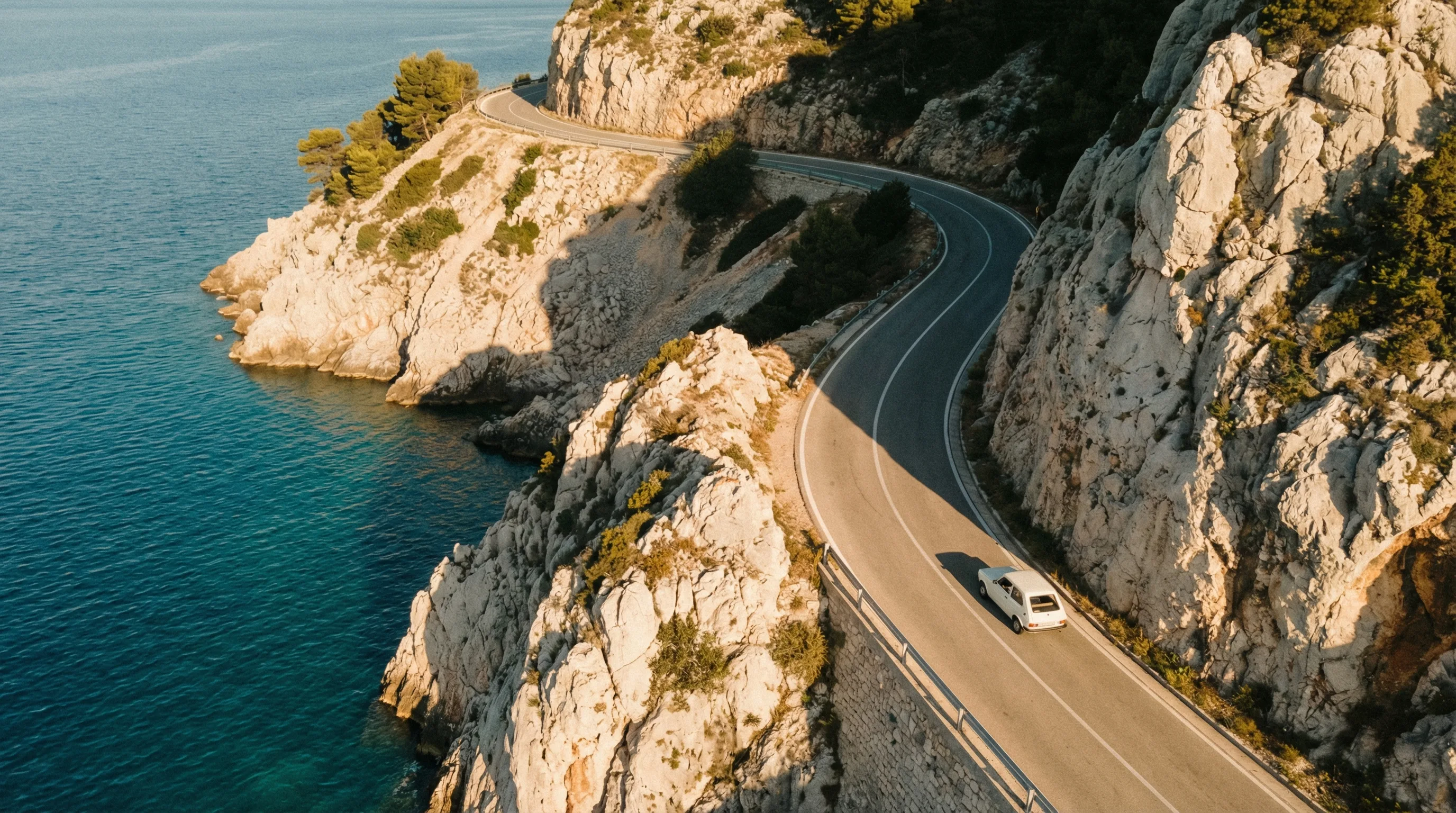
Belgrade to Dubrovnik
We left Belgrade on a Friday morning with rakija-flavored memories of the previous night’s Skadarlija dinner and a GPS showing 700 km to Dubrovnik. Eight days later, standing on the limestone walls of Dubrovnik watching the Adriatic turn gold at sunset, the distance felt less like geography and more like time travel. Belgrade is Balkan maximalism – loud, late-night, unapologetic. Dubrovnik is Mediterranean composure – marble, light, expensive coffee. The 700 km between them contain Serbian mountains, Bosnian canyons, Ottoman bridges, a city that survived the longest siege in modern European history, and a medieval bridge that men jump off for tips. It is not the shortest road trip in the Balkans. It might be the most concentrated.
This route connects two of the region’s most compelling cities through the interior rather than the coast. Every stop between Belgrade and Dubrovnik has a story that matters – not in a guidebook sense, but in the way that a bridge can carry the weight of a Nobel Prize novel, or a tunnel under an airport can represent the difference between survival and surrender.
Route Overview
| Segment | Distance | Drive Time | Border Crossing |
|---|---|---|---|
| Belgrade to Zlatibor/Mokra Gora | 230 km | 3.5 hours | – |
| Mokra Gora to Visegrad | 35 km | 45 min | Serbia-Bosnia |
| Visegrad to Sarajevo | 190 km | 3.5 hours | – |
| Sarajevo to Mostar | 130 km | 2.5 hours | – |
| Mostar to Dubrovnik | 140 km | 2.5 hours | Bosnia-Croatia |
| Total | ~700 km | ~13 hours driving | 2 |
Tip: Both border crossings on this route are among the easiest in the Balkans. The Serbia-Bosnia crossing at Vardiste is often deserted. The Bosnia-Croatia crossing at Metkovic is busier but rarely takes more than 20 minutes, even in summer. Keep documents ready: passport, license, Green Card, rental agreement.
Days 1-2: Belgrade
Serbia’s capital is not a city that reveals itself to people in a hurry, which is convenient because Belgrade itself is never in a hurry. The city operates on its own clock – one where dinner starts at 9 PM, coffee takes an hour, and the question “should we go out tonight?” has only one answer.
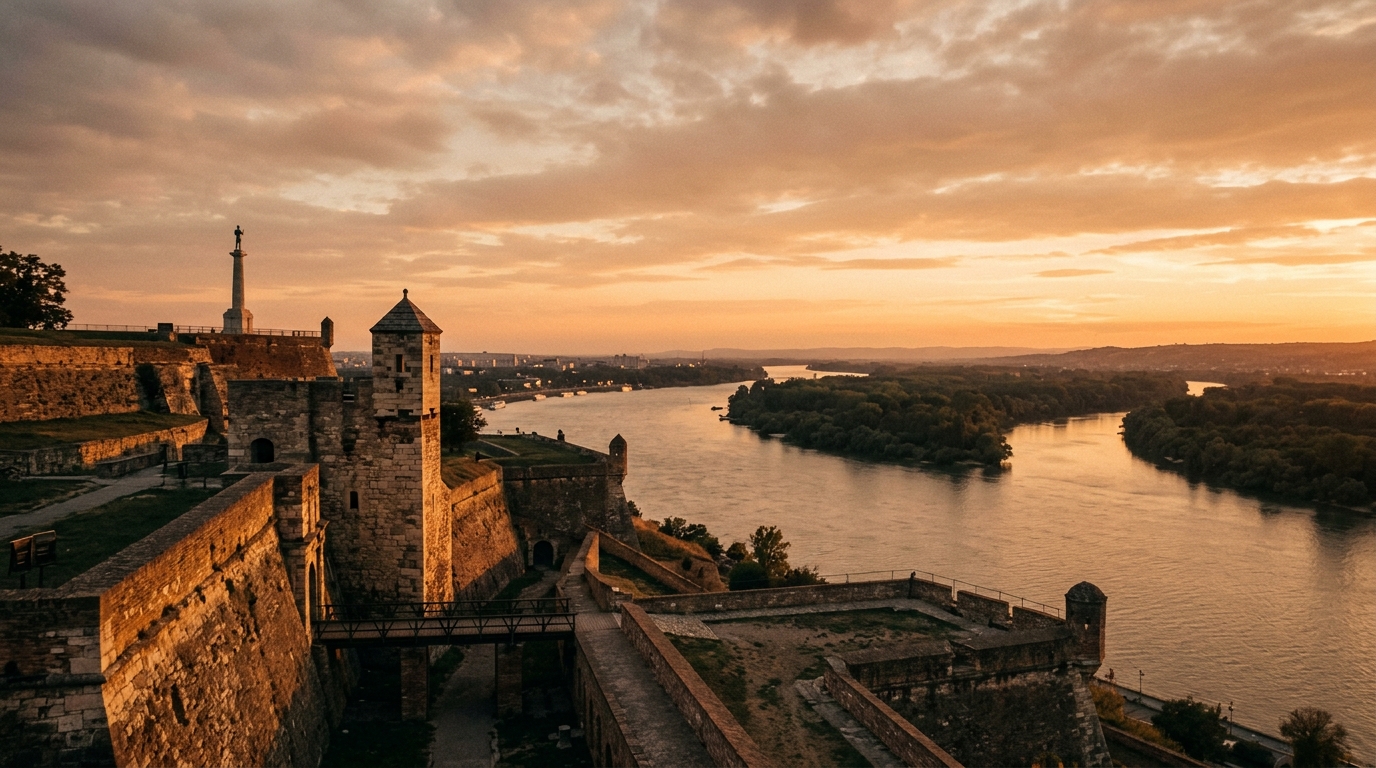
Kalemegdan Fortress is where Belgrade begins – literally (the Romans built the first fortification here) and practically (every visitor ends up on the walls watching the Sava flow into the Danube). The fortress complex is part park, part ruins, part military museum, and entirely the best place in the city to watch the sun set over the plains of Vojvodina to the north.
Walk from Kalemegdan down Knez Mihailova, the main pedestrian street, to the Temple of Saint Sava – one of the largest Orthodox churches in the world. The recently completed interior mosaic, executed in gold and covering the main dome, took over 30 years to finish and is genuinely awe-inspiring regardless of your religious alignment.
On day two, choose between cultural Belgrade and recreational Belgrade:
Cultural: Walk Skadarlija, the bohemian quarter – a cobbled street of Serbian restaurants where live musicians play and the rakija flows with concerning generosity. Visit the National Museum (free, excellent collection) and the Nikola Tesla Museum (EUR 3, interactive exhibits about Serbia’s most famous inventor).
Recreational: Head to Ada Ciganlija, a river island turned urban beach where half of Belgrade swims, cycles, and barbecues in summer. It is free, huge, and the most convincing argument that Belgrade is a livable city rather than just a fun one.
| Belgrade Costs | Price |
|---|---|
| Kalemegdan Fortress | Free |
| Temple of Saint Sava | Free |
| Nikola Tesla Museum | EUR 3 |
| Skadarlija dinner for two | EUR 20-30 |
| Coffee on Knez Mihailova | EUR 1.50-2.50 |
| Apartment in Dorcol/Vracar | EUR 40-70/night |
| Night at splavovi (floating bars) | EUR 10-30 |
Tip: Belgrade parking is zoned and metered in the center. The easiest option is a parking garage (EUR 1-2/hour) near your accommodation. Street parking requires sending an SMS to a specific number per zone – your host can explain the system, which was clearly designed by someone who enjoys complexity.
Serbian Food Primer
Serbian food is the Balkans’ most generous. A pljeskavica (spiced meat patty the size of a dinner plate), cevapi (minced meat sausages in somun bread), karadjordjeva snicla (rolled, stuffed, breaded cutlet), and shopska salad form the core canon. Portions are enormous. Prices are small. A full meal with beer for two at a grill restaurant rarely exceeds EUR 15.
For a step up, Zavicaj near the parliament serves traditional Serbian dishes with a slower pace and better wine. Comunale in Dorcol does modern Balkan food. Ambar on the waterfront is the upscale option with river views.
Belgrade is the city where you say “one more drink” and mean it, and then say it again, and then it is 3 AM and someone is ordering grilled meat from a street vendor. You have been warned.
Day 3: Belgrade to Zlatibor and Mokra Gora
The drive southwest from Belgrade to Zlatibor (230 km, about 3.5 hours) follows the E763, which is partly motorway and partly a decent two-lane road through the Serbian countryside. The landscape shifts from the flat Danube plain into rolling hills and then proper mountains as you approach western Serbia.
Zlatibor is Serbia’s most popular mountain resort – a highland plateau at 1,000 meters with hotels, hiking trails, and a cable car (the “Gold Gondola,” 9 km long, EUR 8 return) connecting the resort area to the surrounding peaks. If the mountains are not calling, the town itself is pleasant for a lunch stop and a walk.
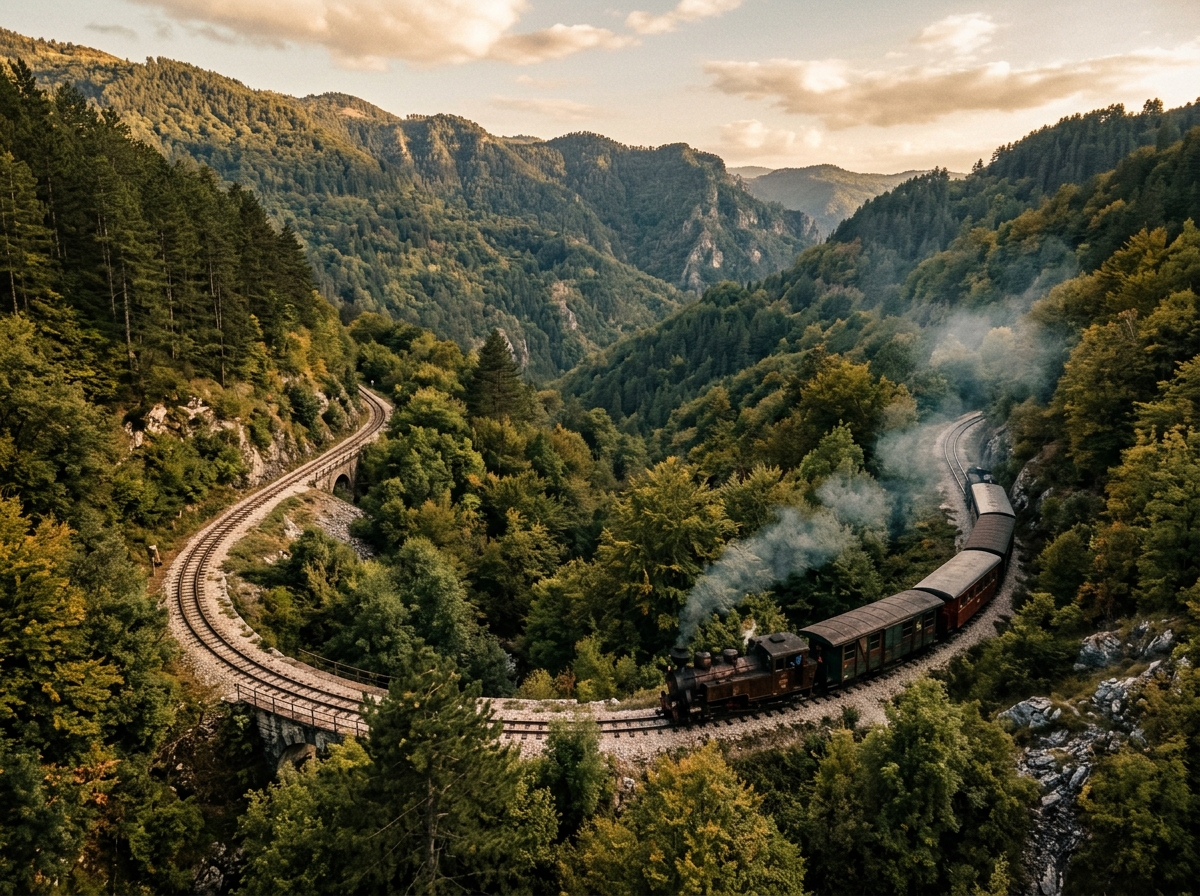
The real draw is 30 km south at Mokra Gora, where the Sargan Eight (Sargan Osmica) railway takes you on a 2.5-hour ride through the mountain on a narrow-gauge line that climbs 300 meters via tunnels and figure-eight loops. The railway was built in 1925, abandoned in the 1970s, and restored as a heritage line. Tickets cost EUR 8, and the ride is genuinely enjoyable – slow enough to photograph the canyon, theatrical enough to feel like an event.
At the top of the railway sits Drvengrad (Kustendorf), Emir Kusturica’s constructed timber village – part film set, part hotel, part cultural statement. The traditional Serbian houses were relocated from around the country and reassembled here. The annual Kusturica Film Festival draws an international crowd. Even without the festival, the village is worth an hour’s walk and a coffee.
If the afternoon is clear, drive 30 minutes north to the Banjska Stena viewpoint in Tara National Park. The lookout sits 1,000 meters above the Drina River, and the view down into the forested canyon is one of the best in Serbia. The drive through the park passes the famous Drina River House (Kucica na Drini) – a tiny house built on a rock in the middle of the river, photographed a million times and still worth seeing.
| Zlatibor / Mokra Gora | Distance from Belgrade | Highlight |
|---|---|---|
| Zlatibor resort | 230 km | Gold Gondola, hiking trails |
| Mokra Gora (Sargan Eight) | 260 km | Heritage railway, canyon views |
| Drvengrad (Kustendorf) | 263 km | Kusturica’s timber village |
| Banjska Stena viewpoint | 250 km | Tara National Park, Drina canyon panorama |
Tip: The Sargan Eight railway runs several times daily in summer but has a reduced schedule in spring and fall. Check the timetable at sfrj.rs before driving out. Book ahead in August when the trains fill up.
Day 4: Visegrad
Cross into Bosnia at the Vardiste border – a crossing so quiet that our border officer seemed personally grateful for the company. From the border, Visegrad is 15 km down the road.
Visegrad is a small Bosnian town that looms large in literary and historical terms. The Mehmed Pasa Sokolovic Bridge, a UNESCO World Heritage Site, spans the Drina River with 11 elegant stone arches. Built in 1577 by Mimar Sinan (the Ottoman Empire’s greatest architect) at the request of Grand Vizier Mehmed Pasa Sokolovic (who was born in the area), the bridge is the physical centerpiece of Ivo Andric’s Nobel Prize novel “The Bridge on the Drina.”
Walk across the bridge. Sit on the stone sofa (kapia) at the midpoint – the raised platform with built-in benches where, in Andric’s novel, the townspeople gathered to trade news, drink coffee, and watch the river. The Drina below is green, wide, and slow here, and the view up and downstream is the kind of thing that makes you understand why someone wrote 300 pages about a bridge.
Andricgrad, next to the old bridge, is Emir Kusturica’s second constructed town on this route – a stone-and-tile complex of buildings in a mix of architectural styles, built as a cultural center. It has a cinema, a library, restaurants, and the slightly surreal quality of everything Kusturica touches. Have lunch here, browse the bookshop, and then walk back across the bridge one more time because once was not enough.
Stay in Visegrad overnight (guesthouses EUR 25-40) or push on toward Sarajevo if you want to arrive before dark. The Visegrad-to-Sarajevo road is beautiful but slow, and not ideal after sunset.
Tip: Rafting on the Drina from Visegrad is excellent (EUR 20-30 for a half-day trip). The canyon section upstream of the bridge, with cliffs rising on both sides and the water running between forested hills, is one of the best half-day outdoor experiences on this route. Operators run trips from May through September.
Days 5-6: Sarajevo
The drive from Visegrad to Sarajevo (190 km, about 3.5 hours) follows the Drina valley south before turning west into the mountains. The road is two-lane, winding, and passes through a landscape that alternates between river valleys, mountain passes, and small towns where the minarets and church steeples stand side by side – the Bosnian religious coexistence that is genuine and complicated in equal measure.
Sarajevo deserves two days and probably more. The city is covered in full in our Heart of the Balkans route, but here is the essential itinerary:
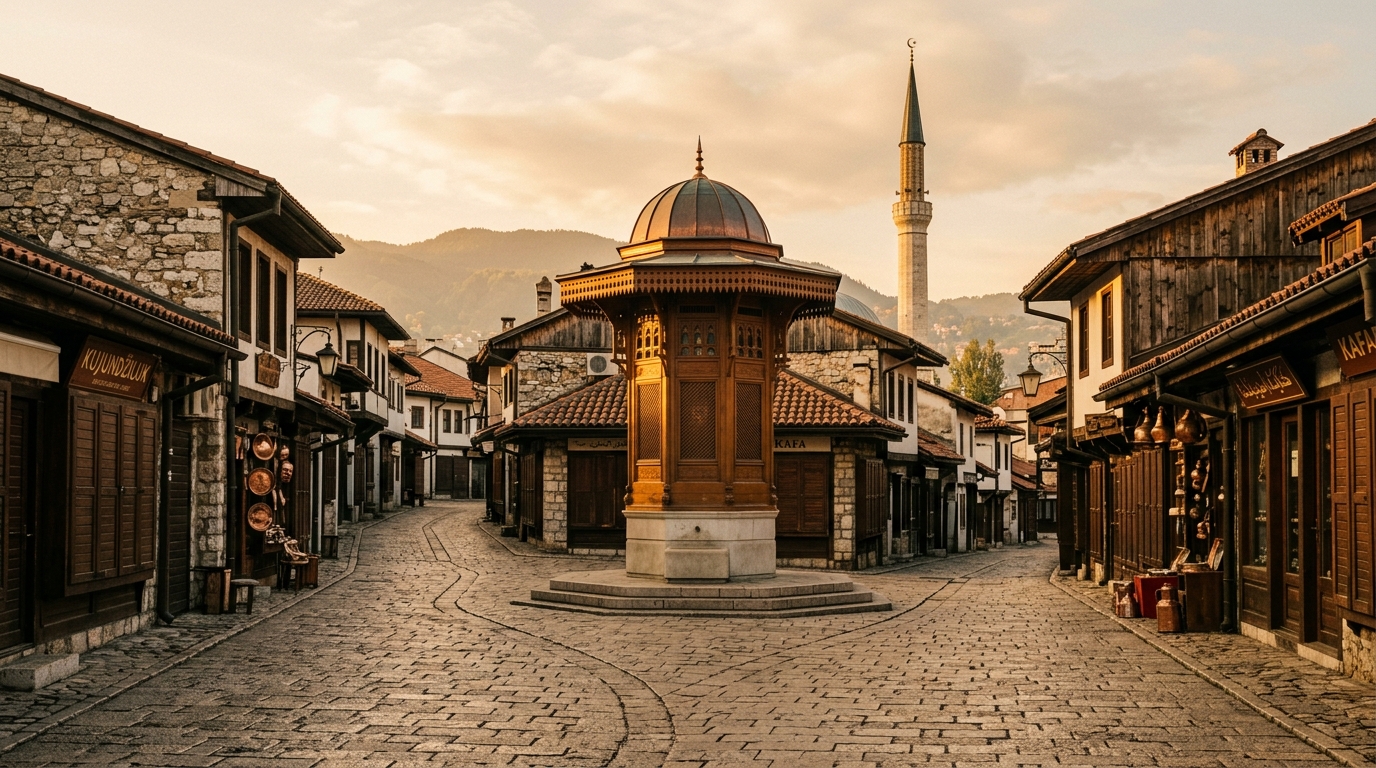
Day 5: Ottoman and Austro-Hungarian Sarajevo. Walk Bascarsija (the Ottoman bazaar), drink Bosnian coffee on a copper tray at a traditional kafana, see the Latin Bridge (Franz Ferdinand, 1914, the shot that started WWI), and walk west along the main street to watch the architecture shift from Ottoman to Habsburg within ten blocks. Eat cevapi at Zeljo or Hodza (EUR 3-5 for a full portion).
Day 6: Siege and recovery. Visit the Tunnel of Hope (EUR 5) – the 800-meter tunnel under the airport that was Sarajevo’s lifeline during the 1992-1996 siege. Take the Trebevic Cable Car up the mountain above the city, walk to the abandoned Olympic bobsled track from 1984, and sit with the contrast between the Winter Olympics and the siege for as long as you need. The War Childhood Museum (EUR 6) in the center tells the story of the siege through objects donated by people who were children during it – a pair of shoes, a school notebook, a UN ration can repurposed as a toy. It is small, powerful, and necessary.
| Sarajevo Costs | Price |
|---|---|
| Bascarsija cevapi | EUR 3-5 |
| Bosnian coffee | EUR 1-2 |
| Tunnel of Hope | EUR 5 |
| Trebevic Cable Car (return) | EUR 10 |
| War Childhood Museum | EUR 6 |
| Latin Bridge | Free |
| Apartment in center | EUR 30-50/night |
Sarajevo is the city that makes you reconsider what you thought you knew about the Balkans. It is warm, complicated, delicious, and scarred – and it would rather you stay for another coffee than leave to check another sight off a list.
Day 7: Sarajevo to Mostar
The Sarajevo-to-Mostar drive (130 km, about 2.5 hours) follows the Neretva River south through a canyon that deepens with every kilometer. The road is two-lane and winding, but well-maintained and endlessly scenic. The river below shifts from green to turquoise, and the limestone walls press in from both sides. This stretch alone justifies renting a car instead of taking the bus.
Mostar is the bridge. Everyone comes for the Stari Most (Old Bridge), a 16th-century Ottoman arch that spans the Neretva 24 meters above the water. It was destroyed in 1993, rebuilt in 2004, and is now a UNESCO World Heritage Site and the most photographed structure in Bosnia. The bridge divers – local men who collect money from tourists before making the 24-meter leap – have been jumping for centuries. The water is cold. The drop is real. Watching is enough.
The Old Town on both sides of the bridge is compact and walkable: coppersmith workshops, rug shops, the Koski Mehmed Pasha Mosque (EUR 3, climb the minaret for the best bridge view), and restaurants serving grilled meat and river trout. The Crooked Bridge (Kriva Cuprija), a smaller Ottoman bridge upstream, is less famous and more peaceful.
Use the afternoon for day trips:
Kravice Waterfalls (40 km south, 45 minutes): The Trebizat River drops 25 meters in a horseshoe cascade into a natural swimming pool. Entry EUR 7. Bring a swimsuit.
Blagaj Tekke (12 km south, 15 minutes): A Dervish monastery built into a cliff face at the source of the Buna River. The turquoise water emerges from a cave, and the monastery hangs above it. EUR 3 entry, 30 minutes, unforgettable.
| Mostar & Day Trips | Distance | Highlight |
|---|---|---|
| Stari Most + Old Town | In center | Bridge, bazaar, mosque minaret view |
| Kravice Waterfalls | 40 km south | Swimming under a 25m cascade |
| Blagaj Tekke | 12 km south | Dervish monastery at river source |
| Pocitelj | 30 km south | Fortified medieval hillside village |
Tip: Mostar accommodation is remarkably cheap. A restored Ottoman-style room in the Old Town runs EUR 30-50 per night. The evening atmosphere, after the day-trippers leave, is when the town belongs to itself again – quieter, warmer, and worth a slow walk across the bridge.
Day 8: Mostar to Dubrovnik
The final drive (140 km, about 2.5 hours) follows the Neretva valley south through fruit orchards and vineyards before crossing into Croatia at the Metkovic border. The crossing takes 15-20 minutes on a normal day. From the border, the road meets the Croatian coast and turns south toward Dubrovnik.
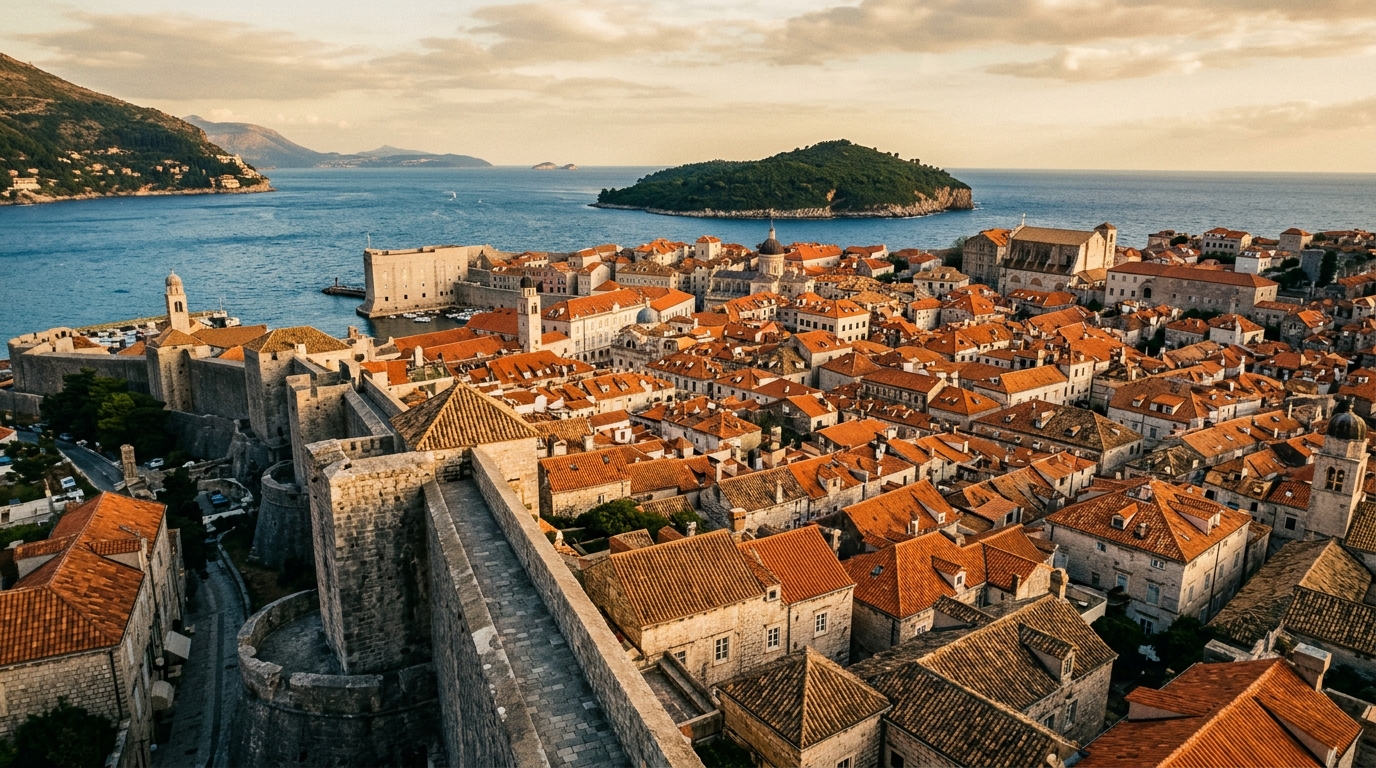
Dubrovnik needs two days properly, but if this is your final day, prioritize ruthlessly:
City walls walk (EUR 35, start early morning before the cruise ships dock). The 2 km circuit around the top of the walls takes 1.5-2 hours and gives you Dubrovnik from every angle – the Adriatic on one side, the Old Town below, Fort Lovrijenac ahead.
If you arrive early enough, add the Mount Srd cable car (EUR 27 return) for the aerial view, or a boat to Lokrum Island (EUR 20 return, 15 min) for swimming and quiet.
Dubrovnik is expensive – the most expensive stop on this route by a wide margin. A coffee that costs EUR 1.50 in Belgrade costs EUR 4 here. A dinner that costs EUR 10 in Sarajevo costs EUR 30. Accept this as the price of ending your trip inside a UNESCO site with the Adriatic stretching to the horizon.
| Dubrovnik Costs | Price |
|---|---|
| City walls walk | EUR 35 |
| Mount Srd cable car | EUR 27 |
| Lokrum Island boat | EUR 20 |
| Coffee in Old Town | EUR 3-5 |
| Dinner in Old Town | EUR 25-40 |
| Apartment in Lapad/Gruz | EUR 70-110/night |
Tip: If you are returning a rental car in Dubrovnik, the airport is 22 km from the Old Town. Most agencies have offices both at the airport and in Gruz harbor. Drop off at Gruz if your flight is not until the next day – it is closer to the Old Town and to cheaper accommodation.
Budget Breakdown
| Category | Daily Estimate | 8-Day Total |
|---|---|---|
| Accommodation (2 people) | EUR 40-70 | EUR 320-560 |
| Fuel (~700 km) | – | EUR 80-110 |
| Tolls (Serbia + Croatia) | – | EUR 15-25 |
| Food (restaurants + groceries) | EUR 25-40 | EUR 200-320 |
| Activities & entrance fees | EUR 10-20 | EUR 80-160 |
| Parking (various cities) | – | EUR 40-60 |
| Total per person | – | EUR 800-1,400 |
The cost curve on this route is steep and directional. Belgrade and the Serbian stops are moderate. Bosnia is genuinely cheap. Dubrovnik doubles or triples the daily budget. If you are watching costs, splurge on accommodation in Sarajevo (the restored Ottoman rooms are special) and economize in Dubrovnik by staying in Lapad or Gruz.
Practical Information
Car Rental
Rent in Belgrade and drop off in Dubrovnik. One-way fees for this three-country route are typically EUR 150-300. The key insurance requirement is Bosnia – not all agencies cover it automatically. Confirm that Serbia, Bosnia, and Croatia are listed on your rental agreement and Green Card before departing. See our car rental guide for agencies that handle multi-country Balkan rentals.
A standard car (Golf, Octavia, Clio) handles every road on this route. There are no mountain passes that require ground clearance, and the Bosnian roads, while winding, are paved and maintained.
Currencies
Three countries, two currencies plus the euro:
- Serbia: Serbian Dinar (RSD), ~117:1 EUR
- Bosnia: Convertible Mark (BAM), pegged at ~1.95:1 EUR
- Croatia: Euro (EUR)
ATMs are everywhere in cities. Bosnia and Serbia prefer cash at smaller establishments. Croatia takes card everywhere.
Best Time to Drive
May to mid-June and September are ideal. Summer (July-August) brings heat inland (35-40C) and crowds in Dubrovnik. October is still pleasant – the Bosnian sections are beautiful in autumn colors, and Dubrovnik is quieter.
Documents
- Valid passport
- Driving license (EU works everywhere; non-EU carry IDP)
- Green Card covering Serbia, Bosnia, and Croatia
- Rental agreement listing all three countries
- Serbian motorway tolls: pay at stations, card or cash
Read our driving guide for country-by-country rules and our border crossings guide for crossing details.
What to Drive Next
From Dubrovnik, the Adriatic Coast continues south through Montenegro and Albania. Reverse this route and extend it with the Black Sea to Adriatic crossing from Sofia through Belgrade. Or head north from Dubrovnik along the Slovenia to Montenegro route in reverse, up the Dalmatian coast to Ljubljana.