Heart of the Balkans: Sarajevo to Ohrid
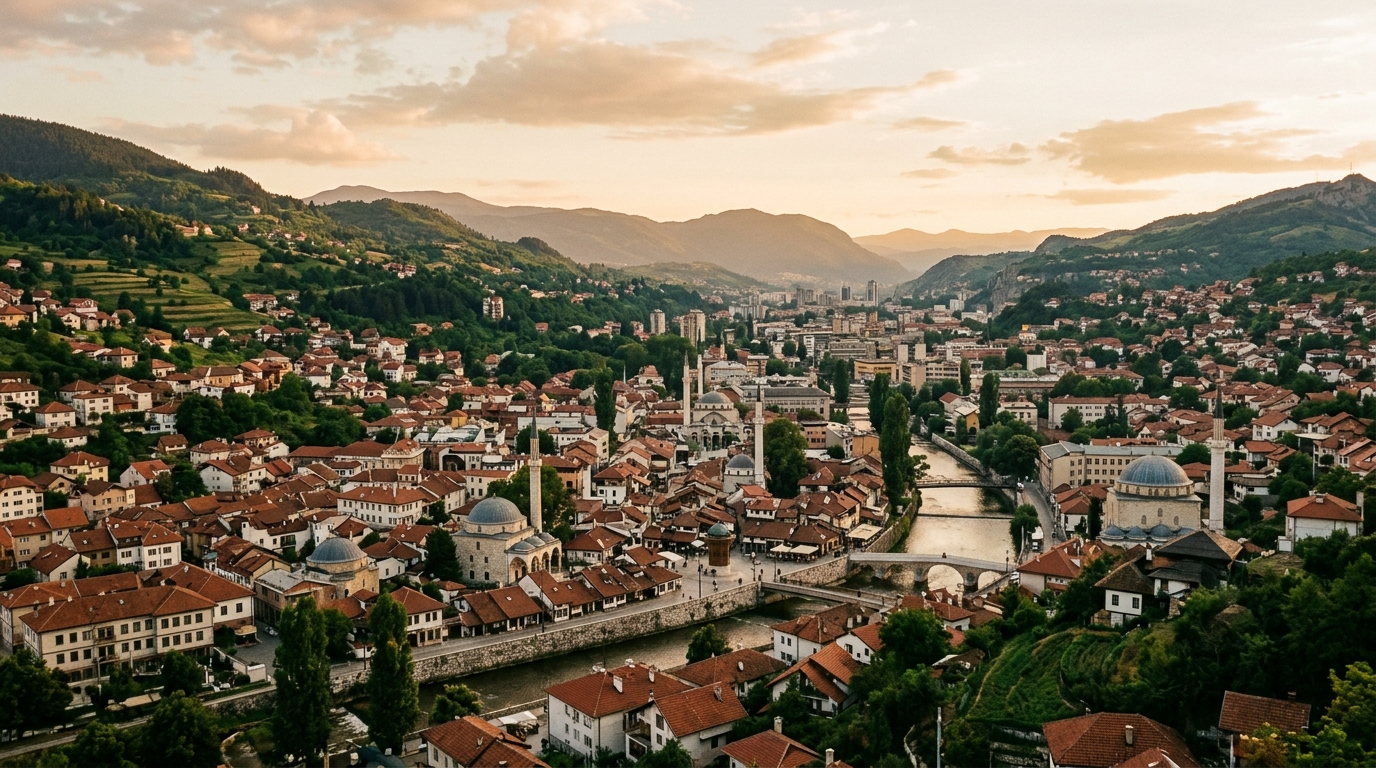
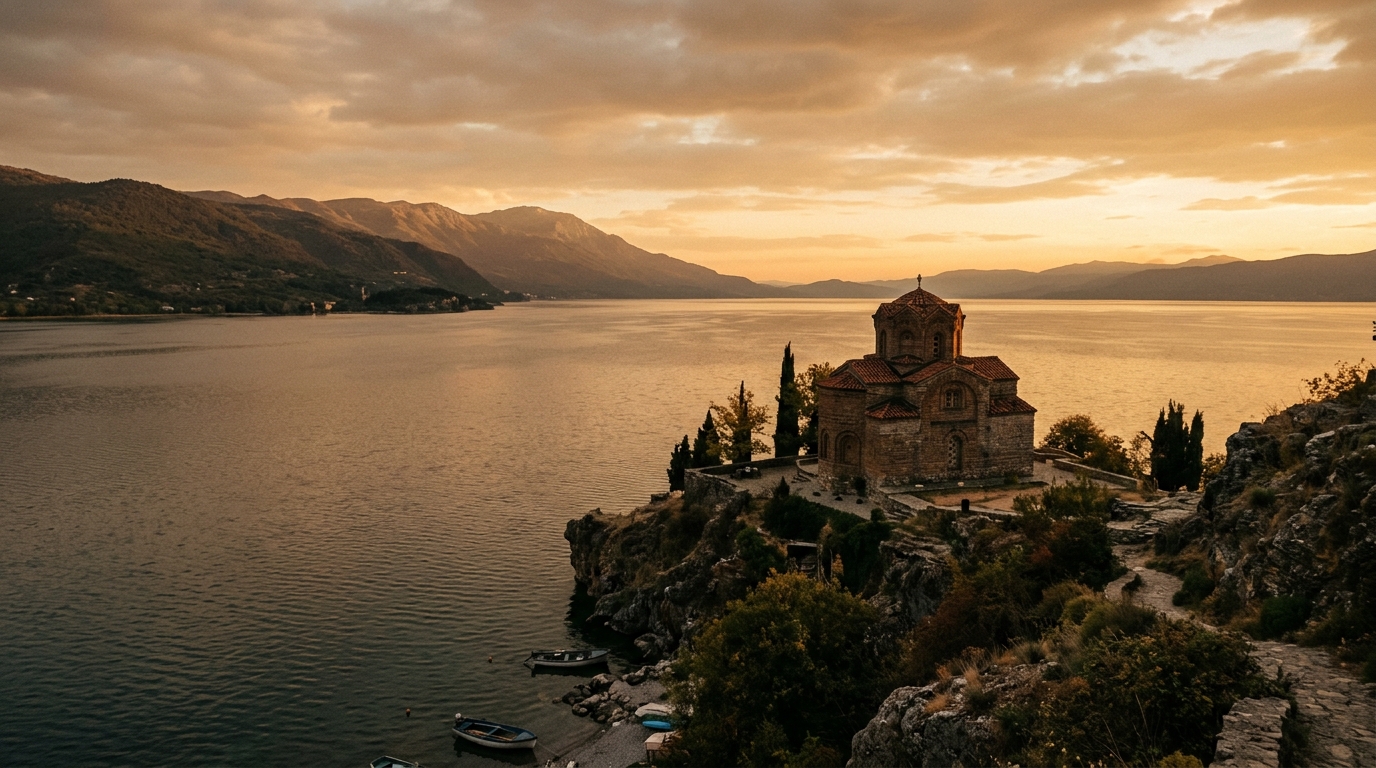
The minaret call echoed across the Miljacka River as we finished our second Bosnian coffee of the morning in Bascarsija, Sarajevo’s Ottoman bazaar. Ten days and 900 km later, we were sitting on a stone wall above Lake Ohrid watching the sun drop behind the Albanian mountains, with the little cliff church of St. John at Kaneo glowing pink below us. Between those two coffees lay three countries, two borders, an Ottoman bridge that won a Nobel Prize, a narrow-gauge railway that loops over itself, a canyon you can kayak through, and enough cevapi to fuel a small army.
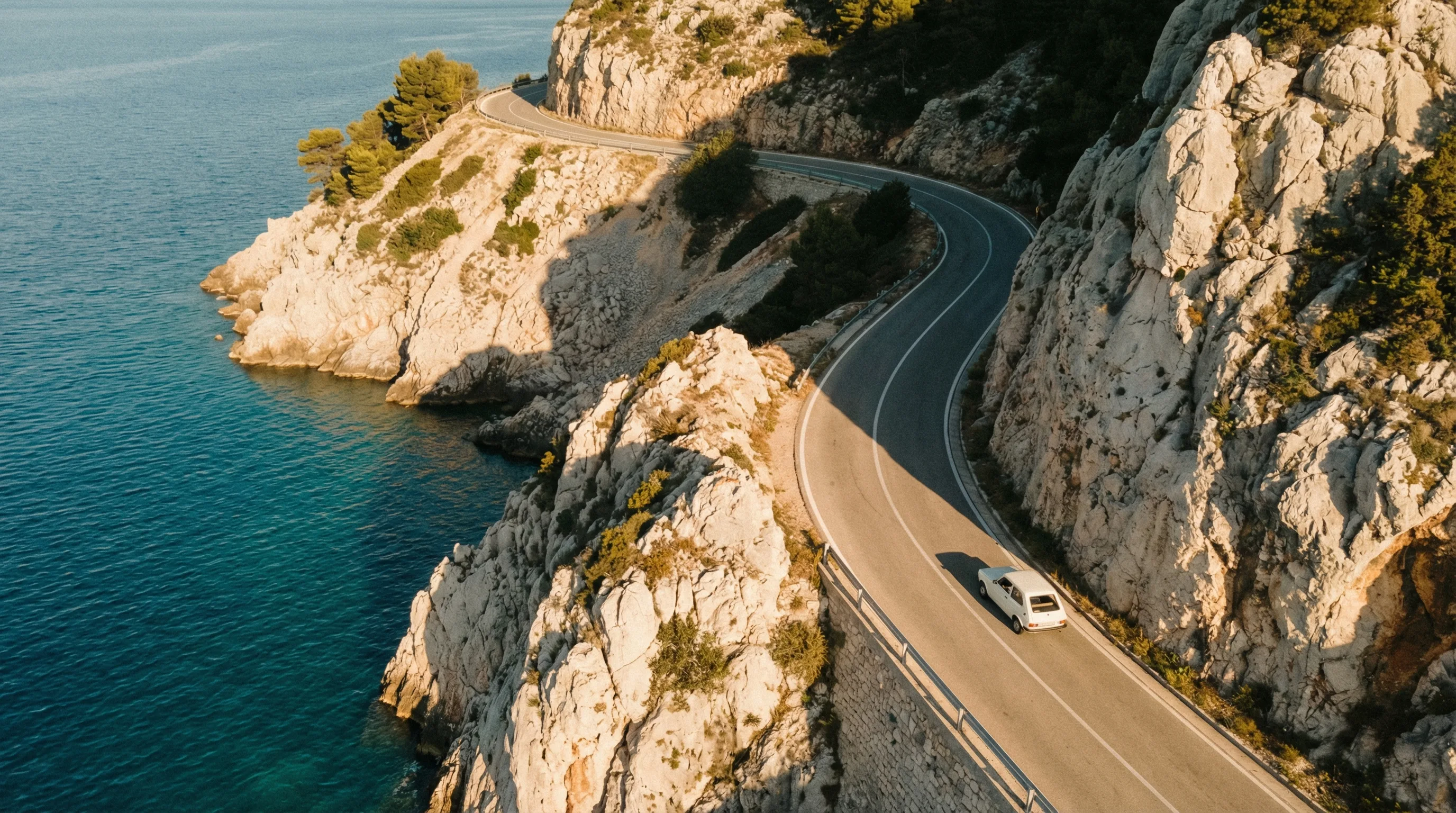
This is the Balkans’ inland route – the one that skips the coast entirely and goes through the mountains instead. No beach crowds, no marina prices, no fighting for parking in Dubrovnik. Just Ottoman stone, Serbian monasteries, Macedonian lakes, and roads that wind through valleys where the GPS signal gives up before you do.
Route Overview
| Segment | Distance | Drive Time | Border Crossing |
|---|---|---|---|
| Sarajevo to Visegrad | 190 km | 3.5 hours | – |
| Visegrad to Mokra Gora | 35 km | 45 min | Bosnia-Serbia |
| Mokra Gora to Nis | 310 km | 4.5 hours | – |
| Nis to Skopje | 200 km | 3.5 hours | Serbia-North Macedonia |
| Skopje to Mavrovo | 75 km | 1.5 hours | – |
| Mavrovo to Ohrid | 90 km | 2 hours | – |
| Total | ~900 km | ~16 hours driving | 2 |
Tip: Both border crossings on this route (Bosnia-Serbia and Serbia-North Macedonia) are among the least congested in the Balkans. Even in peak summer, expect 10-20 minutes. Carry your passport, license, Green Card, and rental agreement in one folder.
Days 1-2: Sarajevo
Bosnia does not ease you in gently. Sarajevo is a city that has been Ottoman, Austro-Hungarian, Yugoslav, besieged, and rebuilt, and all of those layers are visible within a 20-minute walk. The result is a place that feels more complex per square meter than almost anywhere else in Europe.
Start in Bascarsija, the Ottoman bazaar quarter that dates to the 15th century. The Sebilj fountain in the central square is the traditional meeting point. The surrounding streets are a tight grid of copper workshops, rug shops, and kafanas (traditional coffeehouses) where the coffee comes in a small pot on a copper tray with a sugar cube and a glass of water. The ritual matters more than the caffeine, and refusing a second cup is considered mildly insulting.
Walk east along the Miljacka River to the Latin Bridge – the spot where Gavrilo Princip shot Archduke Franz Ferdinand in 1914 and started a chain of events that reshaped the continent. The bridge is small and the plaque is modest, which somehow makes the history feel heavier.
On day two, take the Trebevic Cable Car up the mountain that overlooks the city. The cable car was destroyed during the 1992-1996 siege and rebuilt in 2018 – riding it feels like a small act of optimism. At the top, you can see the abandoned bobsled track from the 1984 Winter Olympics, now covered in graffiti and slowly returning to the forest. It is one of the most photographed spots in Sarajevo, and the contrast between Olympic glory and wartime destruction is the kind of thing this city does to you without warning.
For the siege history, visit the Tunnel of Hope (Tunel Spasa) in the suburb of Butmir. During the siege, this 800-meter tunnel under the airport runway was Sarajevo’s only lifeline to the outside world. You can walk through a preserved section. Entry is EUR 5 and it is worth every cent.
| Sarajevo Highlights | Time | Cost |
|---|---|---|
| Bascarsija bazaar walk | 2-3 hours | Free |
| Bosnian coffee (per serving) | 30 min | EUR 1-2 |
| Latin Bridge | 10 min | Free |
| Tunnel of Hope museum | 1 hour | EUR 5 |
| Trebevic Cable Car (return) | 2-3 hours | EUR 10 |
| Abandoned bobsled track | 1 hour | Free |
| War Childhood Museum | 1 hour | EUR 6 |
Tip: Park at the Bascarsija parking garage (underground, EUR 1/hour) and walk everywhere in the center. Sarajevo’s Old Town is compact and mostly pedestrian. The tram system covers longer distances if needed (single ticket EUR 0.80).
Where to Eat in Sarajevo
Cevapi is the thing. Grilled minced meat served in somun (a flatbread pouch) with raw onion and kajmak (clotted cream). Every Sarajevan has an opinion on where to get the best cevapi, and every opinion is delivered with absolute conviction. Zeljo on Bascarsija has the longest lines, Hodza nearby has partisans who swear it is better, and Petica satisfies anyone who cannot be bothered with the debate. A full portion with a drink costs EUR 3-5.
For something beyond cevapi: Dveri serves excellent Bosnian food in a courtyard setting, and Kibe Mahala does traditional dishes with a modern touch. Budget EUR 8-15 for a full meal.
Sarajevo is the city that explains why the Balkans are the way they are – and why that is not a simple statement.
Day 3: Sarajevo to Visegrad
The drive east from Sarajevo to Visegrad (190 km, about 3.5 hours) follows the Drina River valley through some of Bosnia’s most dramatic landscape. The road is two-lane, winding, and passes through small towns where tractors share the road with Mercedes doing inadvisable speeds. This is not a motorway drive – it is a Bosnian road trip, and the scenery earns every extra minute.
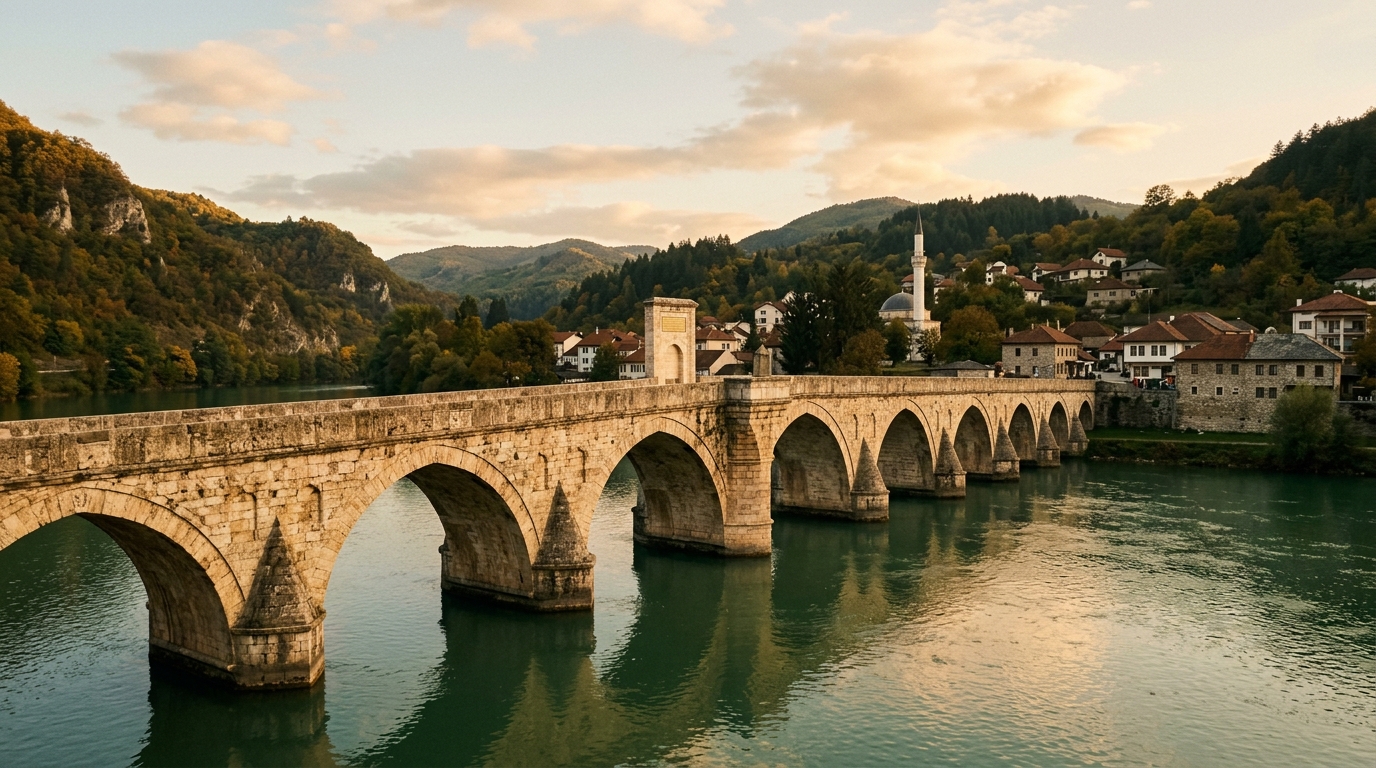
Visegrad exists because of a bridge. The Mehmed Pasa Sokolovic Bridge, built in 1577 by the Ottoman architect Sinan, spans the Drina with 11 stone arches that have survived floods, wars, and five centuries of Balkan weather. Ivo Andric set his Nobel Prize-winning novel “The Bridge on the Drina” here, and the bridge is now a UNESCO World Heritage Site. Walk across it, sit on the stone bench at the center (the sofa, as the novel describes it), and watch the emerald-green Drina flow below.
Next to the old bridge, film director Emir Kusturica built Andricgrad – a mini-town of stone buildings, a cinema, a church, and cafes, all constructed in a deliberately anachronistic mix of Ottoman and Mediterranean styles. It is either a genuine cultural project or the world’s most elaborate film set, depending on your perspective. Either way, it has a good cafe and an excellent bookshop.
Stay overnight in Visegrad. The town is small and accommodation is limited, but guesthouses along the river run EUR 25-40 per night.
Tip: The Drina River near Visegrad is popular for rafting (EUR 20-30 for a half-day trip). If you have time, the canyon section upstream is stunning. Operators in Visegrad arrange trips from May through September.
Day 4: Visegrad to Mokra Gora & Drvengrad
The Bosnia-Serbia border crossing at Vardiste is 30 km from Visegrad and almost comically quiet – we were the only car at the crossing, and the officer looked mildly surprised to have work to do. From there, it is a short drive to Mokra Gora.
Mokra Gora is a mountain village on the Serbian side of the Drina canyon, known for one thing: the Sargan Eight (Sargan Osmica), a narrow-gauge heritage railway that climbs 300 meters through a series of tunnels and loops, crossing over itself in a figure-eight pattern. The railway was built in 1925 for timber transport, abandoned in the 1970s, and restored in the 2000s as a tourist attraction. The ride takes about 2.5 hours and costs EUR 8. It is genuinely fun – the train moves slowly enough to photograph the canyon walls, and the loops through the tunnels have a theme-park quality that appeals to adults more than they expect.
At the top of the railway line sits Drvengrad (Kustendorf), another Emir Kusturica creation – a timber village built as a film set and now operating as a hotel and cultural center. The buildings are genuine traditional Serbian houses, relocated and reassembled here, and the whole place hosts an annual film festival. Stay at the hotel if you want the full experience (EUR 50-80/night), or just visit for lunch and a walk.
If you have the afternoon free, drive 30 minutes north to Tara National Park. The Banjska Stena viewpoint overlooks the Drina canyon from 1,000 meters above, and on a clear day you can see the river winding through the forest for kilometers. The park is crisscrossed with hiking trails, and the visitor center near Mitrovac has maps and information.
| Mokra Gora Area | Distance | Highlights |
|---|---|---|
| Sargan Eight railway | In Mokra Gora | Figure-eight railway, canyon views |
| Drvengrad (Kustendorf) | 3 km from station | Kusturica’s timber village, hotel, cinema |
| Tara National Park | 30 km north | Banjska Stena viewpoint, hiking trails |
| Drina River House | 15 km downstream | Famous house on a rock in the river |
Days 5-6: Nis
The drive from Mokra Gora to Nis (310 km, about 4.5 hours) crosses central Serbia through a landscape of rolling farmland, small towns, and the occasional monastery. The road joins the E75 motorway east of Cacak, and from there it is a straightforward highway drive to Nis. This is the longest single drive on the itinerary, so start early or break it with a stop in Kraljevo or Krusevac.
Nis is Serbia’s third city and one of the oldest continuously inhabited places in Europe. Constantine the Great was born here, the Roman ruins of Mediana are on the city’s outskirts, and the Ottoman fortress by the river is now the city’s main park and gathering place.
The Skull Tower (Cele Kula) is the sight you will remember. After a failed Serbian uprising in 1809, the Ottoman commander built a tower embedded with the skulls of 952 Serbian rebels as a warning. The tower still stands, behind glass in a small chapel, with some of the skulls still visible in the walls. It is not pleasant. It is important.
The Nis Fortress, on the banks of the Nisava River, is where the city relaxes. Walk the walls, have a coffee in one of the cafes inside, and watch locals doing exactly the same thing they have been doing for centuries – sitting in the shade and arguing about football.
For a thermal soak after the long drive, head to Niska Banja (10 km east), a hot springs spa town that is more functional than fancy. A thermal pool session costs EUR 3-5 and the water is genuinely therapeutic if your lower back has opinions about Bosnian mountain roads.
| Nis Costs | Price |
|---|---|
| Skull Tower entry | EUR 1.50 |
| Nis Fortress | Free |
| Meal in the center | EUR 5-10 |
| Niska Banja thermal pool | EUR 3-5 |
| Apartment | EUR 25-40/night |
Tip: Serbian highways use a toll system. The main motorway stretches charge EUR 2-8 depending on distance. Cards are accepted at all toll booths. Speed cameras are common, and the limit is 130 km/h on motorways.
Serbian Food Interlude
Serbia takes its grilled meat seriously, and Nis is one of the best places to experience this. Rostiljnica restaurants (grill houses) serve pljeskavica (a spiced meat patty that makes a burger look underprepared), cevapi, and karadjordjeva snicla (a breaded, stuffed pork or veal cutlet named after a Serbian dynasty – because of course it is). Pair everything with Jelen Pivo beer and shopska salad. A full meal for two with drinks rarely exceeds EUR 15.
Days 7-8: Skopje
The Serbia-North Macedonia border crossing at Tabanovce / Presevo is straightforward (10-20 minutes). The road quality improves noticeably on the Serbian side of the border and drops noticeably on the Macedonian side – but it is getting better, and the E75 corridor is now mostly decent two-lane road.
Skopje divides opinion, and it does so on purpose. The “Skopje 2014” project covered the city center with neoclassical facades, monumental statues (including a 22-meter Alexander the Great on a horse, officially called “Warrior on a Horse” for diplomatic reasons), and replica triumphal arches. The result is a city that looks like it was designed by a committee with a large budget and no restraint. Walk through with an open mind. You will either find it fascinating or baffling, and both reactions are correct.
What Skopje does unambiguously well:
Old Bazaar (Carsija) – the largest Ottoman bazaar in the Balkans outside Istanbul. This is where the city feels authentic: spice shops, metalworkers hammering copper, mosques, and the best cheap food in southeastern Europe. Destan for kebabs and Kolektiv for coffee are local institutions.
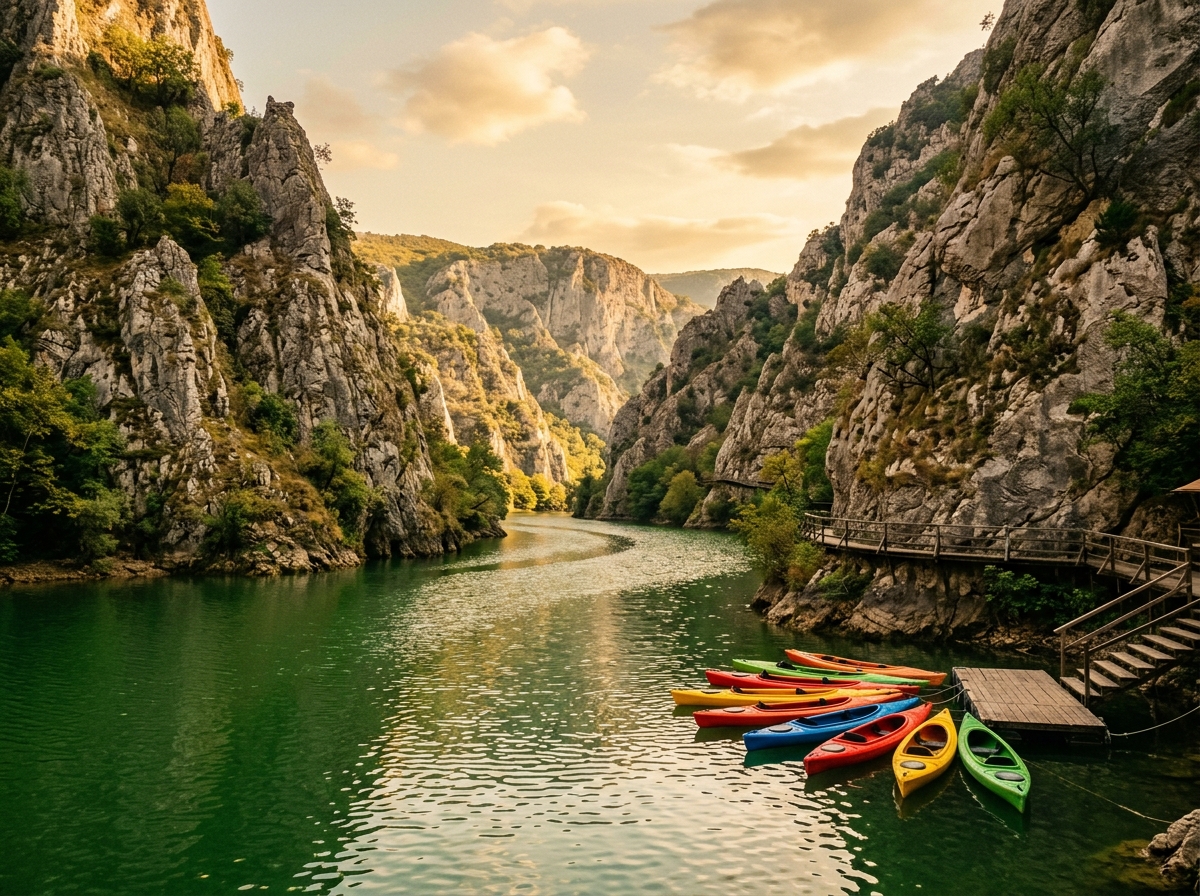
Matka Canyon – 15 km southwest of the center, this limestone canyon with a reservoir is Skopje’s outdoor escape. Rent a kayak (EUR 5/hour), take a boat tour to Vrelo Cave (EUR 4), or hike the canyon rim trail. Half a day minimum, and you will wish you had a full day.
Kale Fortress – hilltop fortress above the Vardar River, free entry, good views over the baroque chaos below.
| Skopje Costs | Price |
|---|---|
| Meal at Old Bazaar | EUR 3-6 |
| Kayak rental, Matka Canyon | EUR 5/hour |
| Vrelo Cave boat tour | EUR 4 |
| Taxi across the city | EUR 2-3 |
| Apartment | EUR 25-45/night |
Tip: Skopje has no Uber, but taxis are cheap and metered. Always check that the meter is running. From the center to Matka Canyon, a taxi costs EUR 5-7 one way.
Day 9: Skopje to Mavrovo
The drive from Skopje to Mavrovo (75 km, about 1.5 hours) heads west through a landscape that shifts from flatland to mountain within 30 minutes. Mavrovo National Park is North Macedonia’s largest, and the road into it climbs through beech forests into alpine meadows with views that justify every switchback.
Mavrovo National Park is less famous than it should be. The artificial lake at its center reflects the surrounding peaks, and the half-submerged Church of St. Nicholas – abandoned when the lake was created and now standing in water up to its walls – is one of the most photographed sights in North Macedonia. In winter this is a ski area; in summer it is hiking, and you will likely have the trails to yourself.
Stay in Mavrovo village or at one of the mountain lodges near the lake. Accommodation is basic but affordable (EUR 25-40/night), and the evening quiet after days in cities is a welcome reset.
Tip: The road through Mavrovo to Ohrid via the Galicica Pass is a genuine mountain drive. Check road conditions if traveling in early May or late October, as snow is possible at higher elevations.
Day 10: Mavrovo to Ohrid
The final leg (90 km, about 2 hours) crosses the Debar valley and then climbs over the Galicica Pass before descending to Lake Ohrid. The Galicica section is a narrow mountain road with switchbacks and no guardrails in some sections – drive carefully and enjoy the views, because the lake appears below you in stages, each glimpse wider than the last, until the whole thing spreads out in front of you like a promise.
Lake Ohrid is the reward for ten days of mountain driving. It is one of the oldest and deepest lakes in Europe, with water so clear you can see the bottom at several meters. The town of Ohrid, on the northeastern shore, is a compact center of medieval churches, Ottoman houses, and a lakeside promenade that fills with life every evening.
Must-do in Ohrid:
- Church of St. John at Kaneo – the cliff-perched church on every Macedonian postcard, reached by a lakeside walk from the Old Town. Go at sunset.
- Samuel’s Fortress – hilltop ruins with 360-degree lake views. Free entry.
- Ohrid Old Town – narrow streets between the lake and the fortress, with churches and galleries tucked into every corner.
- Sveti Naum Monastery – 29 km south along the lake, with peacocks, a spring-fed river, and a calm that feels earned after 900 km of driving.
- Bay of Bones – reconstructed Bronze Age stilt village on the lake, 10 km south. Small but interesting.
| Ohrid Costs | Price |
|---|---|
| Lakeside apartment | EUR 30-50/night |
| Grilled trout dinner | EUR 6-8 |
| Boat trip to Sveti Naum | EUR 10 |
| Bay of Bones entry | EUR 3 |
| Coffee on the promenade | EUR 1-1.50 |
Ohrid is the place where everyone says “I should have stayed longer.” Budget at least two nights. Three would be better.
Budget Breakdown
| Category | Daily Estimate | 10-Day Total |
|---|---|---|
| Accommodation (2 people) | EUR 30-50 | EUR 300-500 |
| Fuel (~900 km) | – | EUR 100-140 |
| Tolls (Serbia) | – | EUR 8-15 |
| Food (restaurants + groceries) | EUR 20-35 | EUR 200-350 |
| Activities & entrance fees | EUR 5-15 | EUR 50-150 |
| Parking (various cities) | – | EUR 30-50 |
| Total per person | – | EUR 900-1,500 |
This is one of the cheapest routes in the Balkans. Bosnia, Serbia, and North Macedonia are all significantly cheaper than Croatia or Slovenia. A restaurant meal that costs EUR 25 in Dubrovnik costs EUR 8 in Sarajevo, EUR 6 in Nis, and EUR 4 in Ohrid’s Old Bazaar.
Practical Information
Car Rental
Rent in Sarajevo and drop off in Ohrid – or more practically, in Skopje, since one-way drop-offs in Ohrid are rare. Check our car rental guide for agencies that allow cross-border driving between Bosnia, Serbia, and North Macedonia. One-way fees between Sarajevo and Skopje are typically EUR 100-200.
A standard car handles this entire route fine. The roads are paved throughout, though some sections between Sarajevo and Visegrad, and the Galicica Pass approach to Ohrid, have tight turns where an SUV’s visibility helps.
Currencies
Three countries, three currencies:
- Bosnia: Convertible Mark (BAM), pegged to EUR at roughly 2:1
- Serbia: Serbian Dinar (RSD), roughly 117:1 EUR
- North Macedonia: Macedonian Denar (MKD), roughly 61:1 EUR
ATMs are everywhere in cities. Small towns and rural fuel stations sometimes prefer cash. Euros are occasionally accepted informally in all three countries, but at unfavorable rates.
Best Time to Drive
May to mid-June and September are ideal: warm weather, open mountain roads, minimal crowds. July-August brings heat (35-40C inland) but everything is open. October works but shorter days limit the mountain sections, and the Galicica Pass may see early snow.
Documents
- Valid passport (check visa requirements for non-EU citizens)
- Driving license (EU works everywhere; non-EU carry IDP)
- Green Card (international vehicle insurance)
- Rental agreement allowing cross-border travel to all three countries
Read our driving guide for country-by-country rules and our border crossings guide for detailed information.
What to Drive Next
From Ohrid, the Grand Balkan Circuit continues north through Skopje to Serbia, or south through Albania to the coast. If you want the Adriatic, the Adriatic Coast: Dubrovnik to Tirana is reachable from Ohrid via a 5-hour drive to Tirana. Or reverse direction and connect to the Belgrade to Dubrovnik route for the Bosnian coast.