Albanian Riviera Loop
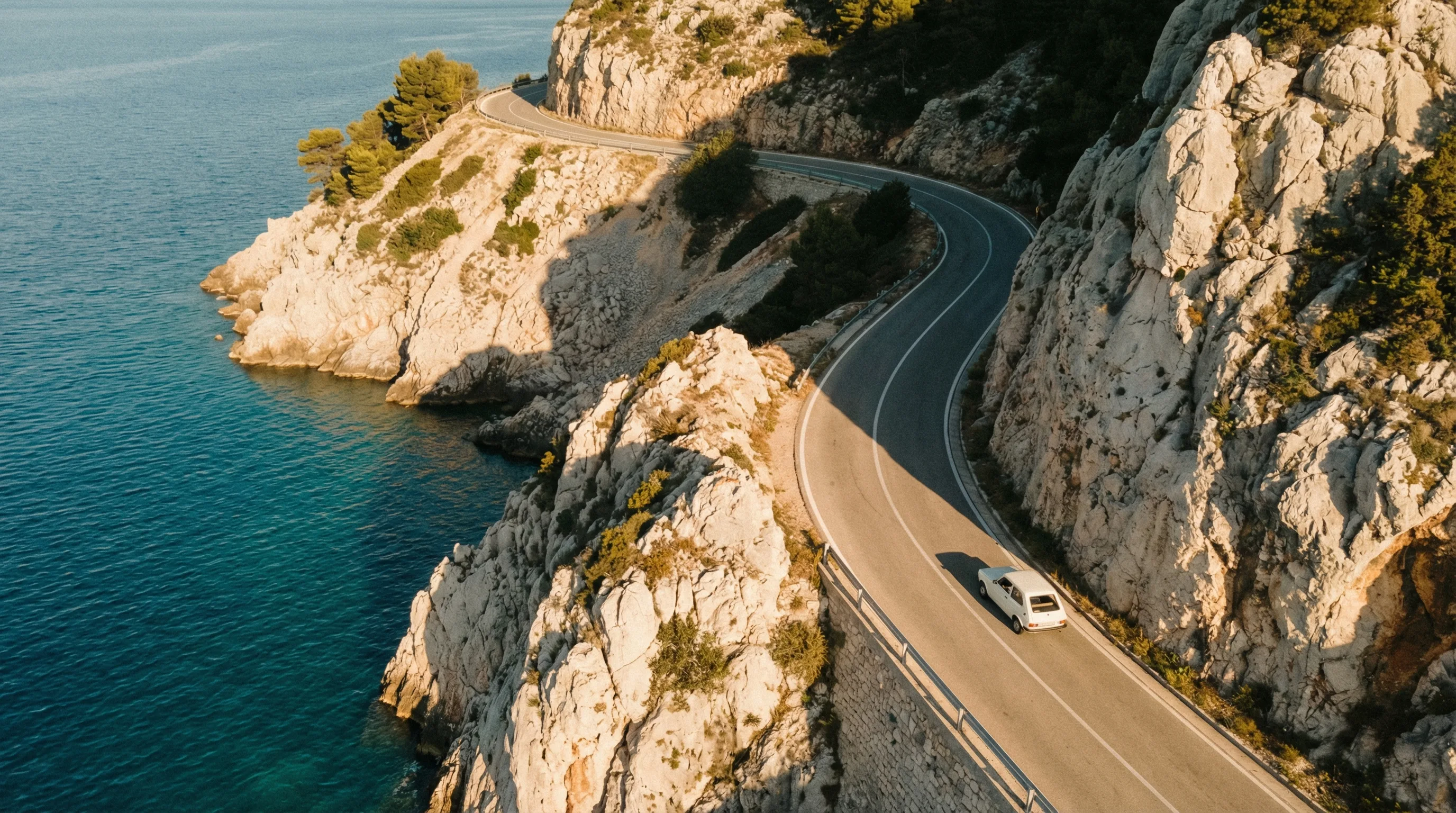
Somewhere between the third switchback of Llogara Pass and the moment the Ionian Sea appeared below – turquoise, absurdly turquoise, the kind of color that looks manipulated in photos but is just water doing what water does when the bottom is white limestone and the sun angle is right – we pulled over and stared. Not because we had never seen a beautiful coast, but because this one looked like it had been left out of every guidebook we had ever read, and we could not figure out why.
Albania is Europe’s last coastal secret, and it will not stay that way for long. The cranes are rising in Saranda, the boutique hotels are multiplying in Himara, and the Instagram crowd has discovered Ksamil. But for now, the Albanian Riviera still feels like the Mediterranean coast did thirty years ago: cheap, uncrowded, slightly chaotic, and genuinely thrilling to drive. This 7-day loop from Tirana takes you down the coast on the SH8 – one of the great European coastal roads – and brings you back through two of the most beautiful Ottoman towns in the Balkans.
Route Overview
| Segment | Distance | Drive Time | Notes |
|---|---|---|---|
| Tirana to Vlora | 140 km | 2.5 hours | Mostly highway, improving fast |
| Vlora to Llogara Pass summit | 30 km | 1 hour | Mountain switchbacks, 1,027 m |
| Llogara to Dhermi/Himara | 40 km | 1.5 hours | SH8 coastal road, curves |
| Himara to Saranda | 70 km | 2 hours | SH8 continues, Porto Palermo |
| Saranda to Gjirokastra | 55 km | 1 hour | Inland, good road |
| Gjirokastra to Berat | 130 km | 3 hours | Mountain roads, improving |
| Berat to Tirana | 120 km | 2 hours | SH4 highway |
| Total loop | ~500 km | ~14 hours driving | No border crossings |
Tip: Albanian drive times are longer than Google Maps suggests. The SH8 coastal road between Llogara and Saranda is narrow, winding, and shared with buses, trucks, and the occasional donkey. Add 30-50% to any estimated time. This is not a bug – it is the route. The slow speed means you see everything.
Day 1: Tirana
Tirana is not conventionally attractive, but it has a momentum that makes conventional attractiveness feel overrated. The communist apartment blocks painted in aggressive colors (a project by Edi Rama, the artist-turned-mayor-turned-prime-minister), the traffic circles that operate on confidence rather than rules, the espresso culture that rivals Italy’s – it all adds up to a city that is emphatically alive.
Start at Skanderbeg Square, the vast central plaza redesigned in 2017: the National History Museum (EUR 3, worth it for the ancient and communist-era sections), the Et’hem Bey Mosque, and the clock tower. Walk south into Blloku – the district that was the exclusive residential zone for communist party elites until 1991 and is now Tirana’s restaurant and bar quarter. The transformation is complete and slightly surreal.
Bunk’Art 2 (EUR 3), a communist-era bunker turned art space near Skanderbeg Square, covers Albania’s secret police history. If you have more time, Bunk’Art 1 (EUR 4) is a massive Cold War nuclear bunker on the city’s outskirts – more extensive, more disturbing, and genuinely one of the best museum experiences in the Balkans.
For dinner, Blloku is the obvious choice. Mulliri Vjeter does excellent traditional Albanian food in a setting that involves a working windmill. Oda serves gjellë (stew dishes) in a traditional Albanian room with floor seating. Budget EUR 6-12 for a full dinner.
| Tirana Costs | Price |
|---|---|
| National History Museum | EUR 3 |
| Bunk’Art 2 | EUR 3 |
| Bunk’Art 1 | EUR 4 |
| Dinner in Blloku | EUR 6-12 |
| Espresso | EUR 0.50-0.80 |
| Taxi across the city | EUR 2-4 |
| Apartment in center | EUR 25-40/night |
Tip: Tirana’s Rinas airport is 25 km from the center. If you are renting a car at the airport, drive to your accommodation and explore the city on foot – Tirana traffic requires a specific disposition that most travelers have not yet developed on day one.
Day 2: Tirana to Vlora and Llogara Pass
Leave Tirana early. The drive to Vlora (140 km, 2.5 hours) follows the A2 highway – Albania’s best road, which is faint praise but genuine. The surface is good, the lanes are mostly marked, and the driving is mostly rational. Past Fier, the road crosses the Myzeqe plain, Albania’s agricultural heartland, before reaching the coast at Vlora.
Vlora (Vlore) is Albania’s second-largest port city. The waterfront promenade has been rebuilt and is now a pleasant 2 km walk with cafes and a view across the bay to the Karaburun peninsula. If you are passing through, an hour’s walk and a seafood lunch is sufficient. The Independence Museum (Albania declared independence here in 1912) is worth 30 minutes if you are interested in how this country came to exist.
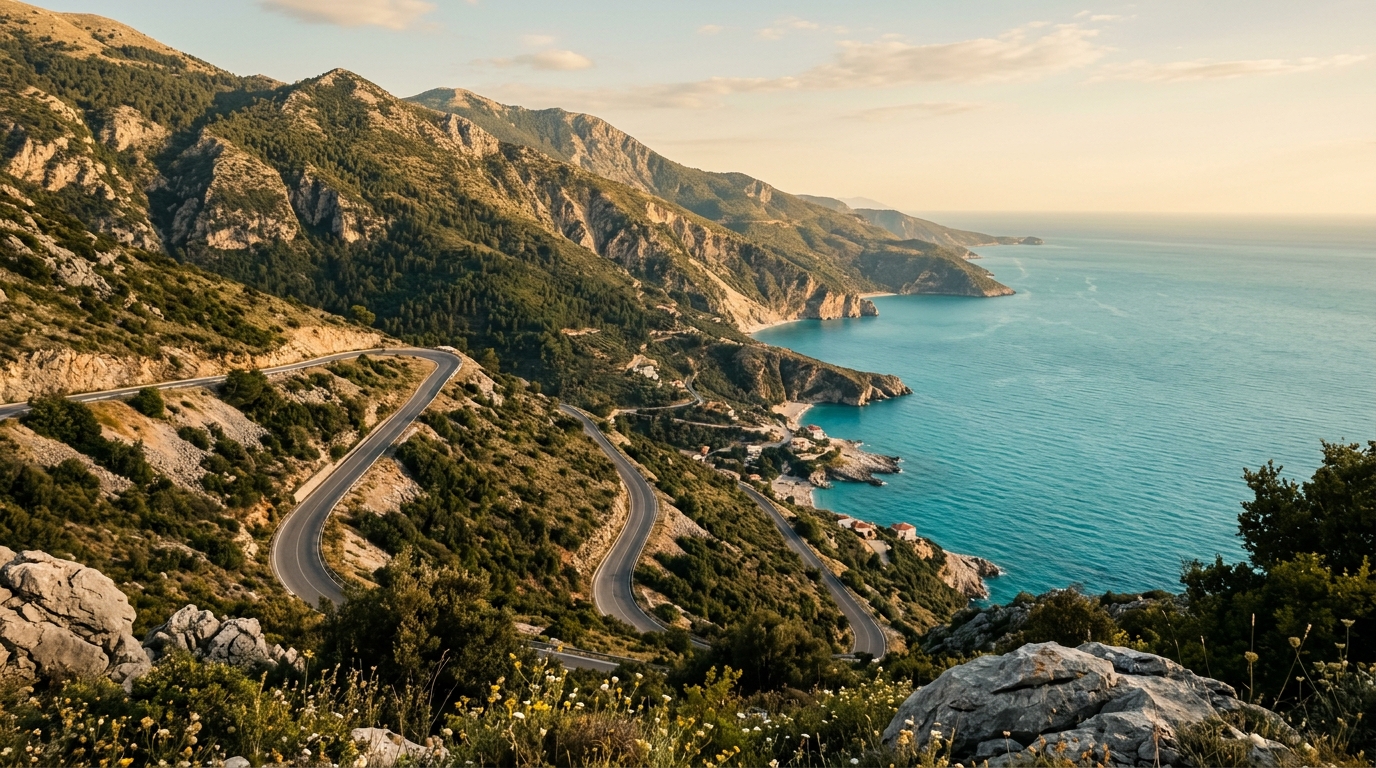
The main event starts after Vlora. The SH8 begins climbing out of the city and turns into Llogara Pass (Qafa e Llogarase) – a 1,027-meter mountain crossing through the Ceraunian Mountains that separates the Adriatic from the Ionian coast. The road rises through pine forests in a series of tight switchbacks, and the views back over Vlora Bay get progressively more improbable with each turn.
At the summit, there is a restaurant and a viewpoint. Stop here. The Ionian coast unfolds below you: turquoise water, limestone cliffs, scattered beaches, and the SH8 stitched into the mountainside below like a thread. This is where the Riviera begins, and the first glimpse of it from 1,000 meters above is one of those travel moments that actually lives up to the anticipation.
Stay at Llogara Pass (there are basic hotels and a national park campsite at the summit, EUR 20-30) or continue down to Dhermi (40 minutes of switchbacks to sea level).
Llogara Pass is the dividing line. North of it: Adriatic, flat, industrial. South of it: Ionian, steep, wild. The difference is instant and total.
Day 3: Dhermi, Himara and the SH8
This is the day you came for. The SH8 from Llogara Pass south to Saranda is the Albanian Riviera’s signature road – 100 km of coastal driving along limestone cliffs above turquoise water, with beaches accessible by side roads that drop steeply to the sea.
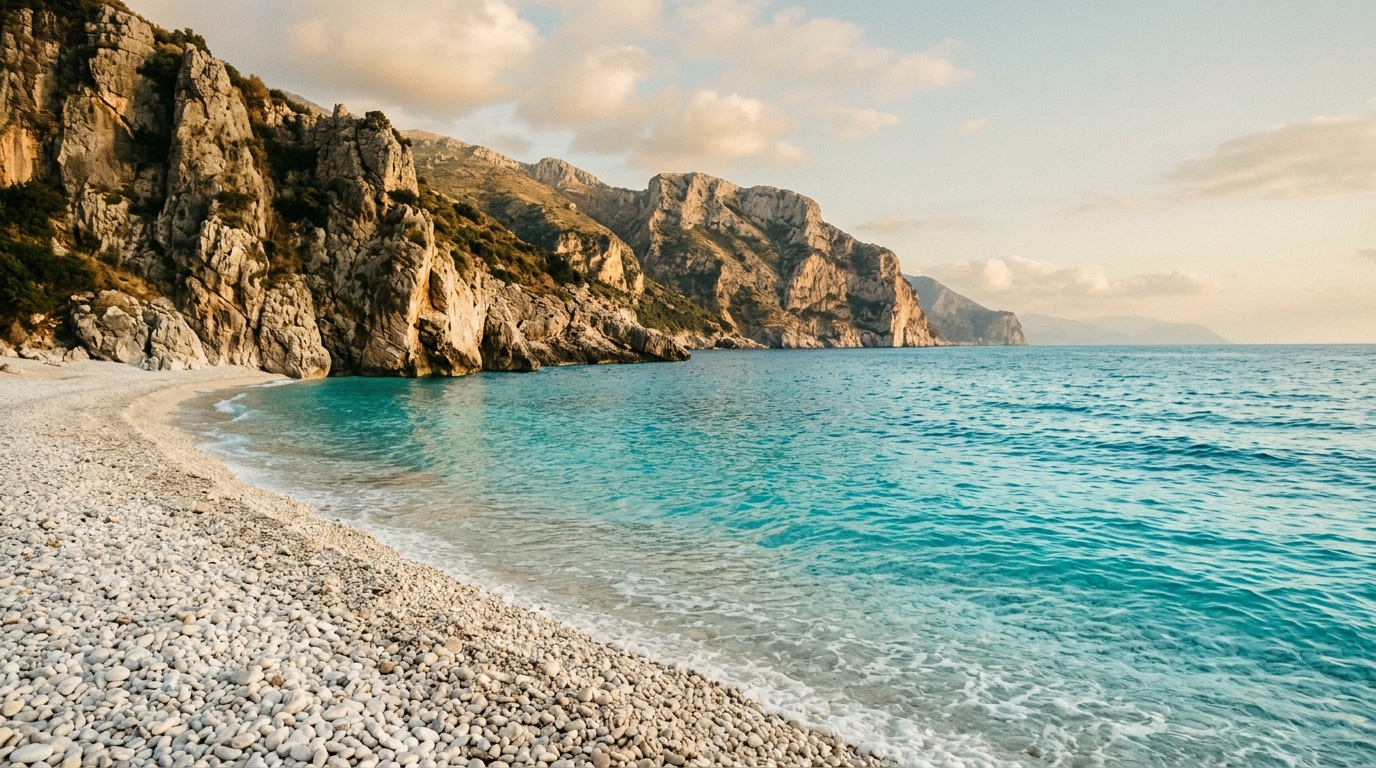
Dhermi is the first beach town south of Llogara. The main beach (Dhermi Beach) is a long pebble strip backed by orange groves and new hotels. The water is clear and the setting is spectacular – cliffs on both sides, the road visible above, and on a good day, the island of Corfu on the horizon. Beach chairs and umbrellas are EUR 5-10 for the day, or bring a towel and claim your own spot.
Drive 8 km south to Gjipe Beach, accessible by a 30-minute walk down a canyon from the road (or by boat from Dhermi). The beach sits in a small cove at the end of the Gjipe Canyon, and the effort to reach it means it is less crowded than the road-accessible beaches.
Continue south to Himara, the Riviera’s main town. Himara has a rebuilt waterfront promenade, a handful of fish restaurants, a small Old Town on the hill above, and Livadhi Beach just south of town – one of the longest and most swimmable beaches on the coast. This is a good base for the night.
| Beach | Access | Type | Notes |
|---|---|---|---|
| Dhermi Beach | Roadside, easy | Pebble | Long, developed, sunbeds available |
| Gjipe Beach | 30 min hike from road | Pebble/sand | Secluded canyon beach |
| Livadhi Beach | Roadside, easy | Pebble | Long, good swimming, Himara’s main beach |
| Llamani Beach | Short walk from road | Pebble | Small, quiet, between Himara and Dhermi |
Tip: The SH8 road has been significantly improved since 2020 but remains narrow with no guardrails in many sections. Drive carefully, use your horn on blind corners, and do not overtake buses on curves. The locals do. You should not.
Albanian Beach Culture
Albanian beaches are free to access by law, even if there are sunbed operations on them. You can always lay your towel on the free section. Prices are reasonable by Mediterranean standards: sunbed and umbrella EUR 5-10 per day, a fish lunch at a beachside restaurant EUR 6-10, a cold Korce beer EUR 1-2. The vibe is relaxed, slightly chaotic, and refreshingly free of the organized commercialism you find on Croatian or Greek beaches.
Day 4: Porto Palermo, Saranda and Ksamil
Continue south on the SH8. The road passes through Qeparo and Borsh (another long beach worth a stop) before reaching Porto Palermo – a small bay dominated by a triangular Ottoman fortress built by Ali Pasha of Ioannina in the early 19th century. The fortress (EUR 2) sits on a peninsula in the bay, and the water around it is deep blue and clean enough to swim in. There is a small submarine bunker from the communist era tucked into the hillside, because Albania cannot resist hiding military infrastructure in its prettiest places.
Saranda is the Riviera’s largest town and the most developed. The horseshoe bay, the promenade, the evening korso (evening stroll) culture – it is the closest thing Albania has to a proper resort town. Saranda faces Corfu (visible across the strait, 15 km away), and hydrofoils make the crossing in 30 minutes if you want a Greek island day trip.
Eight kilometers south of Saranda, Ksamil has the beaches that end up on “best beaches in Europe” lists. Three small islands sit just offshore in turquoise water, reachable by swimming or paddleboard. The beaches are pebble and sand, the restaurants are cheap, and the development is accelerating – come before it becomes the next Budva.
Blue Eye (Syri i Kalter)
Inland from Saranda (22 km, 30 minutes), the Blue Eye is a natural spring where water of an impossible deep blue rises from a 50-meter hole in the rock. The color is real – it is caused by the depth and the limestone filtering. Entry is EUR 1, and the short walk through oak forest to the spring takes 10 minutes. Do not swim in the Blue Eye itself (it is protected), but there is a small swimming area nearby.
| Saranda / Ksamil Costs | Price |
|---|---|
| Porto Palermo fortress | EUR 2 |
| Blue Eye entry | EUR 1 |
| Sunbed at Ksamil beach | EUR 5-8 |
| Fish dinner in Saranda | EUR 8-12 |
| Apartment in Saranda | EUR 25-45/night |
| Hydrofoil to Corfu | EUR 20-25 one way |
Ksamil in August is crowded. Ksamil in June or September is paradise. Plan accordingly.
Day 5: Gjirokastra
Drive inland from Saranda through the Drino valley (55 km, about 1 hour). The road is decent and the landscape shifts from coastal to mountainous within 20 minutes.
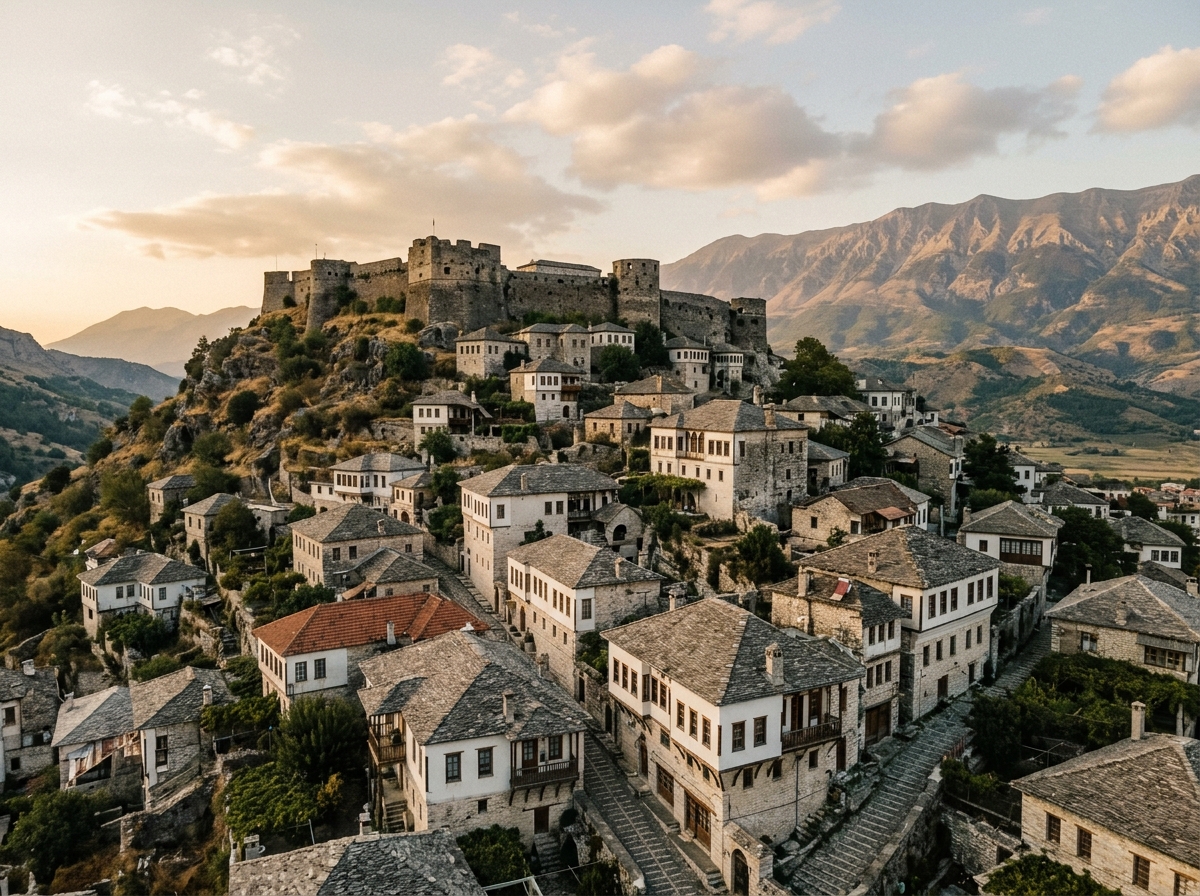
Gjirokastra is one of the two UNESCO-listed Ottoman cities in Albania (Berat is the other), and it is the more dramatic of the pair. The city is built entirely of stone – stone houses, stone streets, stone roofs – climbing a steep hillside below a massive castle. The effect is a city that looks like it grew out of the mountain rather than being built on it.
The Gjirokastra Fortress (EUR 3) is one of the largest in the Balkans. Inside, there is a military museum with captured Italian and American aircraft (from various 20th-century conflicts), an Ottoman clock tower, and views over the Drino valley that explain why every conqueror from the Romans to the Ottomans wanted this hilltop. The fortress also contains a stage used for the National Folklore Festival, held every five years – the next one in 2028.
The Old Bazaar stretches below the castle along the main street. The houses here are distinctive: tall stone structures with large windows (the “tower houses” of Gjirokastra), some of which are now museum-houses you can visit. The Skenduli House (EUR 2) is the best-preserved and offers a guided tour that explains the Ottoman-era domestic architecture.
The Cold War Tunnel (EUR 2) beneath the castle is a former military passage built during the communist period, now open as a museum about the Hoxha regime. It is dark, narrow, and effective at conveying the paranoia that defined four decades of Albanian life.
| Gjirokastra Costs | Price |
|---|---|
| Gjirokastra Fortress | EUR 3 |
| Skenduli House tour | EUR 2 |
| Cold War Tunnel | EUR 2 |
| Meal in Old Bazaar | EUR 4-7 |
| Apartment | EUR 20-35/night |
Gjirokastra at dusk, when the stone buildings catch the last light and the valley below goes dark, is one of the most atmospheric moments on this entire loop. Stay overnight. You will not regret it.
Day 6: Berat
The drive from Gjirokastra to Berat (130 km, about 3 hours) crosses the Albanian interior through the Tepelena gorge and then over the Muzina Pass before descending to the Osum River valley. The road has been improved in sections but remains slow in others – this is Albania, and the GPS is an optimist.
Berat is called the City of a Thousand Windows, and the name earns itself the moment you see the Ottoman houses climbing the hillside, each one stacked above the last, their large windows all facing the river valley. The two historical quarters – Mangalem on the east bank and Gorica on the west bank – are connected by a 1780 Ottoman bridge and together form one of the most photogenic urban scenes in the Balkans.
The Castle Quarter (Kalaja) above Mangalem is still inhabited. Real families live inside a medieval fortress, which means wandering its streets feels less like visiting a museum and more like accidentally walking through someone’s neighborhood. The Onufri Museum (EUR 2) inside the castle holds 16th-century icons by the Albanian master painter Onufri, whose signature use of a particular shade of red has never been successfully replicated.
Down by the river, order tave kosi (lamb baked in yogurt) at any of the restaurants along the water – Berat claims to have invented it, and the local versions justify the claim. Pair it with a glass of Cobo wine from a local winery. Berat’s wine production is small, artisanal, and surprisingly good.
| Berat Costs | Price |
|---|---|
| Castle Quarter + Onufri Museum | EUR 2 |
| Ottoman Bridge walk | Free |
| Tave kosi dinner | EUR 4-6 |
| Local wine (glass) | EUR 1-2 |
| Apartment in Mangalem | EUR 20-35/night |
Tip: If you have a spare half-day, drive 25 km south to the Osum Canyon. The road follows the river through a gorge with walls up to 80 meters high. Rafting trips (EUR 25-35, available April-June) offer the best perspective.
Day 7: Berat to Tirana
The final drive (120 km, about 2 hours) follows the SH4 highway back to Tirana. This is Albania’s best inland road, and the drive is straightforward. You will be back in Tirana by lunchtime, with the afternoon free for anything you missed on day one – or for sitting in a Blloku cafe with a macchiato, processing seven days of Albanian coast and mountains.
If you are dropping off a rental car at Tirana airport, the drive from the center takes 30-40 minutes depending on traffic. If you have an evening flight, spend the afternoon at the Grand Park (Parku i Madh), a large green space with an artificial lake where Tirana residents walk, jog, and argue about politics. It is the city at its most relaxed.
Budget Breakdown
| Category | Daily Estimate | 7-Day Total |
|---|---|---|
| Accommodation (2 people) | EUR 25-40 | EUR 175-280 |
| Fuel (~500 km) | – | EUR 55-75 |
| Food (restaurants + groceries) | EUR 15-25 | EUR 105-175 |
| Activities & entrance fees | EUR 5-10 | EUR 35-70 |
| Beach sunbeds & parking | – | EUR 30-50 |
| Total per person | – | EUR 500-900 |
Albania is the cheapest country in the Balkans for travelers, and this loop proves it. A full day of eating, drinking, swimming, and sightseeing rarely exceeds EUR 40 for two people. The beaches are free, the museums are EUR 2-4, and a fish dinner with wine on the coast costs what a cappuccino costs in Dubrovnik.
Practical Information
Car Rental in Albania
Rent in Tirana – either at the airport or in the city center. Albanian rental agencies are generally more relaxed about where you take their cars than international agencies, but check the insurance details carefully. Some international chains (Sixt, Europcar) operate in Tirana and offer more standardized contracts.
A standard car handles this entire loop. The SH8 coastal road is paved throughout, and the inland roads between Gjirokastra and Berat are adequate. An SUV provides more comfort on the rougher inland sections but is not strictly necessary.
Budget EUR 25-35 per day for a compact car. See our car rental guide for specific agency recommendations in Albania.
Fuel
Albanian fuel is slightly cheaper than neighboring countries (about EUR 1.40-1.50 per liter). Stations are frequent along the coast and main highways. Rural stretches between Gjirokastra and Berat have fewer stations – do not let the tank drop below a quarter.
Cash is sometimes cheaper than card at Albanian fuel stations (5-10 lek per liter difference), and not every station’s card machine works. Carry Albanian lek for fuel.
Road Conditions
| Section | Road Quality | Key Challenge |
|---|---|---|
| Tirana to Vlora (A2) | Good | Some construction zones |
| Llogara Pass | Paved, narrow | Steep switchbacks, no guardrails in parts |
| SH8 coast (Llogara to Saranda) | Paved, narrow | Winding, shared with buses, blind corners |
| Saranda to Gjirokastra | Good | Straightforward |
| Gjirokastra to Berat | Variable | Mountain roads, some rough stretches |
| Berat to Tirana (SH4) | Good | Albania’s best inland highway |
Driving in Albania
- Speed limits: 40 km/h urban, 80 km/h rural, 110 km/h highway
- Police checkpoints are common and routine. Have documents ready.
- Livestock on roads is normal outside cities. Slow down in rural areas.
- Use your horn on blind mountain corners – everyone does.
- Google Maps drive times: add 30-50% for Albanian roads.
Read our driving guide for more details.
Best Time to Drive
June and September are ideal: warm enough for swimming, not yet (or no longer) crowded. July-August is peak season – beaches are full, Ksamil is packed, and accommodation prices double. May and October are pleasant but the water is cool for swimming.
The SH8 and Llogara Pass are open year-round, though winter brings rain and occasionally ice on the pass.
What to Drive Next
From Tirana, the Adriatic Coast: Dubrovnik to Tirana runs in reverse if you want to continue north through Montenegro and Croatia. The Heart of the Balkans route is reachable from Tirana via a drive to Ohrid (5 hours), connecting you to North Macedonia, Serbia, and Bosnia. Or combine this loop with the Albanian Alps – a 3-4 day detour from Shkoder (4 hours north of Tirana) into Theth and Valbona.