Serbia sits at the crossroads of every major Balkan road trip, and its highway network reflects that position. The E75 runs north-south from Hungary through Belgrade to North Macedonia. The E70 runs east-west from Croatia through Belgrade to Romania. These are real, honest, multi-lane motorways with smooth asphalt, proper rest areas, and the kind of driving experience you would expect in Western Europe. We have used Belgrade as a road trip hub more times than we can remember — it connects to eight countries, the fuel is cheap, and the driving culture is the most relaxed you will find in this part of Europe. Nobody is in a desperate hurry on a Serbian highway. That changes inside Belgrade’s city limits, where driving becomes a competitive sport, but the rest of the country is genuinely pleasant behind the wheel.
Road Conditions
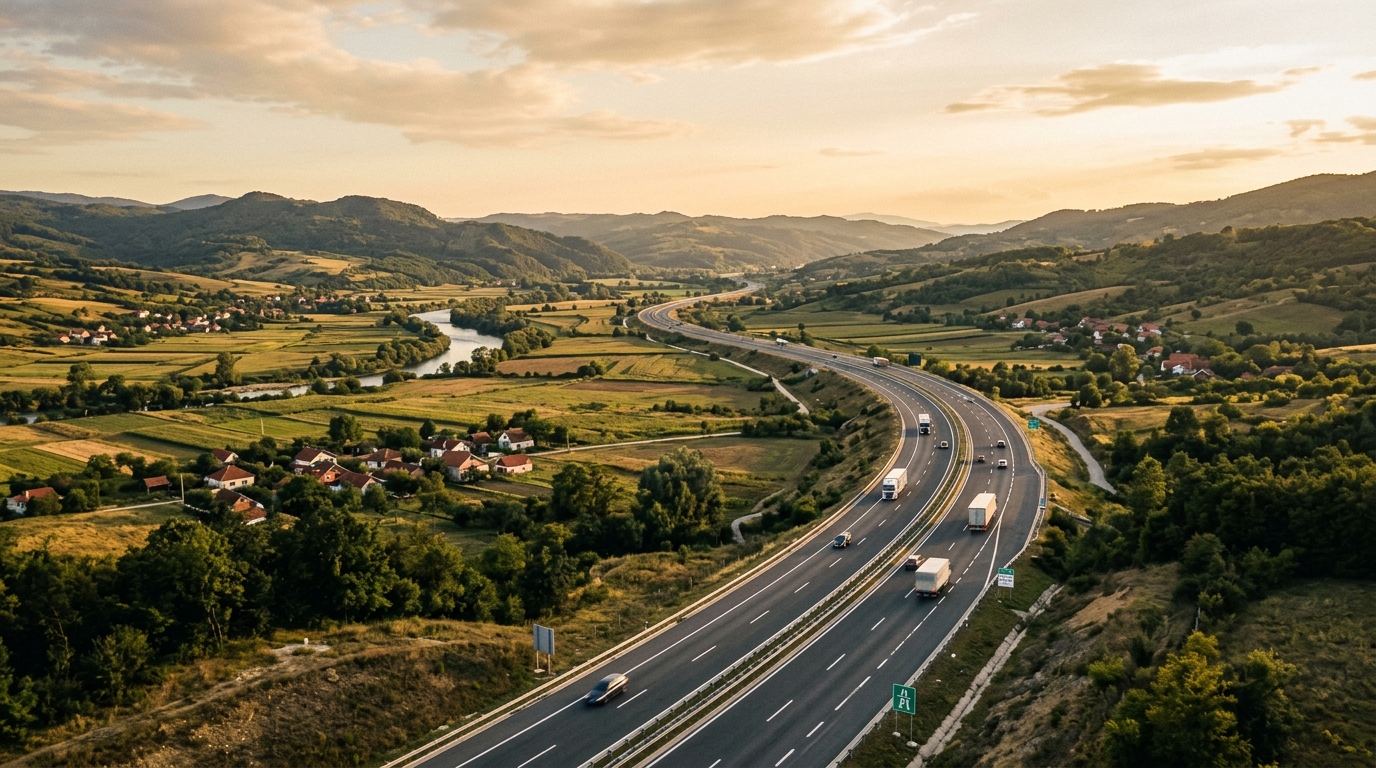
Serbia has the best highway network in the Balkans. The E75 (now the A1 motorway) from the Hungarian border through Novi Sad and Belgrade to Nis is a well-maintained dual carriageway. The E70 (A3) from the Croatian border through Belgrade to the Romanian border is equally solid. The A2 from Belgrade south toward Montenegro via Cacak is newer and in excellent shape.
South of Nis, the E75 toward North Macedonia remains a motorway but the road quality drops slightly. East toward Bulgaria on the E80, conditions are good. The E763 toward Montenegro is modern for most of its length, with some two-lane sections remaining through the mountains.
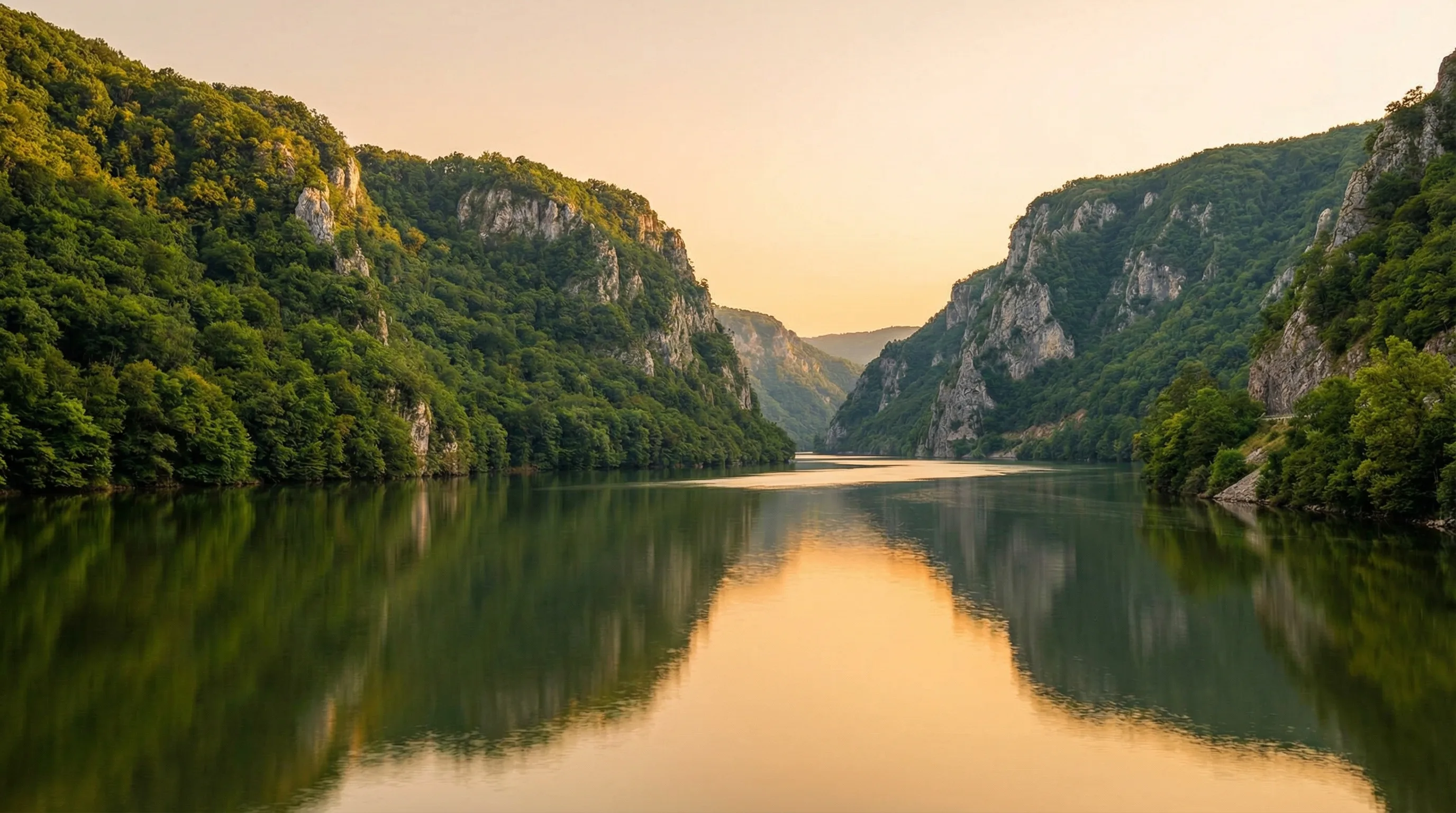
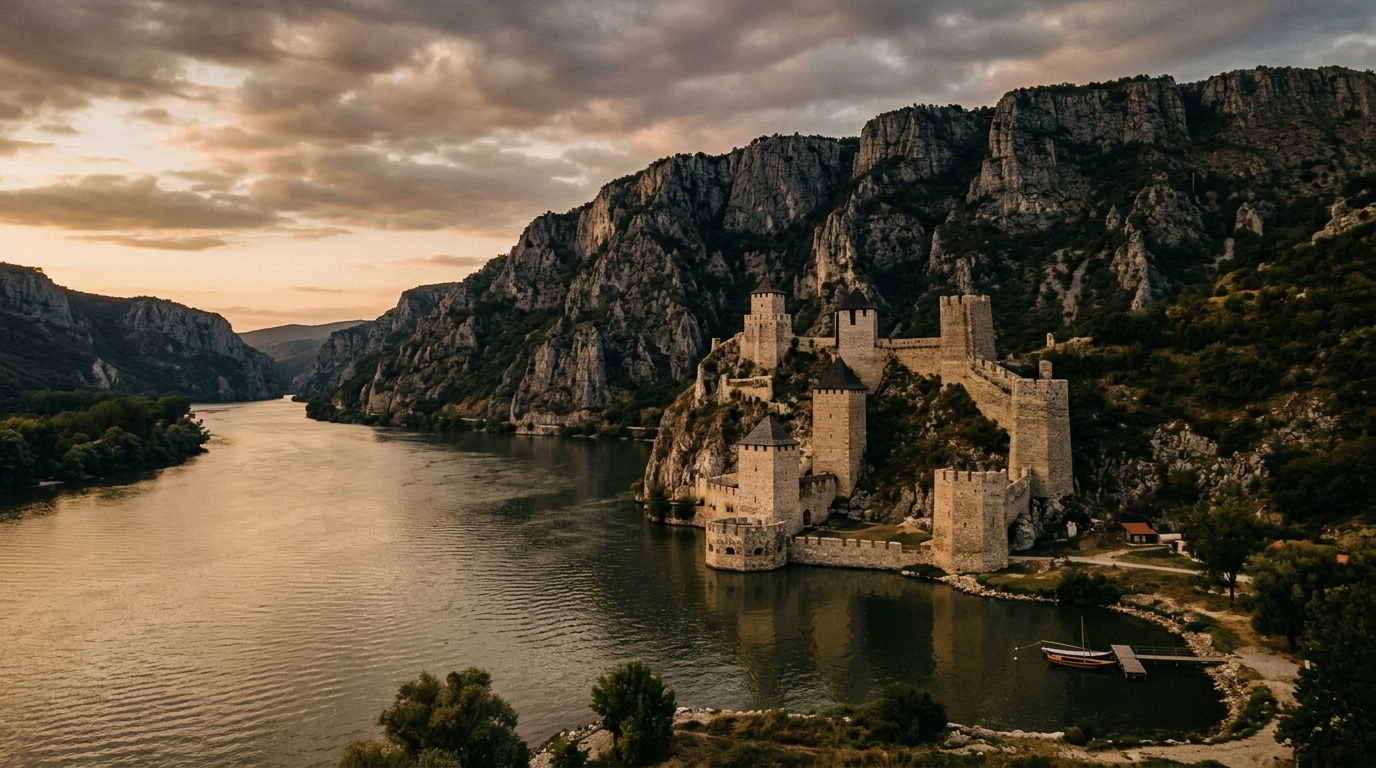
Secondary roads in the Vojvodina plain (northern Serbia) are flat, straight, and generally well-paved. In central and southern Serbia, roads become hillier and narrower. The Djerdap Gorge road along the Danube is scenic and winding — good asphalt but slow going.
A standard car is fine for all Serbian roads. The only reason to consider an SUV would be extended exploration of mountain tracks in the Zlatibor or Tara regions, and even there a regular car manages.
Tip: The Belgrade ring road (Obilaznica) connects the E70 and E75 without going through the city center. Use it. Central Belgrade traffic is dense, confusing, and features drivers who treat lane markings as gentle suggestions.
Speed Limits & Rules
| Road Type | Speed Limit |
|---|---|
| Motorways | 130 km/h |
| Expressways | 100 km/h |
| Rural roads | 80 km/h |
| Urban areas | 50 km/h |
Required equipment:
- Reflective vest (one per passenger)
- Warning triangle
- First-aid kit
- Spare bulb set
- Tow rope
- Headlights on at all times from November through March
Blood alcohol limit: 0.02% — near-zero tolerance. Drivers under 2 years of experience or under 21: 0.00%.
Speed cameras are installed on the E75 and E70 motorways and at many town entrances. Serbia also uses unmarked police cars with radar. Fines range from RSD 5,000 (roughly EUR 42) for minor violations to RSD 120,000+ (EUR 1,000+) for extreme speeding. Fines are not payable on the spot — you receive a payment slip.
Fuel & Costs
Serbia uses the Serbian Dinar (RSD). The exchange rate hovers around 117 RSD = 1 EUR. ATMs are everywhere in cities; bring cash for rural areas.
| Fuel Type | Average Price |
|---|---|
| Eurosuper 95 | ~190 RSD/L (~EUR 1.40/L) |
| Diesel | ~198 RSD/L (~EUR 1.45/L) |
| LPG | ~85 RSD/L (~EUR 0.62/L) |
NIS (a large domestic chain), Gazprom, Lukoil, MOL, and OMV all operate in Serbia. Highway rest areas have fuel stations every 30-50 km. In southern Serbia, stations are less frequent — fill up before heading into mountain areas around Zlatibor or toward Kosovo.
Toll costs: Serbia uses a pay-per-use toll system. You take a ticket when entering the highway and pay when exiting. Belgrade to Nis costs roughly RSD 1,170 (EUR 10). Belgrade to Novi Sad is about RSD 350 (EUR 3). Payment accepted in RSD (cash or card) and EUR (cash, at a slightly worse rate). TAG electronic devices are available for frequent travelers.
| Route | Distance | Toll Cost |
|---|---|---|
| Belgrade - Novi Sad | 90 km | ~EUR 3 |
| Belgrade - Nis | 240 km | ~EUR 10 |
| Belgrade - Subotica (HU border) | 190 km | ~EUR 7 |
| Belgrade - Croatian border (E70) | 150 km | ~EUR 5 |
Parking
Belgrade: the center uses a zone system (zones 1-3) with hourly rates from RSD 57 to RSD 82 (EUR 0.50-0.70). Payment by SMS is standard. Maximum stay in Zone 1 (Knez Mihailova, Republic Square area) is 1 hour — this is enforced. Underground garages at Zeleni Venac and near Slavija Square cost RSD 150-200/hour (EUR 1.30-1.70).
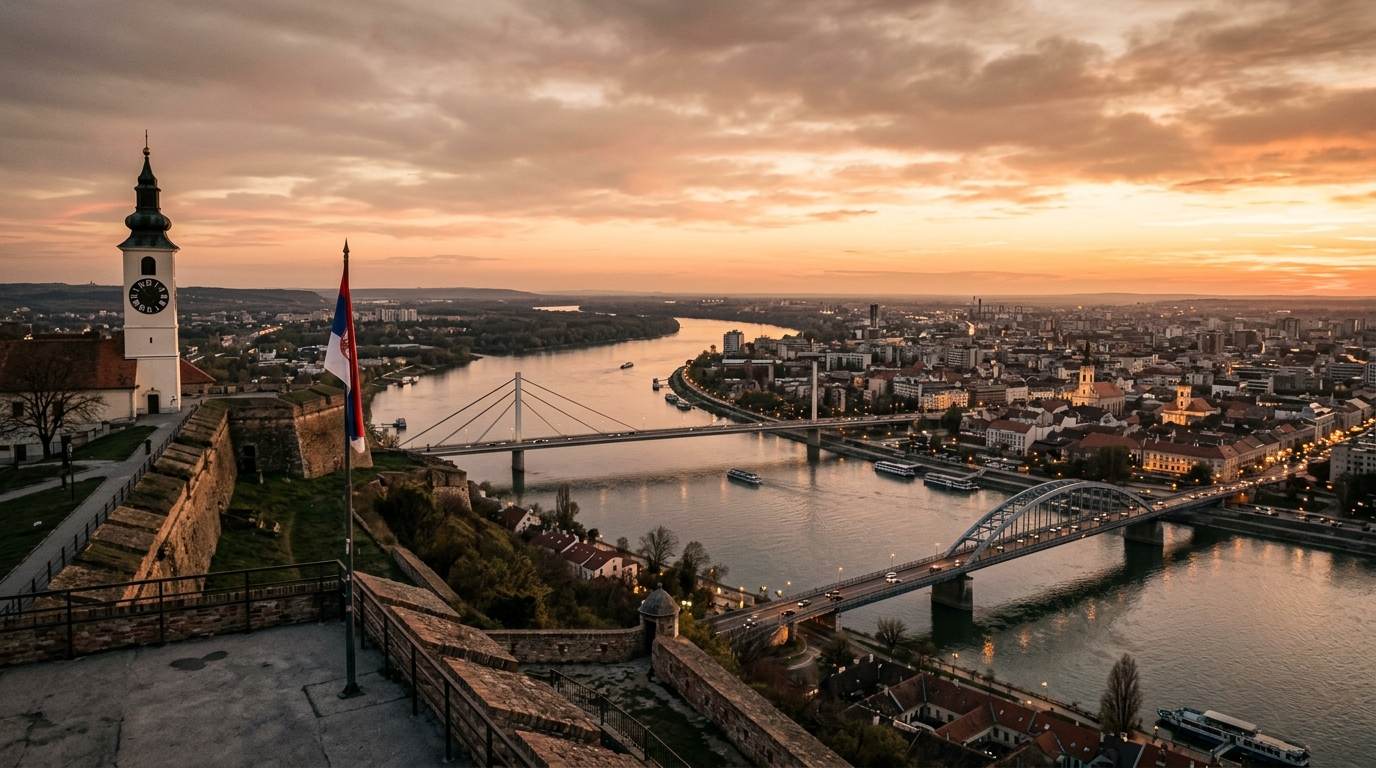
Novi Sad: paid parking in the center, RSD 40-60/hour. The Petrovaradin Fortress area has a free lot on weekdays.
Nis: street parking is cheap and rarely problematic. RSD 30/hour in the center.
Tip: In Belgrade, parking signs with a red “P” crossed out mean towing, not just a ticket. The impound lot is in Novi Beograd, and retrieving your car costs around EUR 50 plus frustration.
Insurance & Documents
EU/EEA driving licenses are valid. Non-EU holders should carry an International Driving Permit. Vehicle registration documents must be in the car at all times.
Third-party insurance is mandatory. Most EU green cards include Serbia (“SRB” on the back). If yours does not, border insurance costs roughly RSD 5,000-8,000 (EUR 42-68) for two weeks.
Rental cars from EU countries generally allow Serbia (confirm in advance). Cross-border fees apply at some agencies (EUR 20-50). If you are doing a multi-country Balkan trip, renting in Serbia can be cost-effective — Belgrade agencies offer competitive rates and are more flexible about cross-border travel than Croatian or Slovenian agencies.
Kosovo note: Entering Kosovo from Serbia is straightforward, but some insurers do not cover Kosovo. Check your policy. If you rent a car in Serbia, most agencies prohibit entry to Kosovo — ask explicitly.
For the complete insurance comparison across all countries, see our driving guide.
Country Articles
Explore Serbia in more detail with these guides:
- Belgrade Day Trips by Car — the best drives within 2 hours of the capital
- Djerdap Gorge Danube Drive — the Iron Gates route along the Danube
Routes Through Serbia
Serbia’s central position makes it a hub for many of our itineraries:
- Heart of the Balkans: Sarajevo to Ohrid — through central Serbia toward Macedonia
- Belgrade to Dubrovnik — westward through Bosnia to the coast
- Black Sea to Adriatic — crossing Serbia from Bulgaria to Bosnia
- Grand Balkan Circuit — Serbia as the northern anchor of the full loop
With eight border crossings to manage, Serbia is the most connected country in the Balkans. For all crossing details, see our border crossings guide.