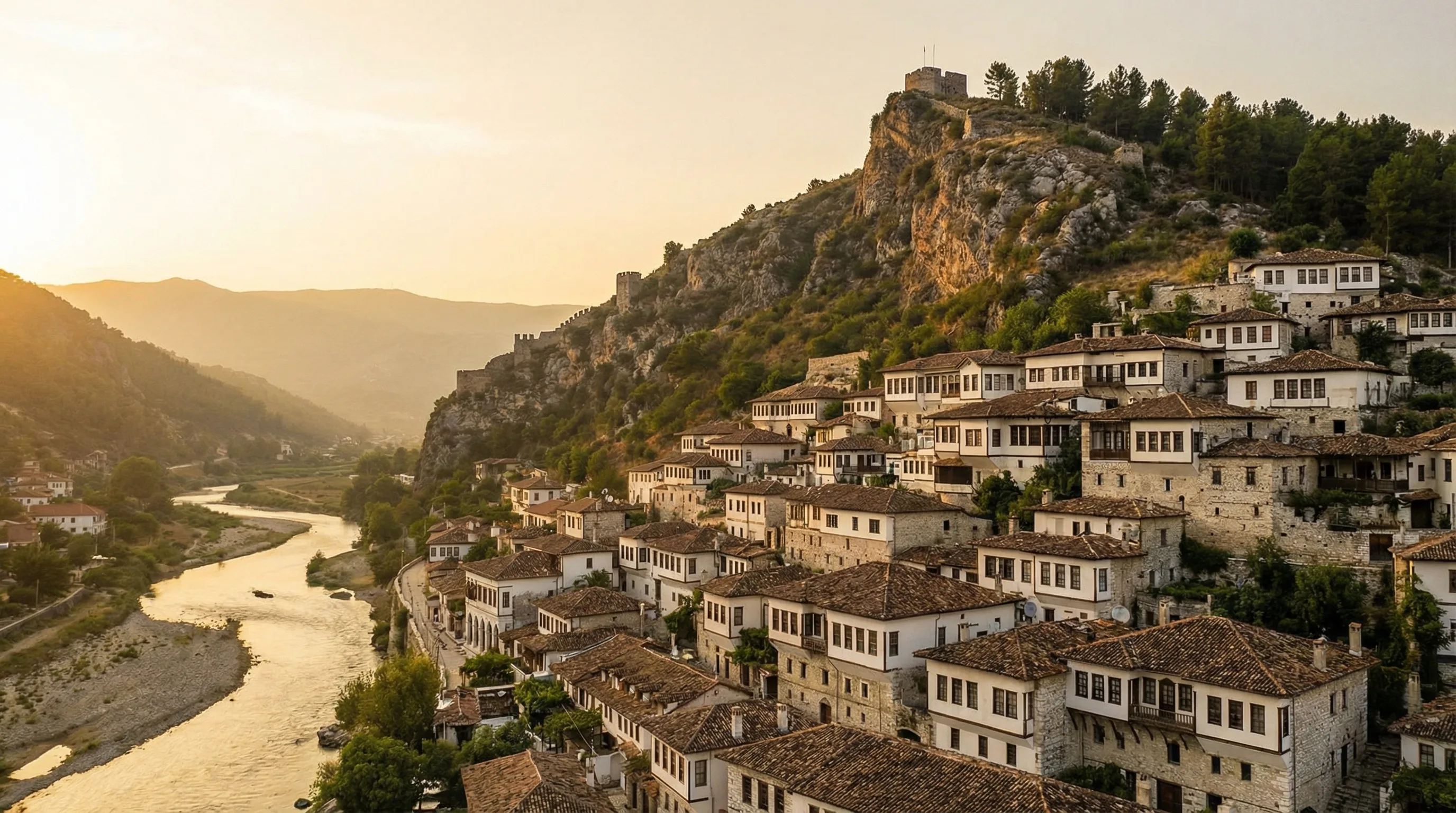
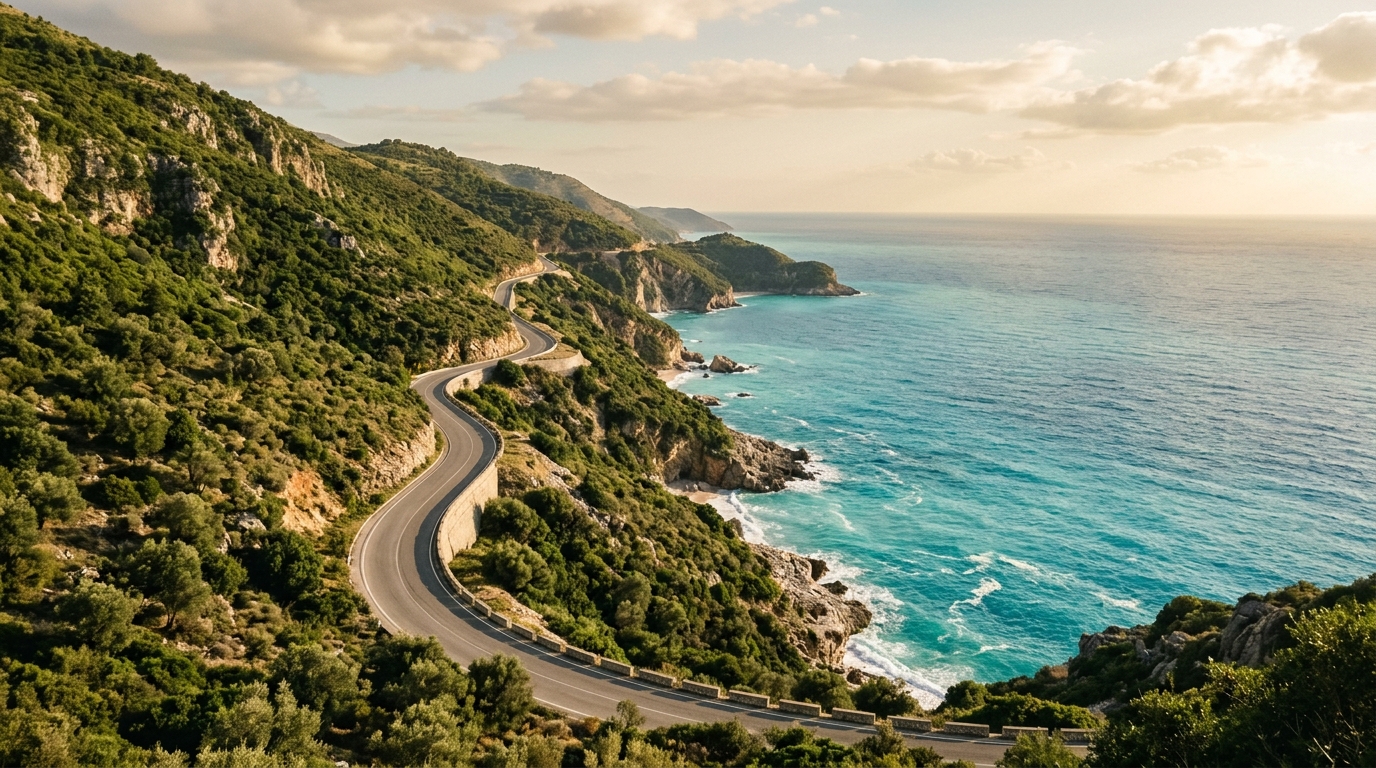
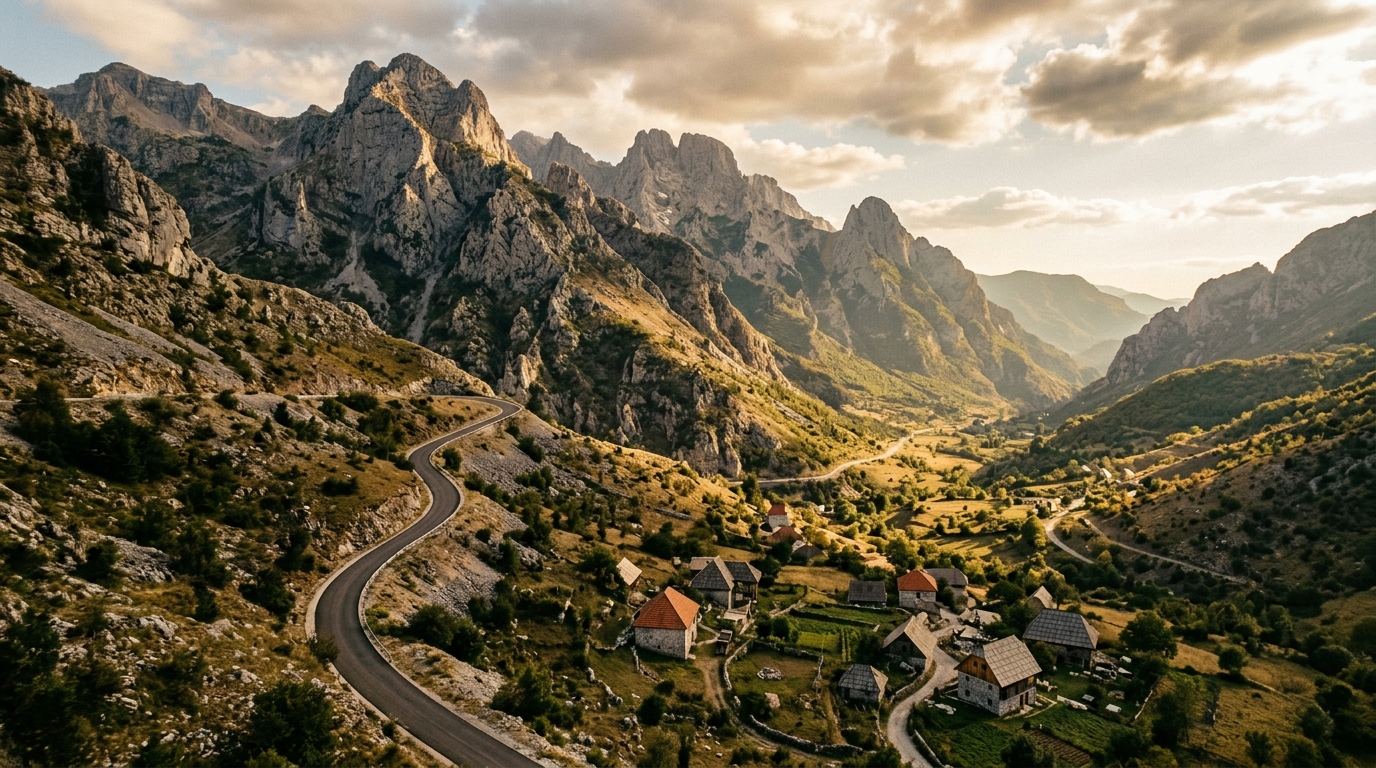
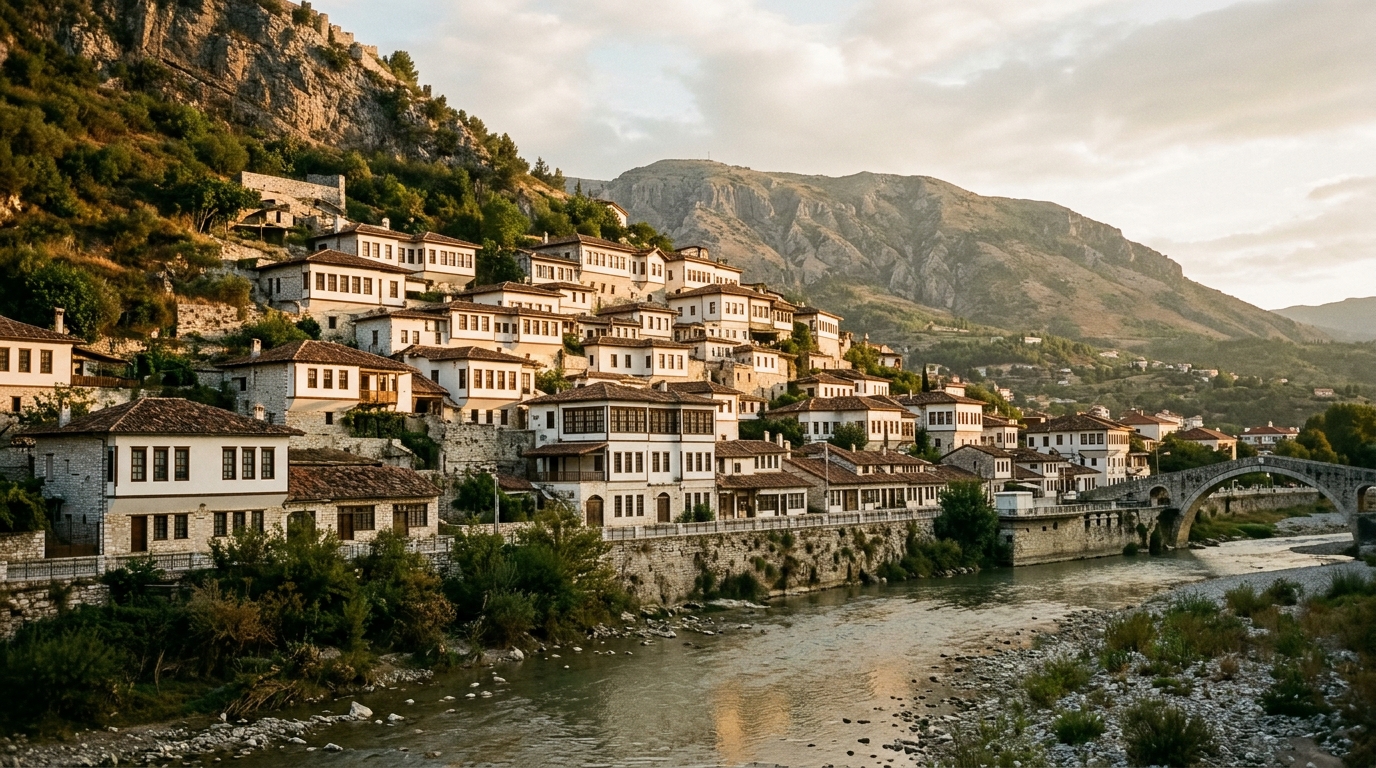
Albania is the country that makes every Balkan road trip story worth telling. We have driven from Shkoder to Sarande and back, rattled along mountain tracks in Theth, and cruised the SH8 coast road with the Ionian Sea doing things with color that should not be possible. The roads here are improving at a speed that would impress even the EU infrastructure fund, but “improving” still means you will encounter stretches that test your suspension, your patience, and your assumption that a road should have two lanes. That unpredictability is part of the appeal. Albania rewards drivers who bring the right attitude: stay flexible, keep your speed moderate, and you will have the time of your life.
Road Conditions
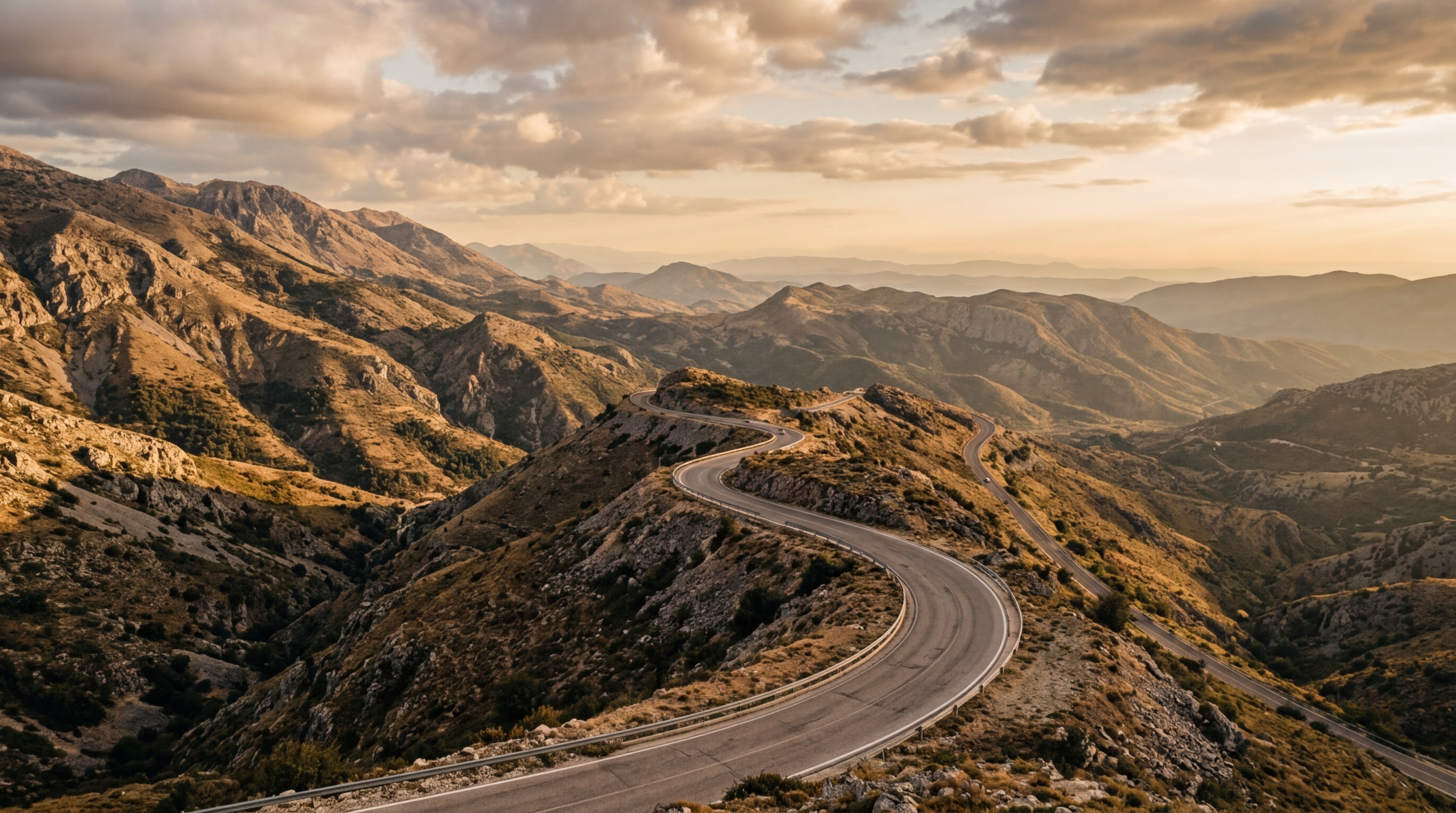
Albania’s road network has transformed dramatically in the past decade. The A2 motorway from Tirana to Kosovo is genuinely modern. The SH4 connecting Tirana to Elbasan and onward to Pogradec is decent. The SH8, the famous coastal route from Vlore to Sarande along the Ionian Sea, has been upgraded and now features solid asphalt and proper guardrails for most of its length.
That said, once you leave the main corridors, conditions change quickly. Mountain roads to Theth, Valbona, and parts of the interior can be unpaved, single-lane, and shared with livestock. These are not roads where you push the speed — they are roads where you pay attention and enjoy the scenery at 30 km/h.
The quality difference between a new Albanian highway and a mountain track is probably the largest of any European country. In a single day, you can drive on a road that rivals Austria and then navigate a gravel path that would challenge a donkey.
An SUV or high-clearance vehicle is strongly recommended if you plan to explore the Albanian Alps (Theth, Valbona) or the remote villages inland. For the coast and main cities, a standard car is fine.
Tip: Albanian drivers use their horns the way other Europeans use turn signals — as a general announcement of existence. Do not take it personally. A honk at a blind corner is a courtesy, not aggression.
Speed Limits & Rules
| Road Type | Speed Limit |
|---|---|
| Motorways / expressways | 110 km/h |
| Main roads | 80 km/h |
| Rural roads | 70 km/h |
| Urban areas | 40 km/h |
Required equipment:
- Reflective vest
- Warning triangle
- First-aid kit
- Fire extinguisher
- Headlights on at all times outside urban areas
Blood alcohol limit: 0.01% — effectively zero tolerance. Do not drink and drive in Albania. The police are unpredictable about enforcement, but the fines are high and your insurance becomes void.
The urban speed limit of 40 km/h (not 50 km/h as in most of Europe) catches many visitors off guard. Police with radar guns frequent the entrances to towns along the SH8 and the road between Tirana and Durres.
Fuel & Costs
Albania uses the Albanian Lek (ALL), though many fuel stations also accept Euros at a slightly unfavorable rate. ATMs are common in cities; bring cash for rural areas.
| Fuel Type | Average Price |
|---|---|
| Eurosuper 95 | ~220 ALL/L (~EUR 1.45/L) |
| Diesel | ~210 ALL/L (~EUR 1.40/L) |
| LPG | ~100 ALL/L (~EUR 0.65/L) |
Kastrati, Alpet, and EuroFuel are the main chains. Stations are frequent along coastal roads and between cities. In the mountains, fuel availability drops — fill up before heading to Theth, Permet, or anywhere east of Korce.
Albania has no tolls and no vignette system. Combined with cheap fuel, it may be the most affordable country in Europe for driving.
| Cost Comparison | Albania | Croatia |
|---|---|---|
| Fuel (per L) | ~EUR 1.45 | ~EUR 1.50 |
| Tolls (100 km highway) | EUR 0 | ~EUR 8 |
| Parking (city center/hr) | EUR 0.30-0.50 | EUR 1-2 |
Parking
In Tirana, paid parking zones cover the center (50-100 ALL/hour, roughly EUR 0.30-0.65). You pay via SMS or at kiosks. Finding a space is competitive — Tirana has more cars than its streets were designed for.
In Sarande and other coastal towns, summer parking is tight. Most tourists park along the main road and walk down to the waterfront. In Berat and Gjirokaster (both UNESCO sites), park at the base of the old towns and walk up — the streets inside are pedestrian-only and steep.
For Theth and Valbona, you park where the road ends. Literally. The last stretch is often a gravel track, and the “parking lot” is a field next to someone’s guesthouse.
Tip: Never leave valuables visible in your car. Albania is safe for tourists, but petty theft from parked cars happens in larger cities just as it does everywhere in Southern Europe.
Insurance & Documents
EU driving licenses are accepted. An International Driving Permit is not legally required for EU license holders but is recommended to avoid confusion during any police checks.
Third-party insurance is mandatory. EU green cards are recognized at the border — verify that Albania is listed on yours (the “AL” box on the back should not be crossed out). If it is not covered, you must buy border insurance (approximately EUR 15 for two weeks).
Many rental agencies in Croatia and Montenegro restrict their vehicles from entering Albania. If you are renting abroad and driving in, confirm explicitly that Albania is permitted, get it in writing, and expect a cross-border surcharge of EUR 30-80. Alternatively, rent a car in Albania itself — agencies in Tirana and at the airport offer competitive rates.
For insurance requirements across all countries, see our driving guide.
Country Articles
Dive deeper into Albania with these guides:
- Albanian Riviera Driving Guide — the SH8 and beyond
- Tirana to Berat Day Trip — inland to the city of a thousand windows
- Road Conditions & Safety in Albania — honest assessment of what to expect
Routes Through Albania
Albania features in several of our cross-border itineraries:
- Adriatic Coast: Dubrovnik to Tirana — arriving from Montenegro through Shkoder
- Albanian Riviera Loop — the full coastal circuit
- Grand Balkan Circuit — Albania as part of the 7-country loop
For details on all four of Albania’s border crossings, see our border crossings guide.