The Grand Balkan Circuit
Three weeks. Seven countries. Six border crossings. One car that will need a wash by the end.
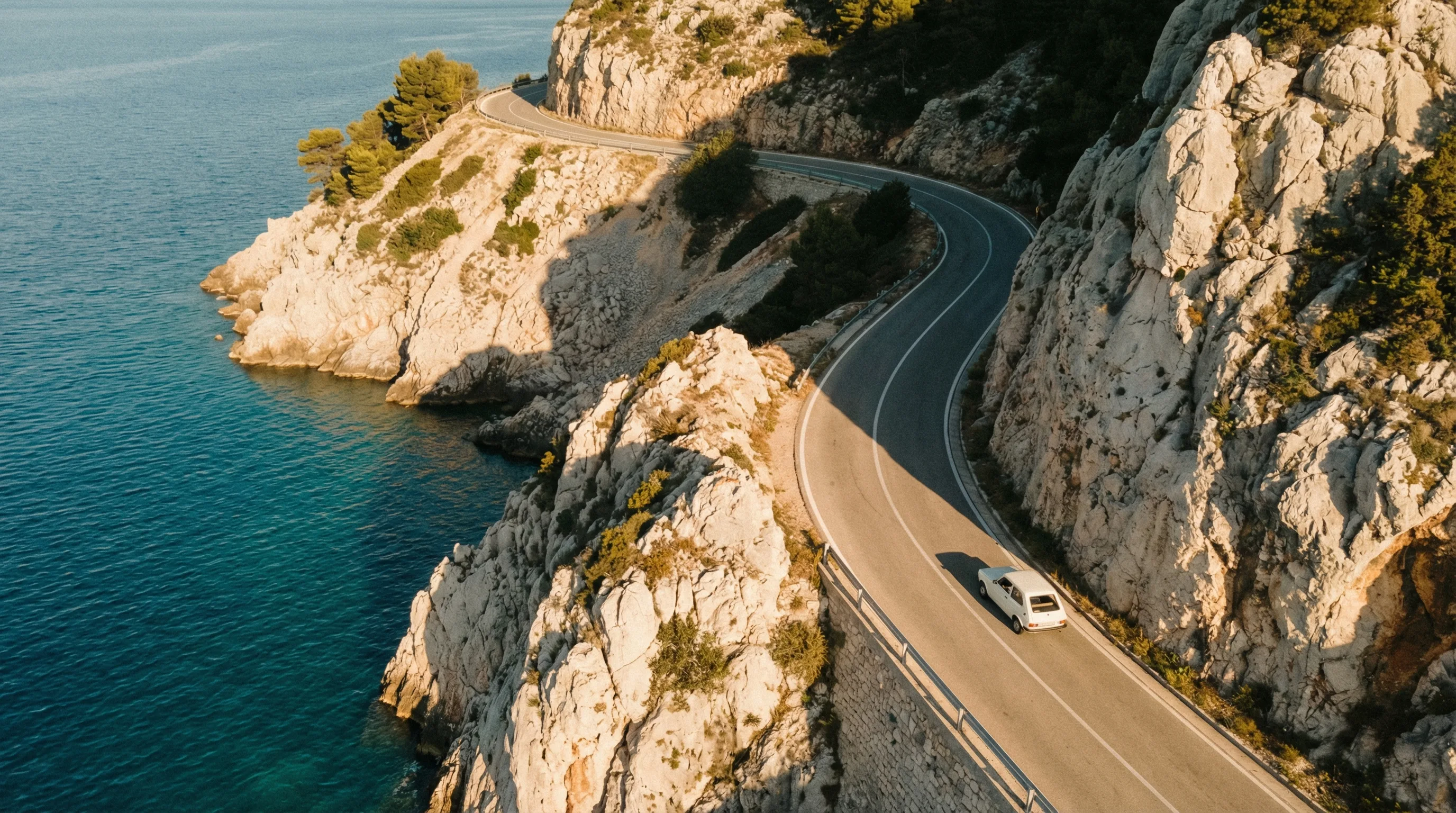
We drove this circuit in September, starting in Ljubljana on a foggy morning and finishing in Belgrade on a warm Friday night with the city’s floating river bars thumping bass across the Sava. In between: Alpine lakes, Roman palaces, Ottoman bazaars, communist bunkers, a castle perched above a fjord, and roughly 2,800 km of roads ranging from autobahn-quality motorways to single-lane mountain passes where right of way is determined by whoever flashes their headlights first.
This is the route for people who want to see the Balkans properly. Not a greatest-hits flyover, but a full immersion – enough time in each country to understand why the coffee is different, why the driving style changes at every border, and why this peninsula, smaller than Texas, contains more variety per square kilometer than anywhere else in Europe.
Route Overview
| Segment | Distance | Drive Time | Border Crossing |
|---|---|---|---|
| Ljubljana to Zagreb | 140 km | 2 hours | Slovenia-Croatia |
| Zagreb to Plitvice | 135 km | 2 hours | – |
| Plitvice to Split | 240 km | 3.5 hours | – |
| Split to Dubrovnik | 230 km | 3.5 hours | (Neum/Bosnia transit) |
| Dubrovnik to Kotor | 93 km | 2.5 hours | Croatia-Montenegro |
| Kotor to Shkoder | 130 km | 3 hours | Montenegro-Albania |
| Shkoder to Ohrid | 200 km | 5 hours | Albania-North Macedonia |
| Ohrid to Skopje | 170 km | 3 hours | – |
| Skopje to Nis | 200 km | 3.5 hours | North Macedonia-Serbia |
| Nis to Belgrade | 240 km | 2.5 hours | – |
| Total | ~2,800 km | ~35 hours driving | 6 |
Tip: Six border crossings sounds like a lot, but most Balkan borders are quick (10-30 minutes) outside peak summer. The slowest will be entering Croatia from Slovenia or Montenegro in July-August. Carry all documents in one folder: passport, license, Green Card, rental agreement.
Days 1-2: Ljubljana and Lake Bled, Slovenia
Slovenia is the kind of country where everything works, the roads are pristine, and the espresso costs EUR 1.50. It is the Balkans with training wheels, and it makes a perfect starting point before things get more interesting further south.
Ljubljana is a city that should be more famous than it is. The car-free Old Town along the Ljubljanica River, the hilltop castle connected by funicular, and the Central Market designed by Joze Plecnik – it all fits into one energetic afternoon. Park at one of the garages near the center (Kongresni trg or NUK, EUR 1-2/hour) and walk.
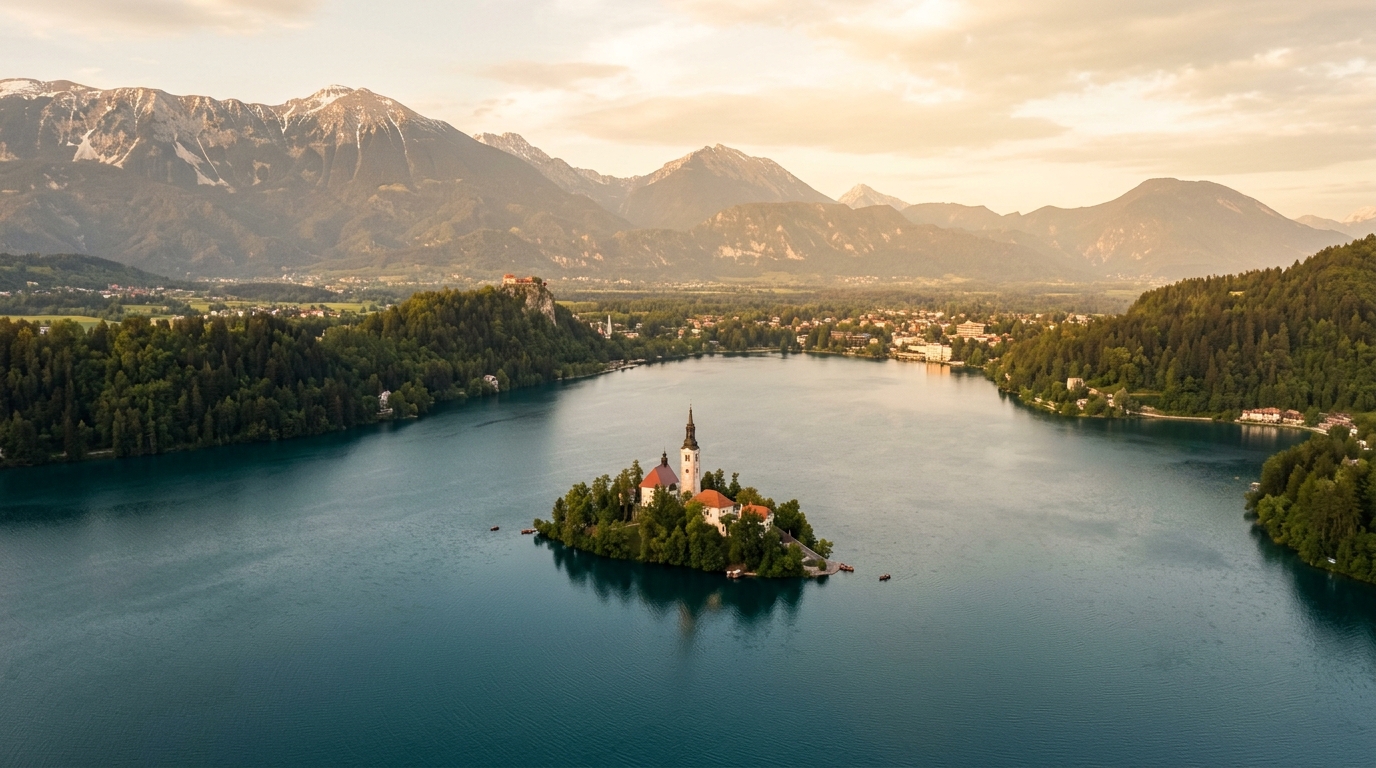
On day two, drive 55 km to Lake Bled. Yes, everyone and their Instagram feed has photographed the island with the church, and yes, you should still go. Rent a traditional pletna boat (EUR 15 per person) or swim to the island if you prefer not to pay. The lake loop walk (6 km, flat) takes 90 minutes and reveals angles that make the cliched views look earned.
If you have the afternoon free, consider driving over the Vrsic Pass – 50 numbered hairpin turns through the Julian Alps, connecting Kranjska Gora to the Soca Valley. It adds 3 hours to your day but it is the best mountain drive in Slovenia. See our Vrsic Pass driving guide for details.
Tip: Buy your Slovenian motorway vignette online before arriving (e-vignette, EUR 16 for 7 days at evinjeta.dars.si). Driving on Slovenian motorways without one carries a EUR 300 fine, and the police check frequently.
Day 3: Zagreb, Croatia
The Ljubljana-Zagreb motorway is 140 km of well-maintained highway with one border crossing. The Slovenia-Croatia border can take 20-40 minutes in summer, less in shoulder season. You will need to buy a Croatian motorway toll ticket (pay at each station, cash or card accepted).
Zagreb does not have the coastal glamour of Split or Dubrovnik, which is exactly why it is worth a day. The Upper Town (Gornji Grad) has the cathedral, St. Mark’s Church with its tiled roof, and the Museum of Broken Relationships, which is exactly as good as everyone says it is. The Dolac Market, a terrace of red parasols above the main square, is where the city shops for produce every morning.
Walk the Upper Town, have lunch at a konoba in Tkalciceva Street, visit the museum, and spend the late afternoon at one of the cafes on Bogoviceva or the main square. Zagreb is not a city that reveals itself to people in a hurry, but one day gives you enough to understand why Croatians are proud of their capital for reasons that have nothing to do with the sea.
| Zagreb Highlights | Time Needed | Cost |
|---|---|---|
| Upper Town walk | 2 hours | Free |
| Museum of Broken Relationships | 1 hour | EUR 8 |
| Dolac Market | 30 min | Free |
| Mirogoj Cemetery | 1 hour | Free |
| Tkalciceva Street lunch | 1 hour | EUR 10-20 |
Days 4-5: Plitvice Lakes
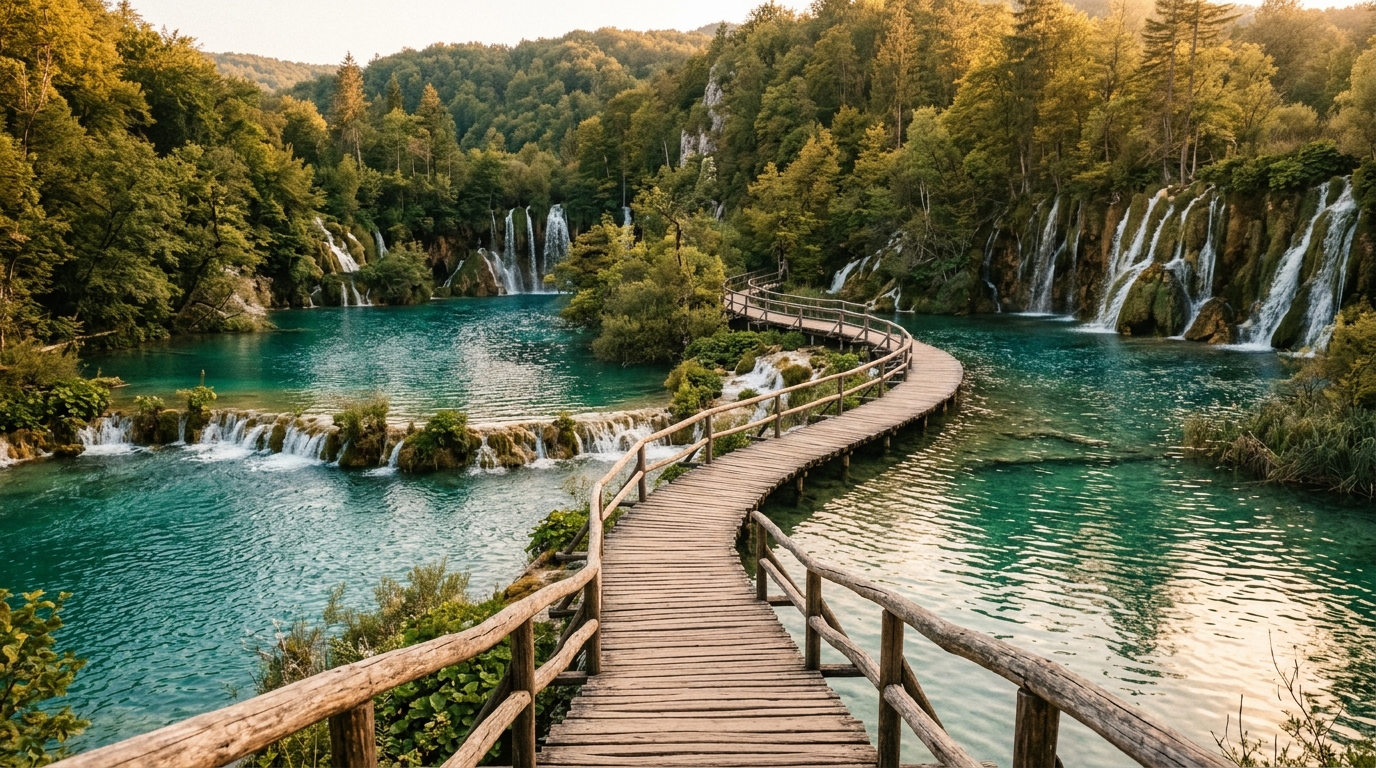
Drive south from Zagreb on the A1 motorway for about 2 hours. Plitvice Lakes National Park is Croatia’s most-visited natural site, and for good reason: 16 lakes connected by waterfalls, terraced into a forested canyon, with wooden boardwalks threading between them.
Arrive early (before 9 AM in summer) to avoid the thickest crowds. The Lower Lakes circuit is the most photogenic – turquoise water pouring over travertine barriers with the canyon walls rising above. The full Upper and Lower Lakes loop takes 4-6 hours depending on your pace and how many times you stop to photograph the same waterfall from a slightly different angle.
Tickets are EUR 23.50-39.80 depending on season and are sold online (mandatory in peak season – buy ahead). Parking is EUR 1/hour. If you have two days, do the Lower Lakes on day one and the Upper Lakes on day two – the upper section is less crowded and has a different character, more forest and fewer waterfalls.
Stay in one of the guesthouses near the park entrance (Rastoke, a village built on waterfalls, is 25 km away and worth the drive) rather than in Plitvice village, which exists solely for the park and has the ambiance to prove it.
Tip: The Croatian toll system uses cash or card at each toll station. Keep small bills handy. The A1 motorway from Zagreb to Split is well-maintained and the toll for the full distance is about EUR 25.
Days 6-7: Split
The drive from Plitvice to Split crosses the central Croatian highlands before descending to the coast. About 3.5 hours, mostly motorway, with the last stretch through the mountains into Split being the scenic payoff.
Split is built inside and around the ruins of Diocletian’s Palace, a 4th-century Roman retirement home that the city simply absorbed over the centuries. The result is a living archaeological site where you can buy groceries in a basement that was built for a Roman emperor. The Peristil, the central courtyard, is surrounded by restaurants that charge too much and by Corinthian columns that are genuinely 1,700 years old.
Marjan Hill, the forested peninsula west of the Old Town, is Split’s escape valve. Climb to the top for views over the city and the islands, or follow the southern path to the secluded Kasjuni beach.
On day two, take a day trip to Trogir (27 km, 30 minutes), a tiny UNESCO-listed town on an island connected to the mainland by a short bridge. It has the same Venetian architecture as Split but without the crowds, and you can walk end to end in 20 minutes.
Split is a city that happens to contain a Roman palace, not a Roman palace that happens to be a city. The locals would like you to know the difference.
Days 8-9: Dubrovnik
The Split-to-Dubrovnik coastal drive (230 km, 3.5 hours) is one of Croatia’s best. The road hugs the coast past the Makarska Riviera and descends through the Peljesac peninsula before hitting the Neum corridor – that brief stretch of Bosnia that interrupts Croatia’s coastline.
Dubrovnik needs no introduction. Two days is enough for the walls walk (do it early morning), the cable car up Mount Srd (late afternoon for sunset), and a boat to Lokrum Island (EUR 20 return, 15 minutes, nude swimming optional). Budget EUR 60-100 per day here for accommodation and food – Dubrovnik is the most expensive stop on this entire circuit.
For driving details and practical tips on Dubrovnik, see the Dubrovnik section of our Adriatic Coast route.
Tip: When leaving Dubrovnik for Montenegro, avoid the Karasovici border crossing during morning hours in summer. The line of cars trying to reach Kotor can stretch for kilometers. Cross before 8 AM or after 6 PM.
Days 10-11: Kotor and the Bay, Montenegro
The Dubrovnik-to-Kotor drive is described in detail in our Adriatic Coast itinerary, but the summary is: the Bay of Kotor is one of the most dramatic coastal drives in Europe, and Kotor’s Old Town is worth two nights.
The fortress hike (1,350 steps to the top of San Giovanni) is the essential Kotor experience. The medieval Old Town below is small enough to explore in an evening but atmospheric enough to warrant lingering. The cats of Kotor are famous, and they know it.
Day two options from Kotor:
| Day Trip | Distance | Drive Time | Highlights |
|---|---|---|---|
| Perast + Our Lady of the Rocks | 12 km | 20 min | Baroque town, island church |
| Budva + Sveti Stefan | 22 km | 30 min | Beaches, photogenic island |
| Lovcen National Park | 35 km | 1 hour | Mountain road, Njegos Mausoleum at 1,657m |
| Cetinje (old capital) | 30 km | 50 min | Museums, royal palaces, monastery |
Montenegro is small enough that any of these day trips can be done and still leave time for an evening in Kotor’s Old Town.
Day 12: Shkoder, Albania
Cross into Albania at the Hani i Hotit / Bozaj border (15-30 minutes typical wait). The contrast is immediate. Roads get rougher. Mercedes-Benz becomes the dominant car species. Small roadside cafes appear every 500 meters. Welcome to the most interesting country in the Balkans.
Shkoder (also spelled Shkodra) sits at the southern tip of Lake Skadar and is the traditional northern capital of Albania. The Rozafa Castle above the city provides a panoramic view over the lake and the Albanian Alps in the distance. The Rruga Kole Idromeno pedestrian street in the center has been rebuilt and is now one of the most pleasant walks in Albania.
One day is enough for Shkoder, but if you have time, take a half-day boat trip on Lake Shkoder from the Montenegrin side or drive to the Koman ferry (2 hours from Shkoder), one of the most spectacular waterway journeys in Europe.
Tip: Albanian fuel stations often have two prices posted: one for cash, one for card. Cash is cheaper by about 5-10 lek per liter. Also, not every station’s card machine works. Carry cash (Albanian lek) for fuel.
Practical: Albania by Car
- Buy Albanian road insurance at the border if your rental policy does not cover Albania (EUR 30-50 for 15 days)
- Speed limits: 40 km/h urban, 80 km/h rural, 110 km/h highway (where highways exist)
- Police checkpoints are common and usually routine – have your documents ready
- Google Maps drive time estimates for Albania: add 30-50% to whatever it says
Days 13-14: Ohrid, North Macedonia
The drive from Shkoder to Ohrid (200 km, about 5 hours) crosses Albania diagonally through Lezhe and Elbasan before reaching the Qafe Thane / Kjafasan border crossing into North Macedonia. The Albanian section of this drive is slow – the roads wind through mountains and pass through numerous small towns. Start early.
Lake Ohrid is the jewel of this route. It is one of the oldest and deepest lakes in Europe, with water so clear you can see the bottom at 5 meters. The town of Ohrid, on the northeastern shore, is a compact center of medieval churches, Ottoman houses, and a lakeside promenade that fills with life every evening.
Must-do in Ohrid:
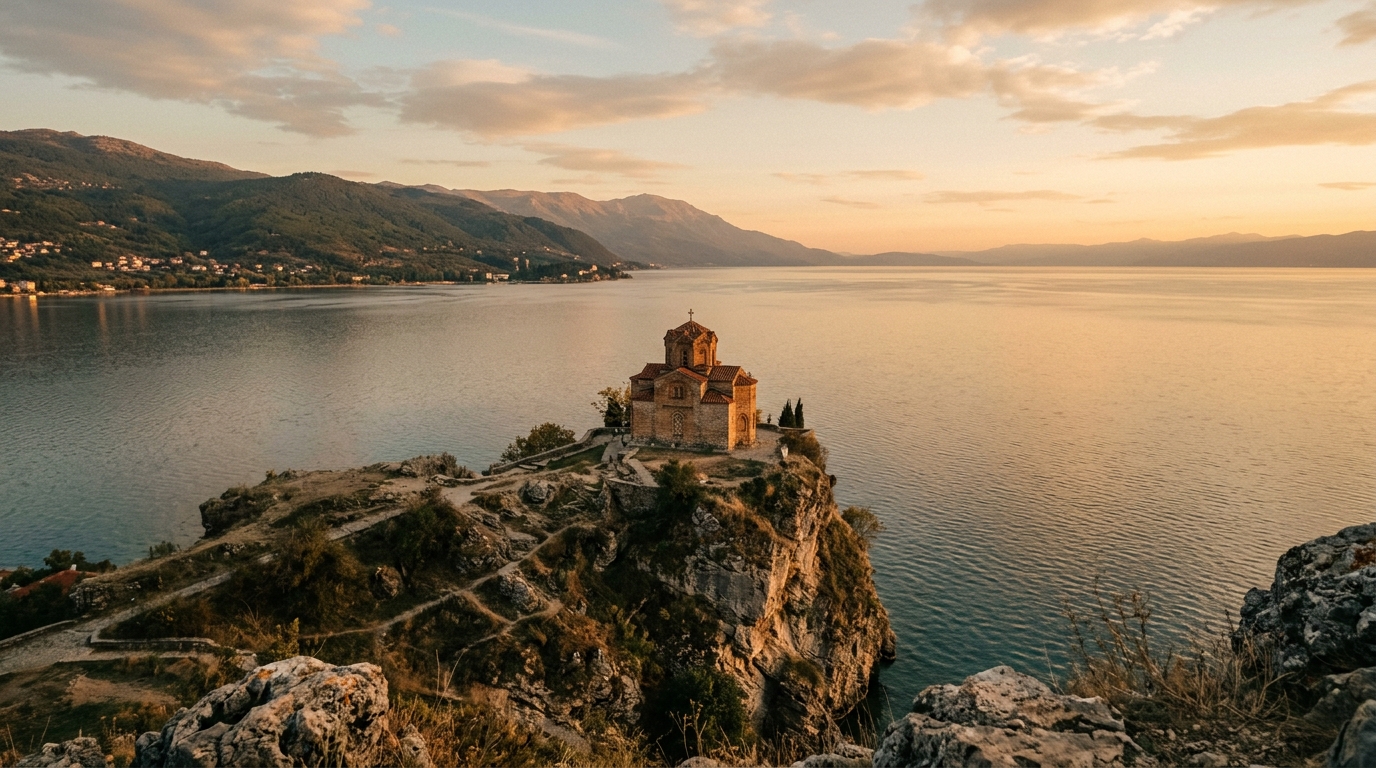
- Church of St. John at Kaneo – the cliff-perched church on every Macedonian postcard, reached by a lakeside walk from the Old Town
- Samuel’s Fortress – hilltop ruins with 360-degree lake views
- Ohrid Old Town – wander the narrow streets between the lake and the fortress
- Sveti Naum Monastery – 29 km south along the lake, with peacocks and a spring-fed river you can boat on
- Bay of Bones – reconstructed Bronze Age stilt village on the lake, 10 km south
Two days in Ohrid is not enough, but it gives you the essentials. Accommodation is cheap (EUR 30-50 for a lakeside apartment), food is excellent and affordable (a full grilled trout dinner for EUR 6-8), and the vibe is Mediterranean without the prices.
Ohrid is the place where everyone says “I should have stayed longer” and nobody disagrees.
Days 15-16: Skopje
The drive from Ohrid to Skopje (170 km, 3 hours) crosses the Macedonian interior through a landscape of mountains and highland plains. The road is good, two-lane, and mostly empty.
Skopje is a city that divides opinion. Between 2010 and 2018, the government spent hundreds of millions of euros on a project called “Skopje 2014” – neoclassical facades, monumental statues, replica triumphal arches – plastered over a city that was rebuilt in brutalist style after a devastating 1963 earthquake. The result is jarring, kitsch, and strangely compelling. Walk through the center with an open mind and decide for yourself.
What Skopje does unambiguously well:
- Old Bazaar (Carsija) – the largest Ottoman bazaar in the Balkans outside Istanbul. Spice shops, metalworkers, mosques, and some of the best cheap food in southeastern Europe. Destan (kebabs) and Kolektiv (coffee) are local institutions.
- Matka Canyon – 15 km southwest of the center, a canyon with kayak rentals (EUR 5/hour), cave tours, and hiking trails. Half a day minimum.
- Kale Fortress – hilltop fortress above the river, free entry, good city views.
- Memorial House of Mother Teresa – yes, she was born in Skopje. Small but worth 30 minutes.
| Skopje Costs | Price |
|---|---|
| Meal at Old Bazaar | EUR 3-6 |
| Kayak rental, Matka Canyon | EUR 5/hour |
| Taxi across the city | EUR 2-3 |
| Hostel/budget hotel | EUR 15-30/night |
| Apartment | EUR 25-45/night |
Tip: The Skopje bus station and the car rental offices are both near the Old Bazaar. If you are returning a rental car in Skopje and continuing by bus to Thessaloniki or Sofia, it is a convenient hub.
Days 17-18: Nis, Serbia
The North Macedonia-Serbia border crossing at Tabanovce / Presevo is straightforward (10-20 minutes). From Skopje, you are in Nis in about 3.5 hours. The E75 highway is a proper motorway on the Serbian side – the difference in road quality when you cross the border is noticeable.
Nis is Serbia’s third-largest city and one of the oldest in Europe. It does not have the glamour of Belgrade, which is part of its appeal. The city is lived-in and unhurried, with a history that ranges from the Roman Empire (Constantine the Great was born here) to some of the darkest chapters of the 20th century.
The Skull Tower (Cele Kula) is unlike anything else on this route. After a failed Serbian uprising in 1809, the Ottoman commander built a tower embedded with the skulls of 952 Serbian rebels. It still stands, behind glass in a small chapel, and serves as a reminder that Balkan history is not all picturesque bridges and charming old towns.
The Nis Fortress, on the banks of the Nisava River, is a large Ottoman fortification that now functions as the city’s park and gathering place. Walk the walls, have a coffee in one of the cafes inside, and watch the city move at its own pace. If you want to relax, drive 10 km east to Niska Banja, a hot springs spa town that is unglamorous but cheap and genuinely therapeutic (EUR 3-5 for a thermal pool session).
Tip: Serbian highways use a toll system. The Belgrade-Nis stretch costs about EUR 8. Cards are accepted at all toll booths. The speed limit on Serbian motorways is 130 km/h, and speed cameras are common.
Days 19-21: Belgrade
The final 240 km from Nis to Belgrade is a straight motorway drive of about 2.5 hours. Belgrade appears gradually – first the suburban sprawl, then the tower blocks, then the confluence of the Sava and Danube rivers, and suddenly you are in one of Europe’s most underrated capitals.
Belgrade is not pretty. It has been destroyed and rebuilt 44 times (a fact Belgraders mention with a mix of pride and dark humor), and the architectural result is a patchwork of Ottoman remnants, Habsburg elegance, communist blocks, and brand-new glass towers. But the energy is unmistakable – this is a city that lives at night, eats with enthusiasm, and does not care what you think of its facades.
Three days in Belgrade allows you to properly experience:
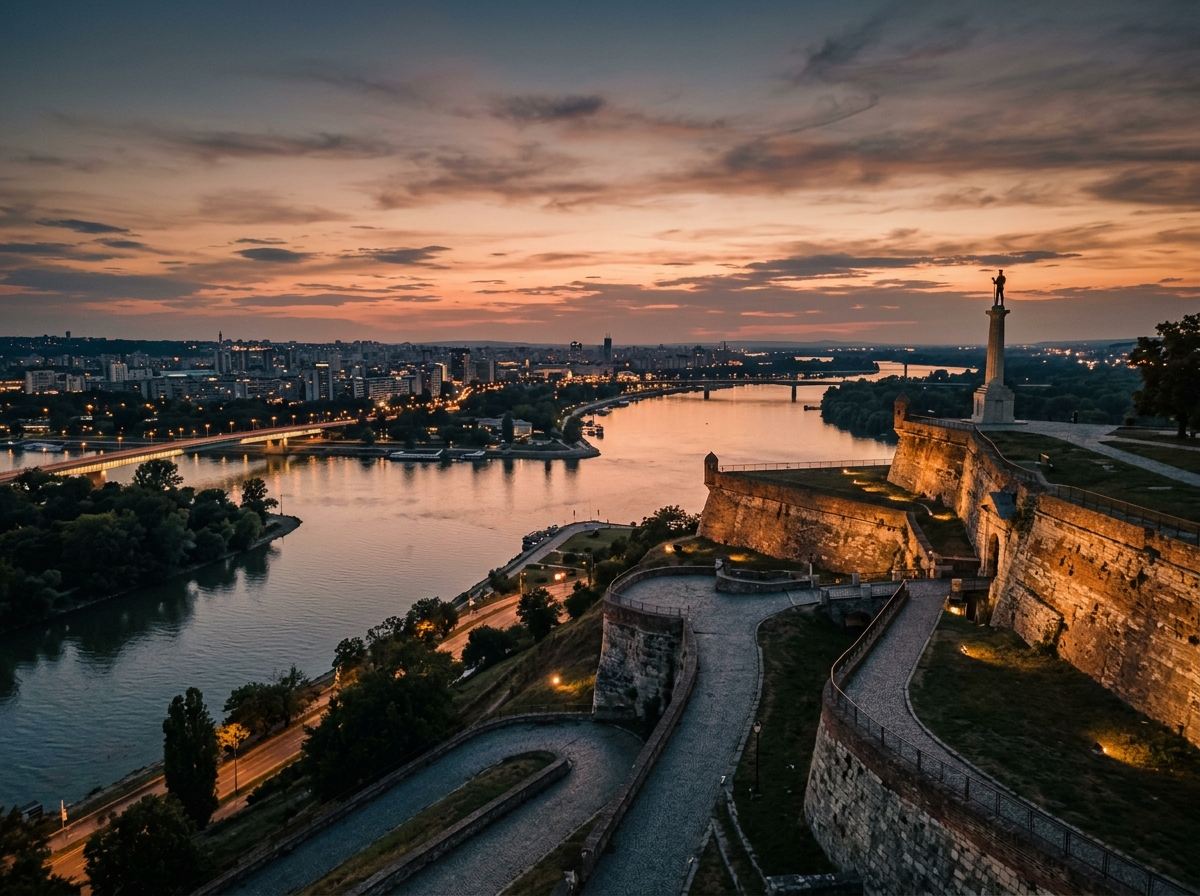
- Kalemegdan Fortress – at the confluence of the two rivers, part Roman, part medieval, part Ottoman, entirely magnificent at sunset
- Skadarlija – Belgrade’s bohemian quarter, a cobbled street of Serbian restaurants with live music and too much rakija
- Ada Ciganlija – a river island turned into Belgrade’s beach. In summer, half the city is here swimming, cycling, or doing exactly nothing
- Temple of Saint Sava – one of the largest Orthodox churches in the world, with a recently completed gold mosaic interior that took decades to finish
- New Belgrade floating bars (splavovi) – permanently moored barges on the river that become clubs after midnight. Belgrade’s nightlife is legendary for a reason
| Belgrade Costs | Price |
|---|---|
| Apartment in Dorcol/Vracar | EUR 40-70/night |
| Serbian meal for two with wine | EUR 20-30 |
| Coffee on Knez Mihailova | EUR 1.50-2.50 |
| Kalemegdan Fortress | Free |
| Temple of Saint Sava | Free |
| Ada Ciganlija (entry + bike rental) | EUR 0 + EUR 5 |
| Night out at splavovi | EUR 10-30 |
Belgrade is where the circuit ends, but it does not feel like an ending. It feels like the start of something that involves loud music, grilled meat, and staying out much later than you planned.
Budget Breakdown
| Category | Daily Estimate | 21-Day Total |
|---|---|---|
| Accommodation (2 people) | EUR 45-80 | EUR 945-1,680 |
| Fuel (~2,800 km) | – | EUR 280-400 |
| Tolls (Slovenia, Croatia, Serbia) | – | EUR 60-90 |
| Food (restaurants + groceries) | EUR 25-45 | EUR 525-945 |
| Activities & entrance fees | EUR 10-20 | EUR 210-420 |
| Border insurance (Albania) | – | EUR 30-50 |
| Parking (various cities) | – | EUR 60-100 |
| Total per person | – | EUR 2,000-3,200 |
The cost curve drops as you move south: Slovenia and Croatia are the most expensive stops, Albania and North Macedonia the cheapest. A restaurant meal that costs EUR 25 in Dubrovnik costs EUR 8 in Ohrid and EUR 5 in Shkoder.
Practical Information
Car Rental Strategy
Rent in Ljubljana and drop off in Belgrade (or vice versa). One-way fees between these cities are typically EUR 100-200. The key constraint is Albania: many rental companies prohibit taking their cars into Albania. You need an agency that explicitly allows it – see our car rental guide for recommendations.
An SUV or crossover is recommended for this route. The Albanian roads between Shkoder and the Macedonian border have stretches that are rough, and the mountain passes in Slovenia benefit from the ground clearance. You can do the entire route in a standard car, but you will wish you hadn’t on the road between Elbasan and the Macedonian border.
Vignettes and Tolls
| Country | Toll System | Cost |
|---|---|---|
| Slovenia | E-vignette (7 days) | EUR 16 |
| Croatia | Pay at each toll station | ~EUR 25 Zagreb-Dubrovnik |
| Bosnia | No tolls (Neum transit) | Free |
| Montenegro | No tolls | Free |
| Albania | No tolls | Free |
| North Macedonia | No tolls | Free |
| Serbia | Pay at each toll station | ~EUR 8 Nis-Belgrade |
Tip: Carry a mix of euros and local currencies. ATMs are everywhere, but small towns and rural fuel stations sometimes prefer cash. Albania uses lek, North Macedonia uses denar, Serbia uses dinar. Croatia and Slovenia use euros.
Best Time to Drive
Late May to mid-June is the sweet spot: warm weather, long days, all mountain roads open, minimal crowds. September is equally good, with warmer water for swimming and harvest season in the wine regions.
July-August works but brings heat (35-40C inland), serious crowds in Croatia, and longer border waits. The Albanian Alps section may be too hot for comfortable hiking.
October is fine for the southern half of the route but shorter days and cooler temperatures limit the alpine stops.
Documents Checklist
- Valid passport (non-EU citizens check visa requirements for each country)
- Driving license (EU license works everywhere; non-EU carry IDP)
- Green Card (international vehicle insurance)
- Rental agreement allowing cross-border travel to all 7 countries
- E-vignette for Slovenia (purchased online)
- Printed or digital copies of all reservations
Read our driving guide for country-by-country rules and our border crossings guide for detailed crossing information.
What to Drive Next
If three weeks through seven countries is not enough, consider adding Romania with our Transylvania Loop – a 10-day circuit through castles, medieval towns, and the Transfagarasan highway. From Belgrade, Bucharest is a 6-hour drive east.
Or reverse segments of this route with our other itineraries: the Adriatic Coast: Dubrovnik to Tirana covers the Croatia-Montenegro-Albania stretch in more depth, and the Belgrade to Dubrovnik route offers an alternative inland path through Serbia and Bosnia.