Rila Monastery by Car
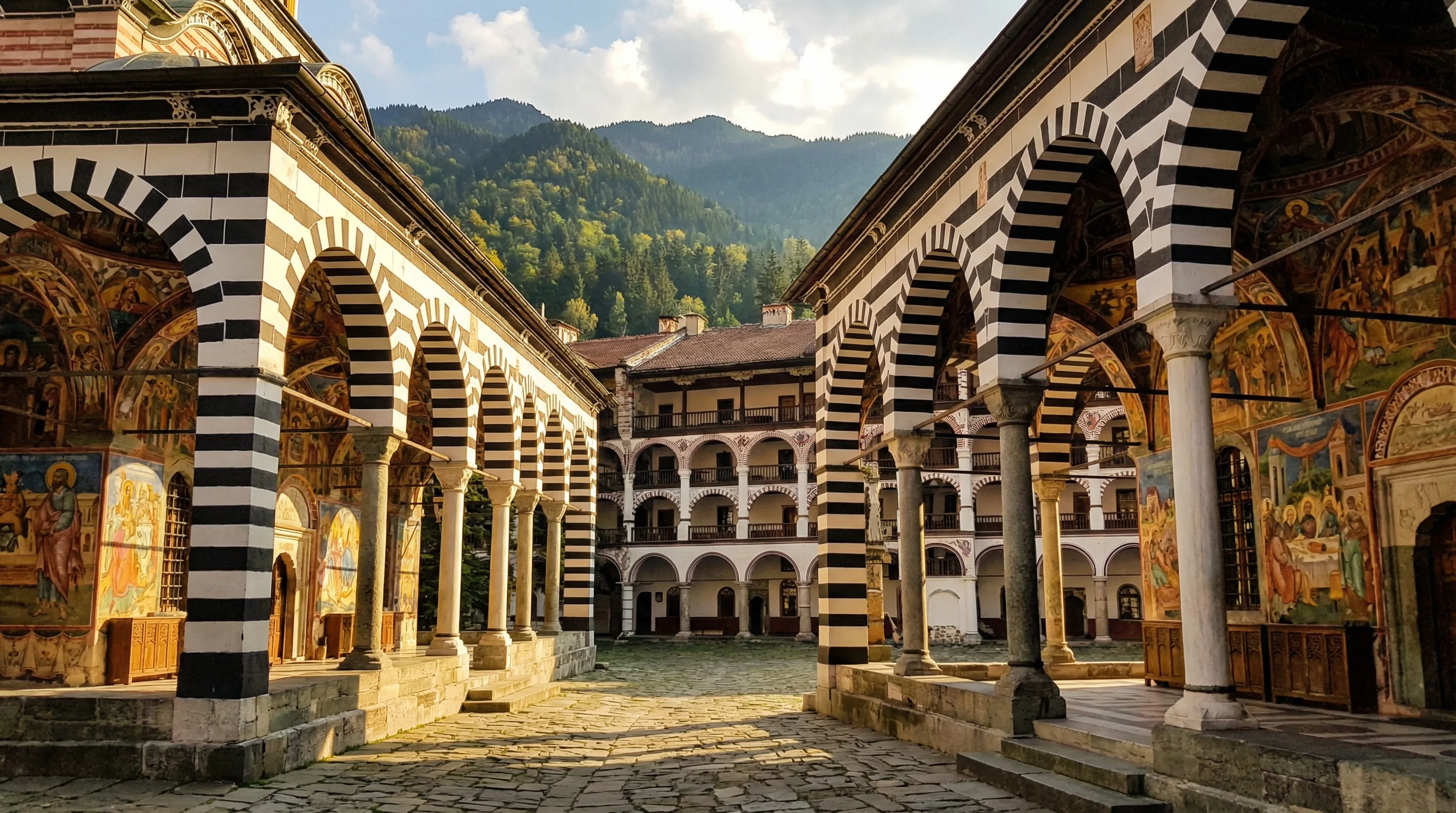
Rila Monastery is Bulgaria’s most visited cultural site, a UNESCO World Heritage landmark, and the spiritual center of the Bulgarian Orthodox Church. It is also, more practically, one of the best day trips from Sofia by car – 120 km of progressively better scenery that deposits you in front of a 10th-century monastery complex painted in stripes of black, white, and ochre, nestled into a mountain valley at 1,147 meters altitude. We have made this drive half a dozen times, in every season, and it improves with repetition. The monastery itself demands a proper visit. The mountains around it demand a walk. A full day from Sofia lets you do both without rushing.
The drive is straightforward, the road is good, and you do not need a guide – though the frescoes on the church walls deserve more attention than most people give them.
Getting There
From Sofia, take the E79 motorway south toward Blagoevgrad. After approximately 70 km, exit at the signed junction for Rila Monastery (near the town of Kocherinovo). From the exit, follow the road east through the town of Rila and then up the valley to the monastery – this mountain section is about 40 km and takes 45 minutes.
| Segment | Distance | Drive Time | Road Quality |
|---|---|---|---|
| Sofia to E79 exit (Kocherinovo) | 70 km | 50 min | Motorway, excellent |
| Kocherinovo to Rila town | 10 km | 10 min | Two-lane, good |
| Rila town to monastery | 30 km | 35 min | Mountain road, good asphalt, winding |
| Total | ~120 km | ~1.5 hours |
The mountain road from Rila town to the monastery follows the Rilska River valley upstream. It is narrow in sections – two lanes, no shoulder, occasional oncoming traffic – but the asphalt is in good condition and the gradient is moderate. Any standard car handles it easily. The scenery builds as you climb: deciduous forest gives way to conifers, the valley narrows, and the monastery appears as you round the final bend.
Tip: Leave Sofia by 8:30 AM to arrive before the tour buses, which typically reach the monastery between 10:30 and 11:00. The monastery opens early, and the parking lot is peaceful before 10:00.
Parking
The monastery has a large, paved parking lot approximately 200 meters from the main gate. Parking is free. In summer (July-August), the lot fills by late morning and overflow parking extends along the road. On weekdays and outside peak season, parking is never a problem.
From the parking lot, walk up a gentle path to the Dupnitsa Gate, the main entrance to the monastery complex. The walk takes 3 minutes and builds anticipation effectively.
The Monastery
Rila Monastery was founded in the 10th century by the hermit Ivan Rilski (Saint John of Rila), who retreated to these mountains to live in a cave. Over the centuries, the monastery grew into a complex of churches, residential buildings, and fortifications that served as a center of Bulgarian literacy, culture, and national identity – particularly during the Ottoman period, when it helped preserve the Bulgarian language and Orthodox traditions.
The current buildings date mainly from the 1830s-1860s, after a fire destroyed much of the earlier complex in 1833. The reconstruction was a national effort, with donations and labor from across Bulgaria, and the result reflects that collective ambition.
What to See
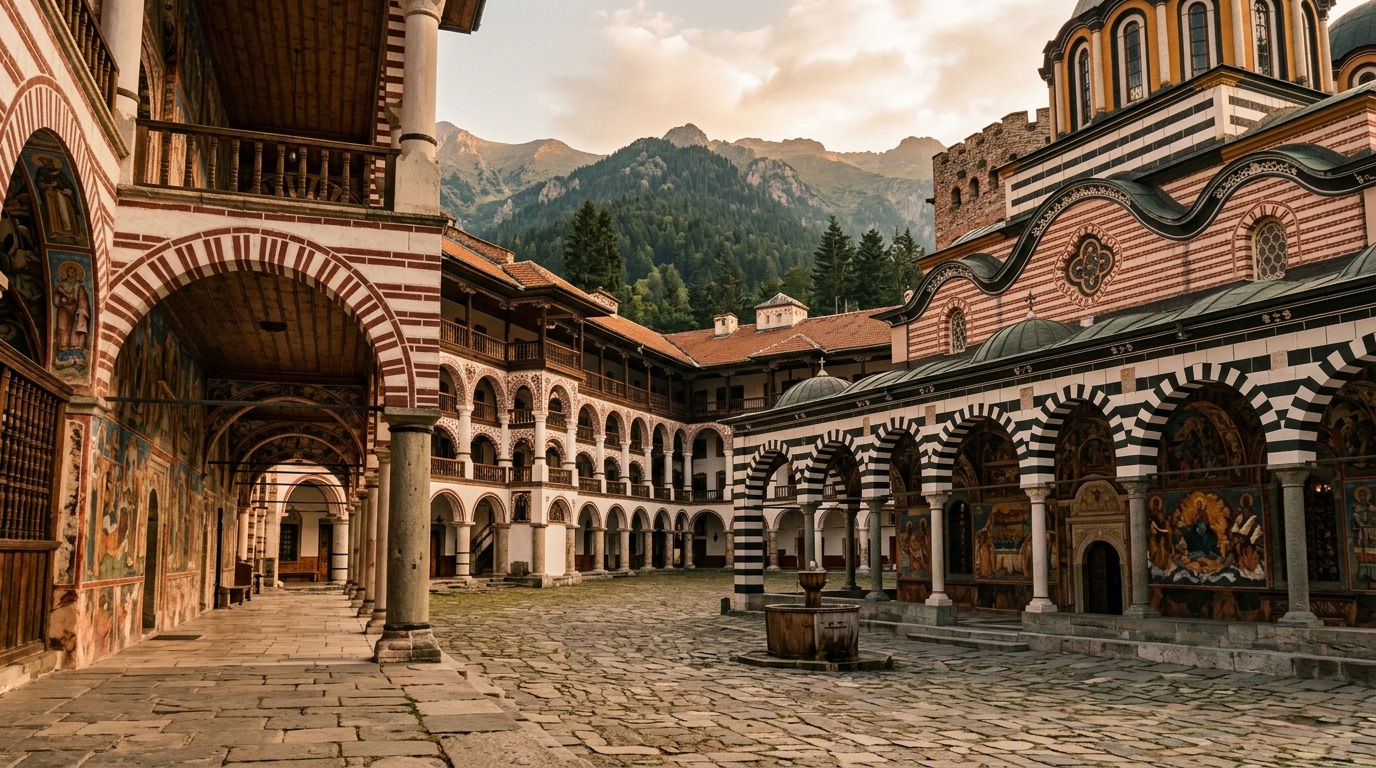
The Church of the Nativity of the Virgin (Katolikon): The main church, at the center of the courtyard, is the visual heart of the monastery. The exterior and the covered galleries (arcades) are covered in frescoes – hundreds of scenes depicting biblical narratives, saints, and – notably – punishments for sinners in hell, painted with a specificity that suggests the artists had strong opinions about human behavior.
The interior frescoes are equally elaborate, but the real treasure is the iconostasis – a gilded wooden screen covered in intricate carvings and icons that took five years to complete (1839-1842). It is one of the finest examples of Bulgarian woodcarving.
Hrelyo’s Tower: The only surviving structure from the 14th century, this stone tower rises from the courtyard and contains a small chapel with medieval frescoes on the top floor. Climb the narrow stairs for a view over the courtyard.
The Museum: A small museum within the complex displays the monastery’s most famous object: Raphael’s Cross, a wooden cross carved with 104 religious scenes and 650 miniature figures. It took the monk Raphael 12 years to complete (1790-1802), and he reportedly went blind from the work. Magnifying glasses are provided because the detail is invisible to the naked eye. Museum entry: BGN 8 (~EUR 4).
The Residential Wings: The four-story residential buildings surrounding the courtyard, with their characteristic black-and-white striped arches and wooden balconies, are architecturally striking. Parts of the upper floors are accessible and offer views down into the courtyard.
| Monastery Practical Info | |
|---|---|
| Entry | Free (the monastery complex is open to all) |
| Museum entry | BGN 8 (~EUR 4) |
| Opening hours | Roughly 7:00-20:00 (monastery), 8:30-17:00 (museum) |
| Time needed | 1-2 hours |
| Dress code | Modest clothing (cover shoulders and knees) |
| Photography | Exterior and courtyard: yes. Inside the church: no flash |
The frescoes in the external galleries of Rila’s main church are a crash course in Bulgarian Orthodox morality. The scenes of heavenly reward are serene. The scenes of damnation are imaginative in ways that suggest the painters enjoyed their work.
Lunch
Two options, both good:
Monastery guesthouse restaurant: The monastery operates a guesthouse with a simple restaurant serving Bulgarian mountain food – bean soup, grilled meats, bread baked on the premises. Prices are modest (BGN 10-15 / EUR 5-8 per person for a full meal). The restaurant is inside the monastery walls, so the atmosphere includes stone courtyards and mountain silence.
Restaurants in Rila village: On the road back toward Rila town, several roadside restaurants serve traditional Bulgarian cuisine – grilled trout from the river, shopska salad, kebapcheta. Prices are similar. Mehana Rila (traditional tavern style) is a reliable choice.
Optional: Seven Rila Lakes
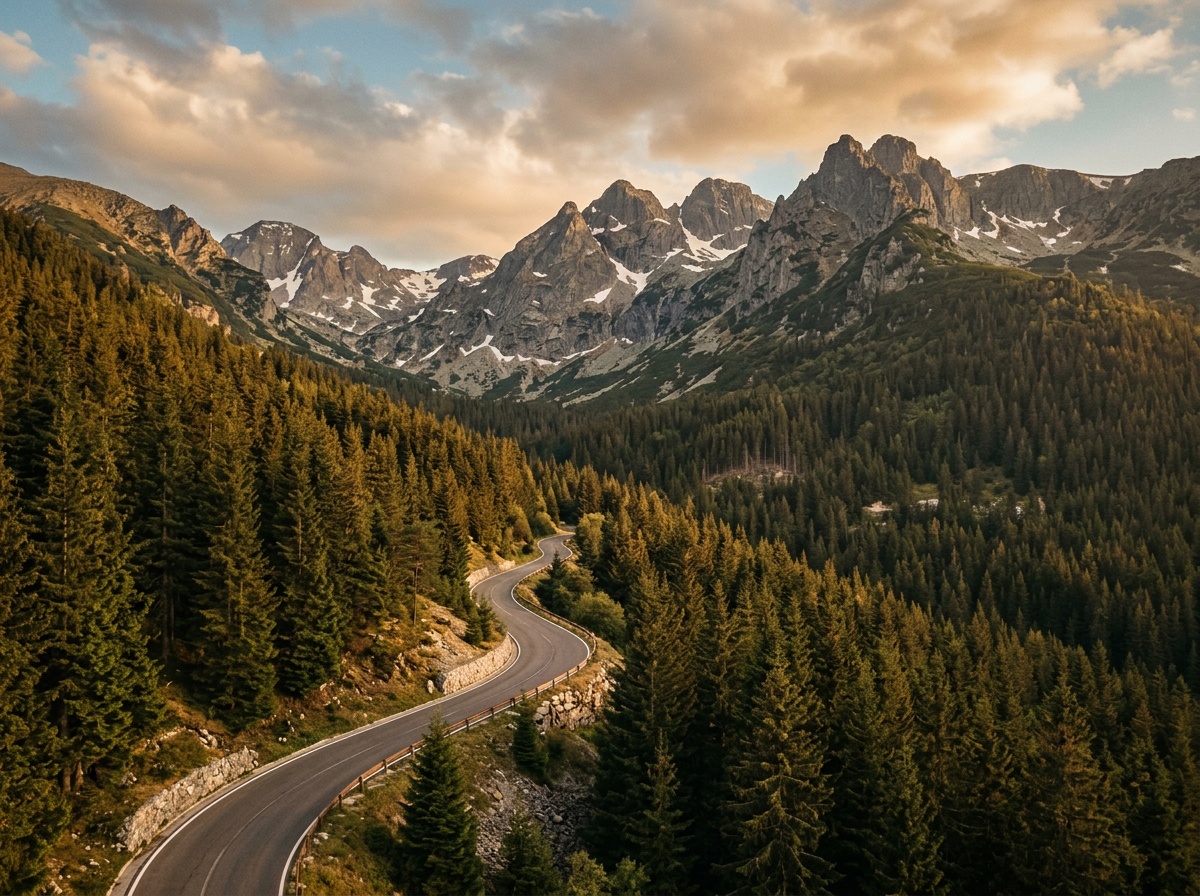
If you have a full day and reasonable fitness, the Seven Rila Lakes are one of Bulgaria’s natural highlights – a chain of glacial lakes at altitudes between 2,095 and 2,535 meters, each named for its most distinctive characteristic (The Tear, The Eye, The Kidney, The Twin, The Trefoil, The Fish Lake, The Lower Lake).
The lakes are not directly accessible from the monastery. You need to drive back toward Rila town and then take the road south to the Panichishte area, where a chairlift operates in summer.
| Seven Rila Lakes Option | |
|---|---|
| Drive from monastery to chairlift | 40 km, ~50 min |
| Chairlift (Panichishte to ridge) | BGN 20 (~EUR 10) one way, BGN 30 return |
| Chairlift operating hours | Typically 8:30-17:00 in summer (check locally) |
| Hike from chairlift to all seven lakes | 3-4 hours loop |
| Difficulty | Moderate (rocky paths, altitude, weather changes fast) |
| Best months | July-September |
The chairlift deposits you near the highest lake, and a marked trail loops down through all seven. The terrain is above the tree line – bare rock, alpine meadows, and the lakes themselves reflecting the sky. In good weather it is magnificent. In bad weather (which arrives without warning at this altitude) it is cold, wet, and visibility drops to nothing. Bring a rain jacket and warm layer regardless of the forecast below.
This adds 5-6 hours to your day trip. It is possible to combine the monastery visit and the lakes in a single long day from Sofia (leave at 7:00 AM, return by 8:00 PM), but it is tight. If the lakes are a priority, consider overnighting in Rila village or at the monastery guesthouse (BGN 40-60 / EUR 20-30 per person, basic rooms, advance booking recommended).
Tip: The Seven Rila Lakes trail is the most popular hike in Bulgaria. On summer weekends, the chairlift queues can reach 1-2 hours. Go on a weekday or arrive before 9:00 AM.
Return Via Blagoevgrad (Alternative Route)
Instead of returning to Sofia on the same road, consider continuing south from the monastery to Blagoevgrad and then back to Sofia on the E79 motorway. This loop adds about 30 minutes to the return drive but avoids retracing your steps and passes through different scenery.
| Return Route | Distance | Time | Character |
|---|---|---|---|
| Same way (via Kocherinovo) | 120 km | 1.5 hours | Known road, motorway finish |
| Via Blagoevgrad | 150 km | 2 hours | Mountain descent south, then motorway north |
The road from the monastery area south to Blagoevgrad runs through the Rila Mountains and descends into the Struma River valley. It is scenic and quiet – mostly forest and occasional villages. Blagoevgrad itself is a university town with a pleasant center if you want a coffee stop, but it is not a destination.
From Blagoevgrad, the E79 motorway back to Sofia takes about 1 hour (100 km). This section of the motorway is modern and well-maintained.
Practical Information
Fuel
Fill up in Sofia before leaving. The E79 motorway has service stations every 30-40 km. Once you leave the motorway for the mountain road, the last fuel station is in Rila town. The monastery area has no fuel stations. The round trip from Sofia is 240-300 km, well within the range of any car on a full tank.
Best Time to Visit
- May-June: Green mountains, wildflowers on the approach road, comfortable temperatures. Monastery is less crowded than summer.
- July-August: Warm, busy with Bulgarian and international tourists. Tour buses arrive between 10:30-14:00. Seven Rila Lakes chairlift is operational.
- September: Excellent month. Fewer visitors, autumn color beginning, clear mountain air.
- Winter: The monastery is open year-round, and the drive is possible even in winter (the road is maintained). Snow cover in the mountains is atmospheric. The Seven Rila Lakes are inaccessible without winter hiking gear.
Combining with Other Drives
Rila Monastery works naturally as a day trip from Sofia before heading east to the Black Sea. The typical sequence: Day 1 Rila Monastery, Day 2 start the cross-Bulgaria drive via Plovdiv and Shipka Pass.
From Blagoevgrad (on the return loop), the Greek border at Kulata is only 90 km south. If your next destination is Greece, the monastery can be your last Bulgarian stop.
For Bulgaria vignette requirements, speed limits, and insurance rules, see our Bulgaria hub page and the driving guide.