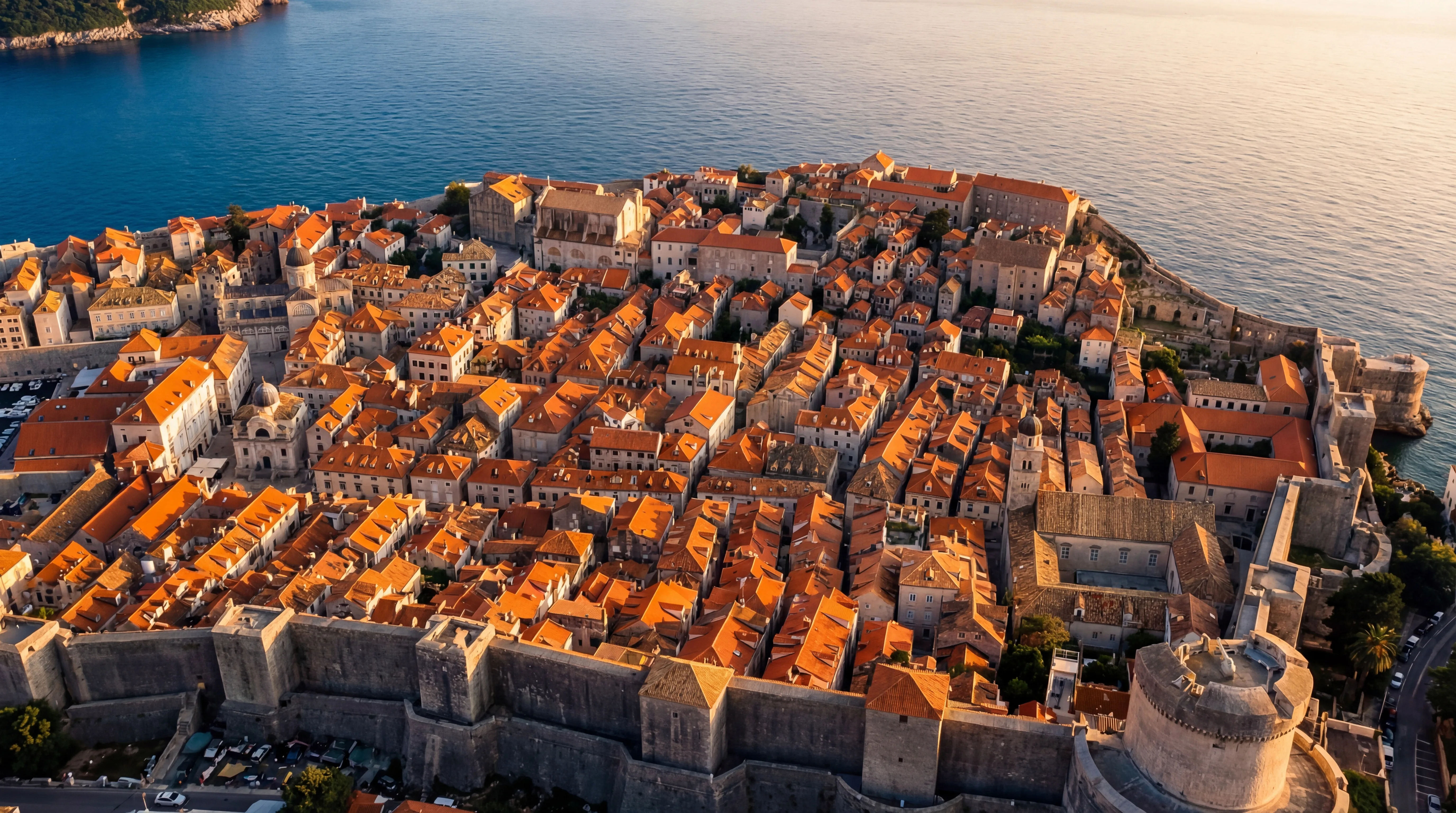
Car Rental in Croatia
We have rented cars in Croatia more times than we can count — from the airport kiosks in Split and Dubrovnik, from local agencies tucked behind Zadar side streets, and from booking engines that promised one price and charged another. The Croatian rental market is mature, competitive, and mostly honest, but it has enough traps to catch anyone who books without reading the small print. Cross-border fees alone can double the cost of your rental if you plan to drive into Bosnia or Montenegro. One-way drop-off charges between Split and Dubrovnik will surprise you. And the insurance upsell at the counter — the one where the agent looks concerned about your CDW deductible and offers to “fix” it for EUR 20 per day — is a performance worthy of the Croatian National Theatre.
This guide covers the practical details: what things actually cost, which agencies allow cross-border driving into which countries, how one-way fees work, and when to rent locally versus internationally. If you are planning a road trip across Croatia and beyond, this will save you money and arguments.
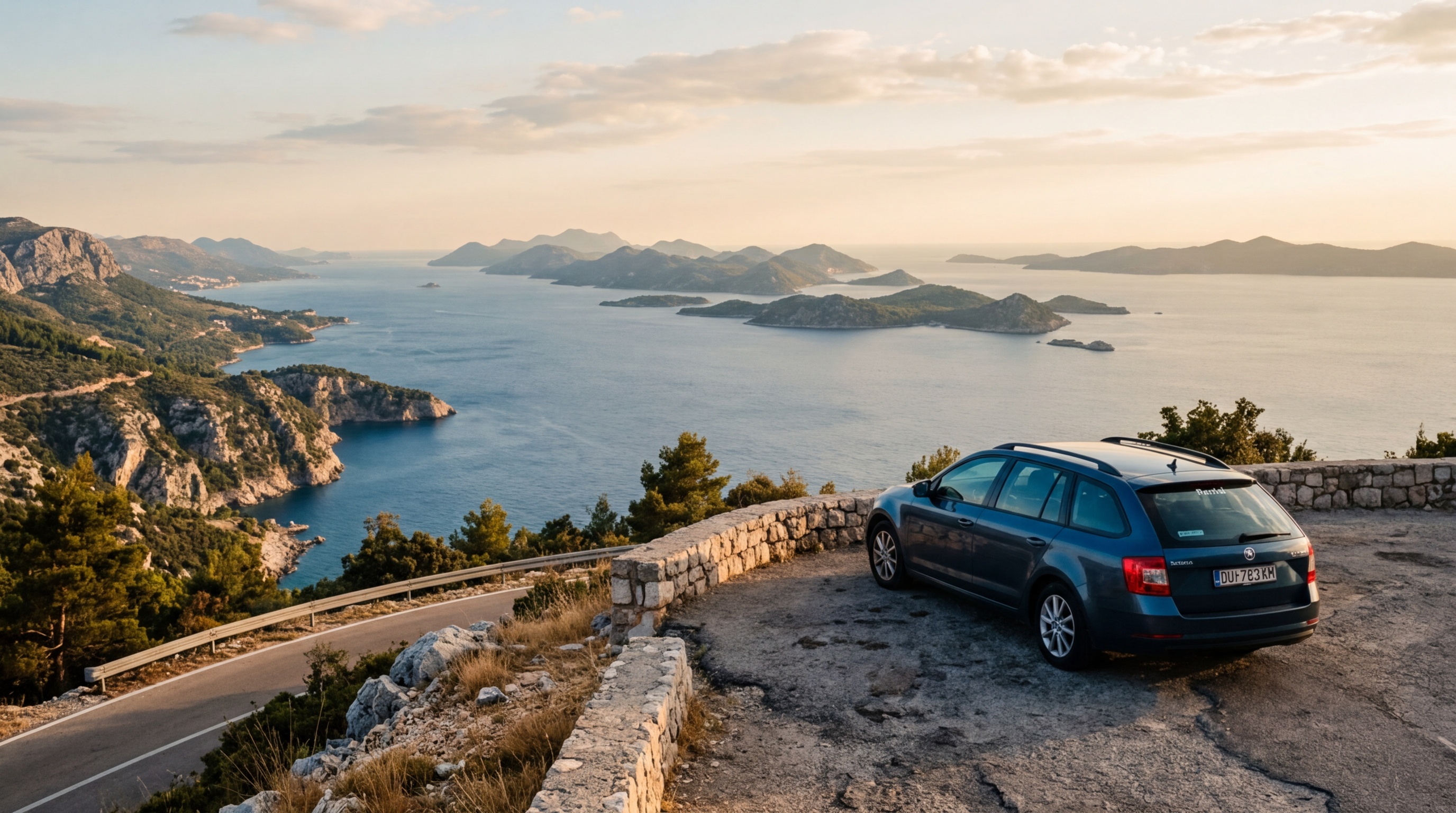
What Things Actually Cost
Croatian car rental prices follow a predictable seasonal pattern. The swing between winter and summer prices is among the steepest in Europe.
Price Ranges by Season
| Season | Economy car (per day) | Mid-size (per day) | SUV (per day) | Notes |
|---|---|---|---|---|
| Peak (Jul-Aug) | EUR 40-70 | EUR 60-100 | EUR 80-140 | Book 2-3 months ahead |
| Shoulder (May-Jun, Sep-Oct) | EUR 25-45 | EUR 35-65 | EUR 50-90 | Best value for road trips |
| Low (Nov-Apr) | EUR 15-25 | EUR 20-35 | EUR 30-50 | Limited availability at smaller agencies |
These are online booking prices. Walk-up prices at the airport are 30-50% higher, and in August they can be genuinely painful. The agencies know you need the car — your flight already landed, your hotel is 30 km away, and the bus is not coming.
The math that matters: A week-long rental in August for a VW Golf or equivalent runs EUR 350-500 from international agencies and EUR 250-400 from reputable local ones. The same car in May costs EUR 175-280. If you have flexibility on dates, shoulder season is the obvious play.
Hidden Costs to Budget For
| Cost | Typical range | Notes |
|---|---|---|
| Cross-border fee | EUR 20-80 per country | Varies by agency and destination country |
| One-way drop-off (domestic) | EUR 50-200 | Split to Dubrovnik is the expensive one |
| One-way drop-off (international) | EUR 200-500 | If even allowed |
| Young driver surcharge (<25) | EUR 10-20/day | Some agencies set it at <23 |
| Additional driver | EUR 5-15/day | Some agencies include one free |
| GPS device | EUR 8-12/day | Use your phone instead |
| Full insurance (SCDW) | EUR 10-25/day | May be worth it; see below |
| Baby/child seat | EUR 5-10/day | Bring your own if possible |
| Airport surcharge | EUR 0-30 | Some agencies add it, some do not |
Tip: The single most expensive mistake is not understanding the cross-border and one-way fees before you book. A EUR 200 rental can become EUR 400 with a cross-border permit for Bosnia and a one-way drop-off in Dubrovnik. Get the total price, with all surcharges, before you commit.
Insurance: What You Actually Need
This is where most people get confused, and where the agencies make a significant portion of their profit.
What Comes Standard
Every rental in Croatia includes:
- TPL (Third Party Liability): Covers damage you cause to other people or their property. This is legally required.
- CDW (Collision Damage Waiver): Covers damage to the rental car. But — and this is the key part — CDW comes with a deductible (also called excess or franchise), typically EUR 800-1,500 for economy cars and up to EUR 2,500 for SUVs.
The deductible means: if you damage the car, you pay the first EUR 800-1,500 out of your own pocket. The CDW covers everything above that.
The Upsell: SCDW or Full Coverage
At the counter, the agent will offer you SCDW (Super CDW) or Full Coverage that reduces or eliminates the deductible. This typically costs EUR 10-25 per day. On a two-week rental, that is EUR 140-350 extra.
Is it worth it? It depends on your alternatives:
| Option | Daily cost | Deductible | Notes |
|---|---|---|---|
| Standard CDW (included) | EUR 0 | EUR 800-1,500 | You are on the hook for damage up to the deductible |
| Agency SCDW | EUR 10-25/day | EUR 0-200 | Convenient but expensive over a long rental |
| Third-party insurance (RentalCover, etc.) | EUR 5-10/day | EUR 0 | Reimburses the deductible if you claim; you pay upfront |
| Credit card coverage | EUR 0 | Varies | Check your card; many do not cover Croatia or have exclusions |
Our approach: we carry third-party excess insurance (bought online before the trip) and decline the SCDW at the counter. This saves EUR 100-200 on a two-week rental. The catch is that if something happens, you pay the deductible at the counter and claim it back from the third-party insurer afterward. This requires patience and paperwork.
Tip: Whatever you choose, photograph the car thoroughly before driving off. Every scratch, dent, and chip. Show the photos to the agent and ensure they are noted on the rental agreement. Croatian agencies are generally fair about pre-existing damage, but documentation prevents arguments.
Tyre and Windscreen Coverage
Standard CDW in Croatia typically does not cover tyres, windscreen, or undercarriage damage. These are separate add-ons (EUR 3-8/day each) or bundled into the SCDW/full coverage package. On Croatian roads, windscreen chips from gravel are common, especially on the D8 coastal road and inland routes. Consider windscreen coverage if it is offered cheaply.
Cross-Border Fees and Restrictions
This is the section that matters most for Balkan road trippers. Croatia borders five countries, and your rental car’s permission to enter each one varies dramatically by agency.
Cross-Border Policy Overview
| Destination | Generally allowed? | Typical fee | Insurance complications |
|---|---|---|---|
| Slovenia | Yes, almost always | EUR 0-20 | Included in standard EU coverage |
| Bosnia and Herzegovina | Usually yes | EUR 20-50 | May need separate green card; check with agency |
| Montenegro | Often yes | EUR 30-60 | Green card usually covers it; verify |
| Serbia | Sometimes | EUR 30-60 | Check green card; some agencies restrict |
| Albania | Rarely | EUR 50-80+ | Many agencies explicitly prohibit it |
| Kosovo | Almost never | n/a | Most agencies refuse coverage entirely |
Slovenia is the easiest. Croatia and Slovenia are both EU members, insurance is seamless, and most agencies do not even charge extra for crossing the border. You just need to buy a Slovenian e-vignette for the motorways.
Bosnia is usually fine but requires a conversation. Most Croatian agencies allow Bosnia and include it on the green card. Some charge EUR 20-50 for the cross-border permission letter. The letter is important — Bosnian police occasionally ask for proof that the rental car is permitted in the country.
Montenegro is similar to Bosnia. Most agencies allow it with a fee. Verify that the green card lists Montenegro (check the back of the card — “MNE” should not be crossed out).
Albania is the problem child. Many Croatian rental agencies — including some of the international brands — explicitly prohibit taking the car into Albania. Those that allow it charge EUR 50-80+ and require you to purchase additional Albanian insurance at the border (EUR 15-30 for 15 days). If you are planning the Adriatic Coast route from Dubrovnik to Tirana, confirm Albania coverage before booking.
The workaround for Albania: Rent in Croatia for the Croatian and Montenegrin portions of your trip, return the car, and rent a second car from an Albanian agency in Tirana or Shkoder. Albanian rental agencies are cheaper than Croatian ones, have no cross-border anxiety, and are used to tourists arriving from Montenegro. The inconvenience of switching cars is offset by simpler insurance and often lower total cost.
Agencies and Their Cross-Border Policies
Policies change, but as of our most recent research:
| Agency type | Bosnia | Montenegro | Albania | One-way international |
|---|---|---|---|---|
| Sixt, Europcar, Hertz | Yes (fee) | Yes (fee) | Rarely | Sometimes to Slovenia |
| Enterprise, Avis, Budget | Yes (fee) | Usually | No | Limited |
| Local Croatian (e.g., Fleet, Oryx, Carwiz) | Yes | Yes | Sometimes | No |
| Last Minute Rent (Split) | Yes | Yes | Yes | No |
| Nova Rent (Dubrovnik) | Yes | Yes | Yes (fee) | No |
Local Croatian agencies are often more flexible about Bosnia and Montenegro, and some explicitly cater to the Balkan road trip market. They are also usually cheaper than the international brands. The trade-off is fewer pick-up locations and sometimes older vehicles.
Tip: When booking, email the agency directly and ask: “Can I take the car to [country list]? What are the fees? Is [country] listed on the green card?” Get the answer in writing. Phone confirmations have a way of being forgotten when you arrive at the counter.
One-Way Drop-Off: Split to Dubrovnik and Beyond
One-way rentals within Croatia are common and most agencies offer them — but the fees vary wildly depending on the route and the agency.
Domestic One-Way Fees
| Route | Typical one-way fee | Notes |
|---|---|---|
| Zagreb to Split | EUR 50-100 | Most common route, competitive pricing |
| Split to Dubrovnik | EUR 100-200 | High demand in summer, fewer cars go south |
| Dubrovnik to Zagreb | EUR 80-150 | Less demand, sometimes cheaper |
| Dubrovnik to Split | EUR 80-150 | Same as Split-Dubrovnik but slightly less |
| Zagreb to Dubrovnik | EUR 100-200 | Long distance = higher fee |
| Any airport to any airport | +EUR 20-30 | Airport locations charge more |
The Split to Dubrovnik route is the most expensive one-way in Croatia because Dubrovnik is at the end of the road — literally. There is nowhere for the agency to send the car next, so they have to transport it back. This logistical reality gets passed to you.
The Peljesac Bridge effect: Before the Peljesac Bridge opened in 2022, driving from Split to Dubrovnik meant either the slow coastal D8 or the A1 motorway through Bosnia (with border crossings). The bridge has made the coastal drive simpler but has not significantly reduced one-way fees.
International One-Way Drop-Off
Dropping a Croatian rental car in another country is possible with some agencies but expensive:
| Route | Availability | Typical fee |
|---|---|---|
| Croatia to Slovenia | Some agencies | EUR 150-300 |
| Croatia to Montenegro | Rare | EUR 200-400 |
| Croatia to Bosnia | Very rare | EUR 200-400 |
| Croatia to Albania | Almost never | n/a |
The cheapest international one-way option is Croatia to Slovenia, because both are EU and the car market flows in both directions. For other countries, the fee usually makes it cheaper to return the car in Croatia and fly to your next destination.
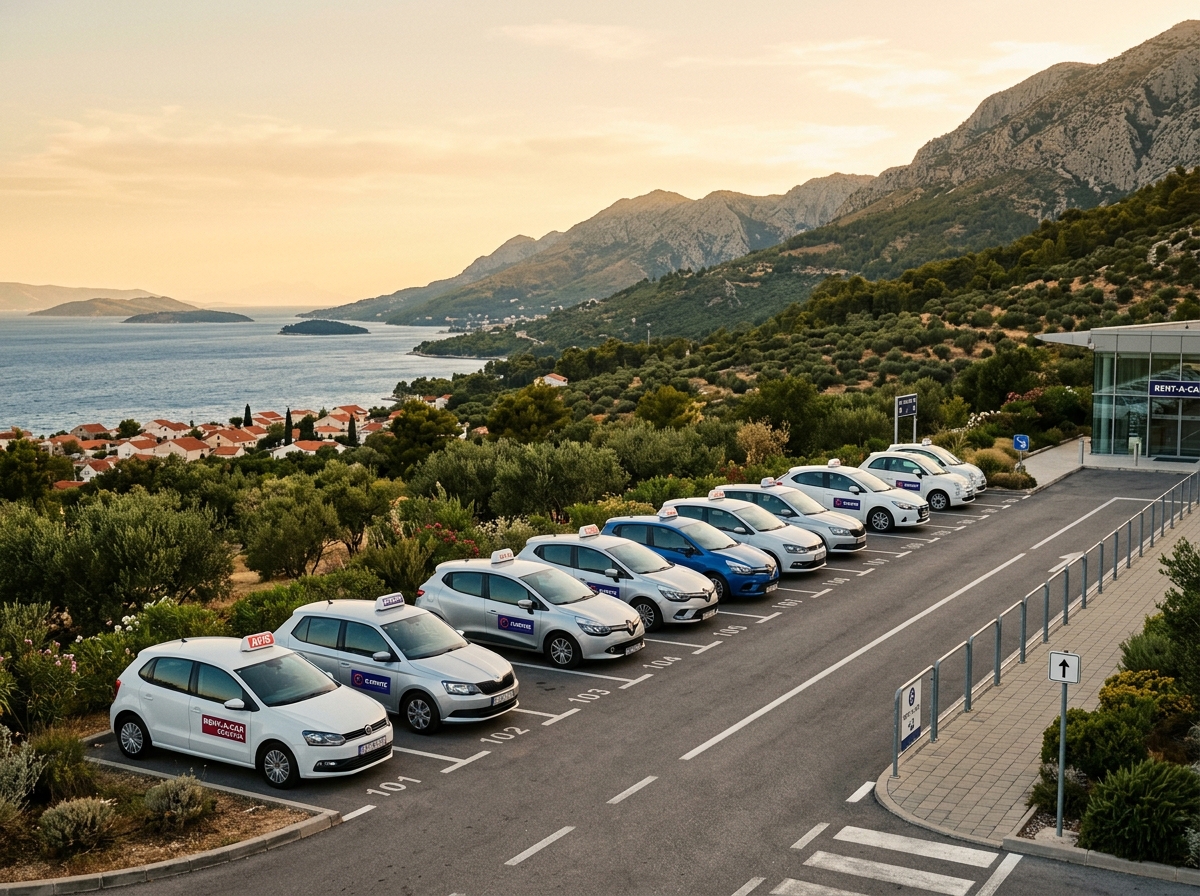
Local vs International Agencies
International Brands (Sixt, Hertz, Europcar, Avis, Enterprise, Budget)
Pros:
- Multiple pick-up and drop-off locations across Croatia
- Newer fleets (typically under 2 years old)
- International reservation systems — easy to book from abroad
- More one-way options, including some international drop-offs
- Loyalty programs if you rent frequently
Cons:
- Higher base prices, especially in summer
- Aggressive upselling at the counter (insurance, GPS, fuel options)
- Cross-border fees tend to be higher
- Some impose restrictions on Albania, Kosovo, or specific Balkan countries
- Airport surcharges
Local Croatian Agencies (Oryx, Carwiz, Fleet, Nova Rent, Last Minute Rent)
Pros:
- Lower prices (20-40% cheaper than internationals in peak season)
- More flexible cross-border policies — many are set up for the Balkan road trip market
- Personal service; you often deal with the owner or a small team
- No loyalty program overhead
- Some include extras (GPS, child seat, additional driver) for free
Cons:
- Fewer locations (usually one city or one airport)
- Older vehicles in some cases
- Smaller companies may have limited availability in August
- No international drop-off options
- Booking platforms are sometimes basic
Our recommendation: For a simple Croatia-only rental (fly into Split, drive the coast, fly out of Split), international agencies are fine — just book early and decline the add-ons you don’t need. For a multi-country Balkan road trip involving Bosnia, Montenegro, or Albania, a local agency that explicitly caters to cross-border driving will save you money and paperwork.
Booking Platforms
| Platform | Strength | Notes |
|---|---|---|
| Discovercars.com | Good price comparison | Includes many local agencies; filter by cross-border policy |
| RentalCars.com (Booking.com) | Wide selection | International brands dominate results |
| Localrent.com | Local agencies focus | Good for Balkan road trip-specific rentals |
| Direct agency websites | Best price guarantee from some | Check Oryx, Carwiz, Fleet directly |
| Google (search “rent a car [city]”) | Aggregates prices | Quick comparison but not always complete |
Book 2-3 months ahead for July-August travel. Shoulder season (May-June, September-October) gives you more flexibility — booking 2-4 weeks ahead is usually sufficient.
The Peljesac Bridge and What It Changes
The Peljesac Bridge, which opened in July 2022, connects the Dubrovnik side of Croatia to the Peljesac peninsula, bypassing the Neum corridor in Bosnia. For car rentals, this matters in one specific way: you no longer need cross-border permission for Bosnia just to drive from Dubrovnik to Split.
Before the bridge, the only road from Dubrovnik to the rest of Croatia passed through 9 km of Bosnian territory at Neum. This technically meant you were taking the car into Bosnia, and some agencies charged a cross-border fee for it. Others looked the other way because the transit was so brief.
Now, with the Peljesac Bridge, you can drive the entire Croatian coast without leaving Croatia. This eliminates the Bosnia cross-border question for coast-only road trips and simplifies the insurance picture.
However, if you actually want to visit Bosnia — Mostar, Sarajevo, the Neretva canyon — you still need cross-border permission. The bridge just means Bosnia is now optional rather than unavoidable.
Fuel Policies
Croatian rental agencies use two fuel policies:
- Full-to-full: You get the car with a full tank and return it full. This is the standard and the fairest option. Fill up at a station near the drop-off point before returning.
- Full-to-empty (prepaid fuel): The agency charges you for a full tank at the start, and you return it empty. This sounds convenient but almost always costs more — the per-liter price they charge is higher than the pump price, and you will never return it perfectly empty. Avoid this option unless you are in a genuine rush at the end of your trip.
Tip: There are fuel stations within 2-3 km of every major airport and city center drop-off point in Croatia. Returning on a full tank takes five minutes and saves you EUR 20-40 compared to the prepaid fuel option.
Practical Checklist Before You Drive Off
- Photograph the car. Every angle, every scratch. Time-stamped photos on your phone.
- Check the paperwork. Rental agreement, green card (if crossing borders), and your cross-border permission letter.
- Verify equipment. Reflective vest, warning triangle, first-aid kit. Check the trunk — they should be there.
- Ask about the ENC. The electronic toll transponder for Croatian motorways. Some agencies include it; others charge EUR 1-2/day. If it is not included, you can pay cash or card at toll booths.
- Confirm return time and location. Late returns are charged by the hour or day. Airport and downtown locations sometimes have different return procedures.
- Check tyre condition. If you are renting between November and March, check for winter tyres. Croatian law requires appropriate tyres in winter conditions, and some agencies provide them only on request.
Summer Booking Strategy
July and August in Croatia are a seller’s market for car rental. Here is how to minimize costs:
- Book 2-3 months ahead. Prices rise steadily as summer approaches. A VW Polo that costs EUR 30/day in April might cost EUR 55/day if you book in June for August.
- Consider alternative pick-up cities. Dubrovnik and Split have the highest demand. Zadar and Zagreb are 10-20% cheaper for the same car class.
- Look at weekly rates. Most agencies offer a significant discount for 7+ day rentals. A 7-day rental can cost less than renting for 5 days at the daily rate.
- Skip the airport. If you are staying one night in a city before starting your road trip, pick up the car at a downtown office the next morning. Airport offices add surcharges and often have the longest queues.
- Check local agencies. Use Localrent or search directly for agencies in your pick-up city. Local prices in August can be 30-40% below Hertz and Sixt for equivalent cars.
For more on the driving guide covering rules across all Balkan countries, or for details on the Dubrovnik to Split coastal drive where a rental car really earns its keep, see our other guides. And if your trip extends beyond Croatia, our general car rental guide covers the full Balkan picture.