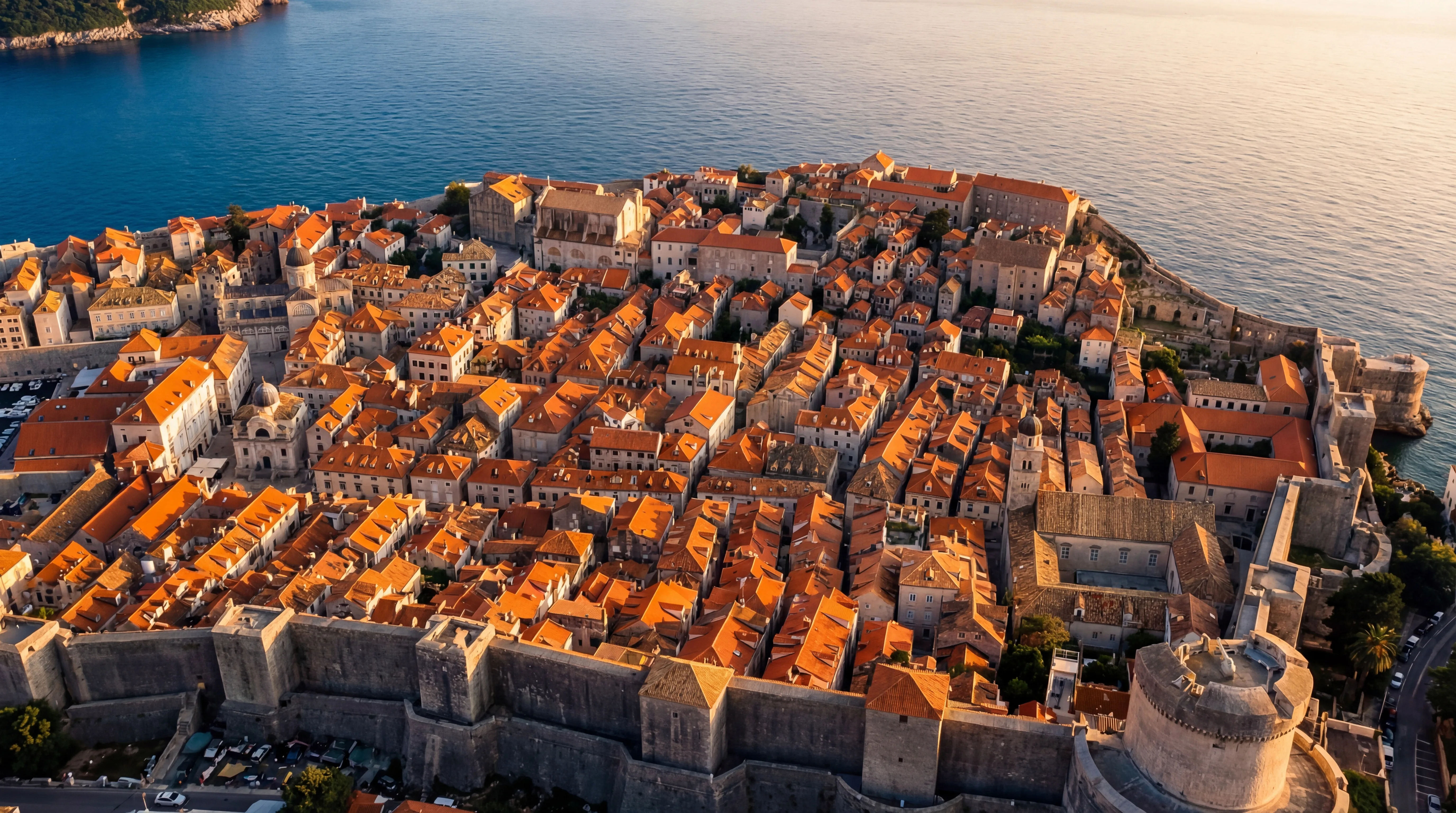
Dubrovnik to Split Coastal Drive
We left Dubrovnik at seven in the morning, and by the time we reached Split the sun was dropping behind Marjan hill and we had made nine unplanned stops, eaten a kilogram of oysters, missed a ferry by four minutes, and driven through a nine-kilometer strip of Bosnia that nobody warned us about on the first trip. The Dubrovnik to Split coastal drive is 230 km of Adriatic highway that should take three hours and never does — because the road keeps giving you reasons to pull over, and the Dalmatian coast is not a place that rewards rushing.
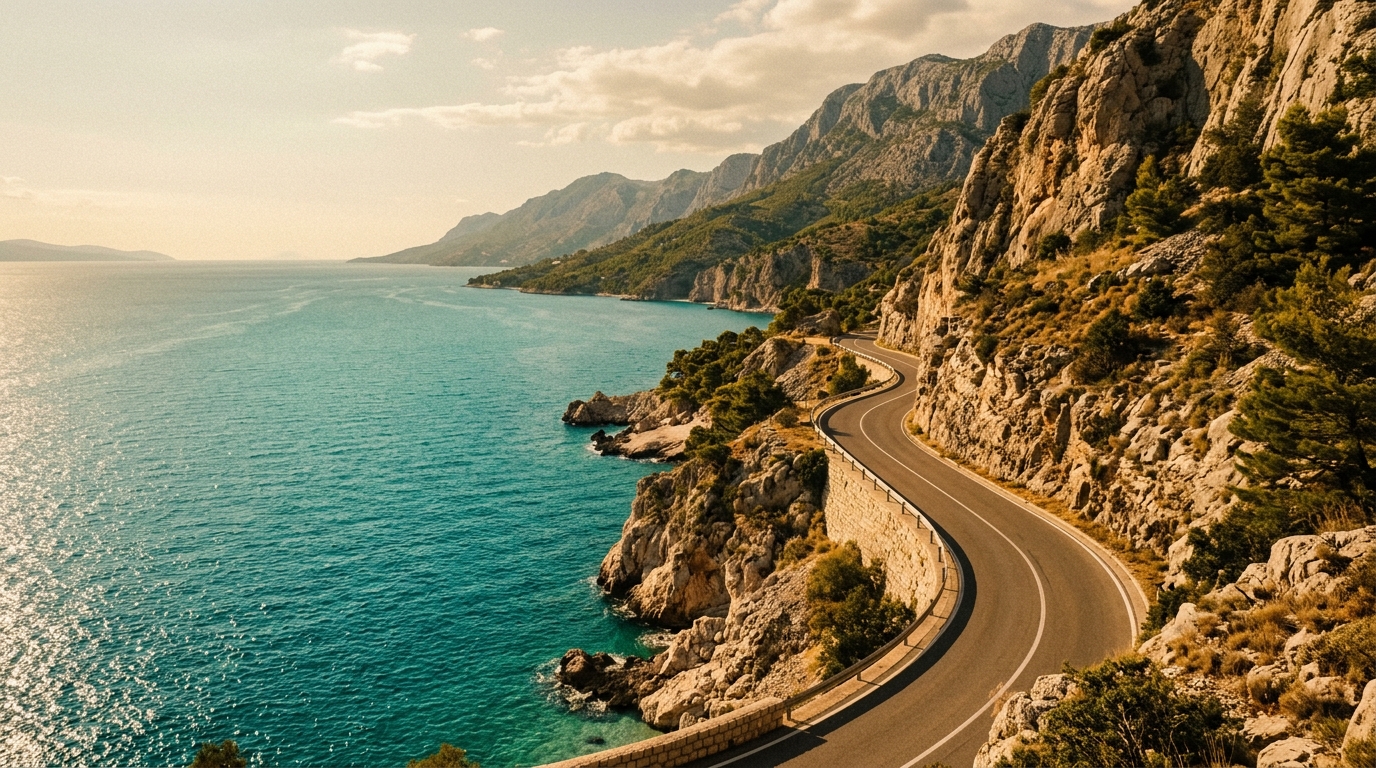
This is the D8, also known as the Jadranska Magistrala, and it is one of the most famous coastal roads in Europe. It runs along cliffs, dips through fishing villages, skirts island-filled bays, and occasionally reminds you that Croatia’s geography is as complicated as its history. The drive works in either direction, but we prefer Dubrovnik to Split because the afternoon light hits the coastline better when you are heading northwest, and because arriving in Split for dinner feels like a proper reward.
Route Overview
| Segment | Distance | Drive Time | Key Stop |
|---|---|---|---|
| Dubrovnik to Neum (Bosnia corridor) | 60 km | 1 hour | Ston and oysters |
| Neum to Ploce | 30 km | 45 min | Neum town (optional) |
| Ploce to Makarska | 65 km | 1-1.5 hours | Peljesac bridge views |
| Makarska to Omis | 45 km | 45 min | Makarska Riviera beaches |
| Omis to Split | 30 km | 30 min | Omis canyon |
| Total | ~230 km | 4-6 hours |
Drive times assume moderate traffic and zero stops, which is an exercise in fantasy on this road. In July and August, add at least an hour for traffic through towns, another 30 minutes for the Neum border crossings, and whatever time you surrender to the views.
Tip: If you are purely trying to get from Dubrovnik to Split fast, skip the D8 entirely and take the A1 motorway inland. It cuts the drive to about 3 hours with tolls of EUR 20-25. But if speed is your priority on this route, you are doing it wrong.
The Neum Corridor — Yes, You Drive Through Bosnia
About 60 km northwest of Dubrovnik, the D8 crosses into Bosnia and Herzegovina at Neum — a 9 km strip of Bosnian coastline that splits Croatia in two. This means two border crossings in quick succession: out of Croatia, into Bosnia, through Neum, out of Bosnia, back into Croatia.
In practice, both crossings are usually fast (5-15 minutes each). EU passport holders breeze through. Non-EU citizens should have their passports ready and expect a stamp on each crossing. The Bosnian border guards are efficient and rarely chatty.
The town of Neum itself is a budget beach resort popular with Bosnians who want Adriatic access without Croatian prices. You can stop for cheap coffee or fuel (slightly cheaper than Croatia), but most people drive through without pausing.
The Peljesac Bridge alternative: Since July 2022, the Peljesac Bridge bypasses Neum entirely by connecting the Croatian mainland to the Peljesac peninsula, then continuing to the D8 north of Neum. This means you can now drive Dubrovnik to Split without entering Bosnia at all. The bridge is free, well-built, and shaves about 30 minutes off the drive compared to the Neum crossing in summer.
| Option | Border crossings | Summer advantage | Notes |
|---|---|---|---|
| D8 through Neum | 2 (Bosnia in/out) | Faster when borders are quiet | Need passport for Bosnia |
| Peljesac Bridge | 0 | Skip border queues | Slightly longer distance but often faster overall |
Our recommendation: take the Peljesac Bridge route outbound, and if you have time, swing through Neum on the return for the novelty of driving through three countries in an afternoon.
Stop 1: Ston — Oysters and Walls
About 55 km from Dubrovnik, just before you reach the Peljesac peninsula turn-off, sits Ston. This small town has two claims to fame: the second-longest defensive wall in the world (after the Great Wall of China, and they really want you to know that) and some of the best oysters in the Mediterranean.
The walls of Ston stretch 5.5 km across the hills connecting Ston to its twin settlement Mali Ston. Walking the full circuit takes 1-2 hours and costs EUR 12. The walls are less crowded than Dubrovnik’s, half the price, and arguably more impressive because you can see the entire salt production system they were built to protect.
But the real reason to stop is Mali Ston’s oyster farms. The channel between the peninsula and the mainland creates ideal conditions for oyster cultivation, and the restaurants here serve them straight from the water. A dozen oysters with lemon costs EUR 8-12. We recommend Bota Sare or Kapetanova Kuca, both of which have waterfront terraces and wine lists that lean heavily on the local Plavac Mali grape.
Tip: If you want the freshest possible experience, some farms offer tasting directly at the floating platforms. Ask at the tourist info office in Mali Ston — they can arrange a visit for EUR 15-20 per person including a glass of wine.
Stop 2: Peljesac Peninsula Detour
The Peljesac peninsula deserves a full day of its own, but if you are pressing onward to Split, you can sample it with a two-hour detour.
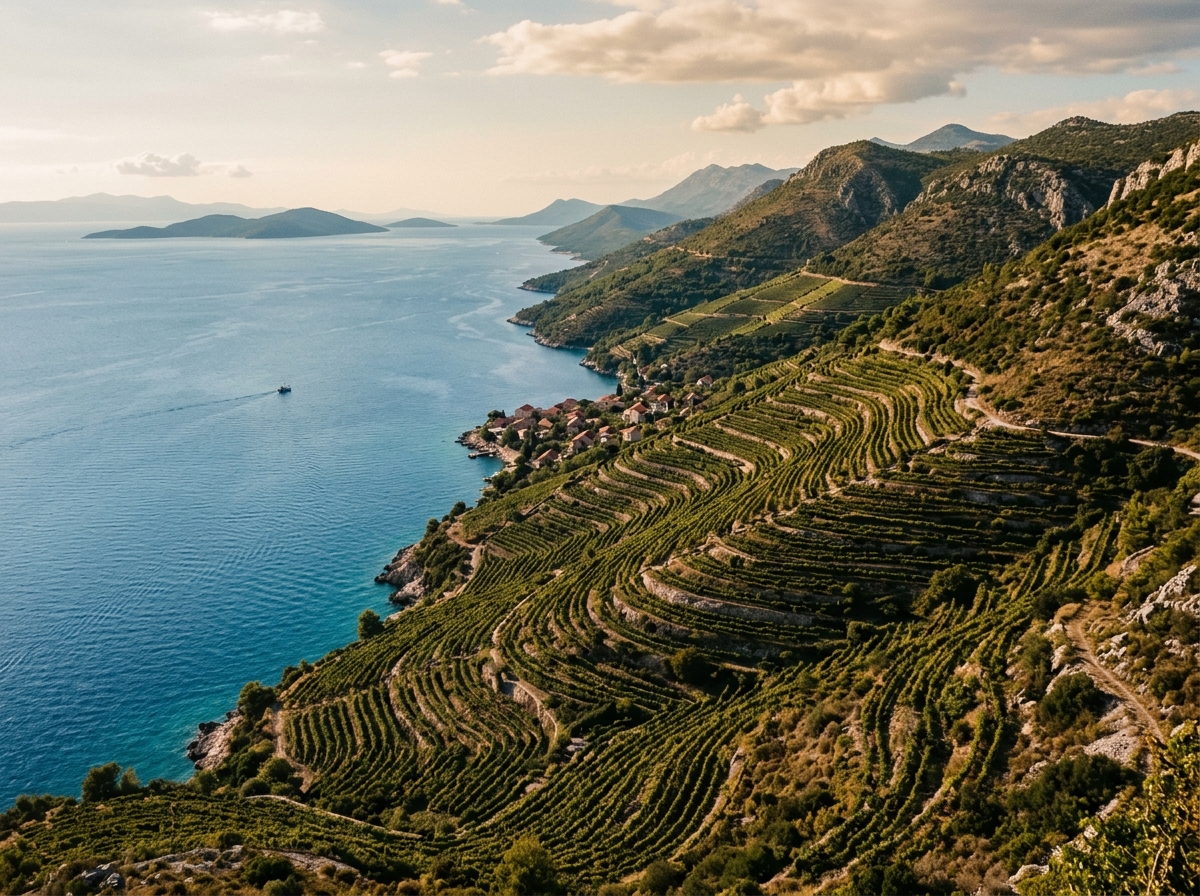
From Ston, the road runs along the spine of the peninsula through vineyards and olive groves. Peljesac produces Croatia’s most respected red wine — Dingac, made from the Plavac Mali grape grown on impossibly steep south-facing slopes above the sea. The Dingac and Postup appellations are Croatia’s answer to France’s AOC system, and the wine is genuinely excellent if you like robust, sun-baked reds.
Key stops on the peninsula:
| Stop | What | Time needed |
|---|---|---|
| Potomje | Wine tasting at Matusko or Bartulovic cellars | 45 min |
| Dingac viewpoint | View over the vineyards dropping to the sea | 10 min |
| Viganj | Kitesurfing beach, casual lunch | 1 hour |
| Orebic | Ferry to Korcula island (optional) | 15 min for the ferry ride |
If you want to visit Korcula island — the town that claims Marco Polo was born there, a claim Venice disputes — the ferry from Orebic runs hourly in summer (EUR 5 per person, EUR 30 with car, 15 minutes). A quick walk through Korcula Old Town takes an hour and is worth it if you are not in a rush.
Stop 3: Makarska and the Makarska Riviera
Back on the D8, heading northwest from Ploce, you enter the Makarska Riviera — a 60 km stretch of coastline backed by the dramatic grey wall of the Biokovo mountain range. The contrast between the turquoise water below and the 1,700-meter limestone peaks above is one of the most visually striking things on the entire Croatian coast.
Makarska itself is a lively resort town with a horseshoe-shaped harbor, a palm-lined promenade, and enough restaurants to make choosing dinner an ordeal. Parking in town costs EUR 1-2/hour in summer and is tight — use the lots on the north side of town and walk in.
The real attraction is the Biokovo Skywalk, a glass viewing platform at 1,228 meters elevation on the edge of a cliff in Biokovo Nature Park. The access road from Makarska climbs 23 km of switchbacks (narrow, steep, not for nervous drivers) and the view from the top covers the coast, the islands, and on clear days, Italy. Entry is EUR 12 per person, parking included. The road closes to uphill traffic after a certain number of cars — arrive before 10 AM in summer.
Beaches along the Makarska Riviera worth stopping at:
| Beach | Location | Type | Notes |
|---|---|---|---|
| Nugal | South of Makarska | Pebble, clothing-optional | 20-min walk from road, secluded |
| Punta Rata (Brela) | North of Makarska | Pebble | Famous rock formation, photogenic |
| Brela beaches | Brela town | Pebble | Pine trees to the waterline, clear water |
| Tucepi | Between Makarska and Brela | Long pebble beach | Less crowded than Makarska itself |
Tip: Brela consistently ranks among the best beaches in Croatia and Europe. Arrive early — by 10 AM in July and August, every square meter of shade under the pine trees is claimed.
Stop 4: Omis — The Pirate Town
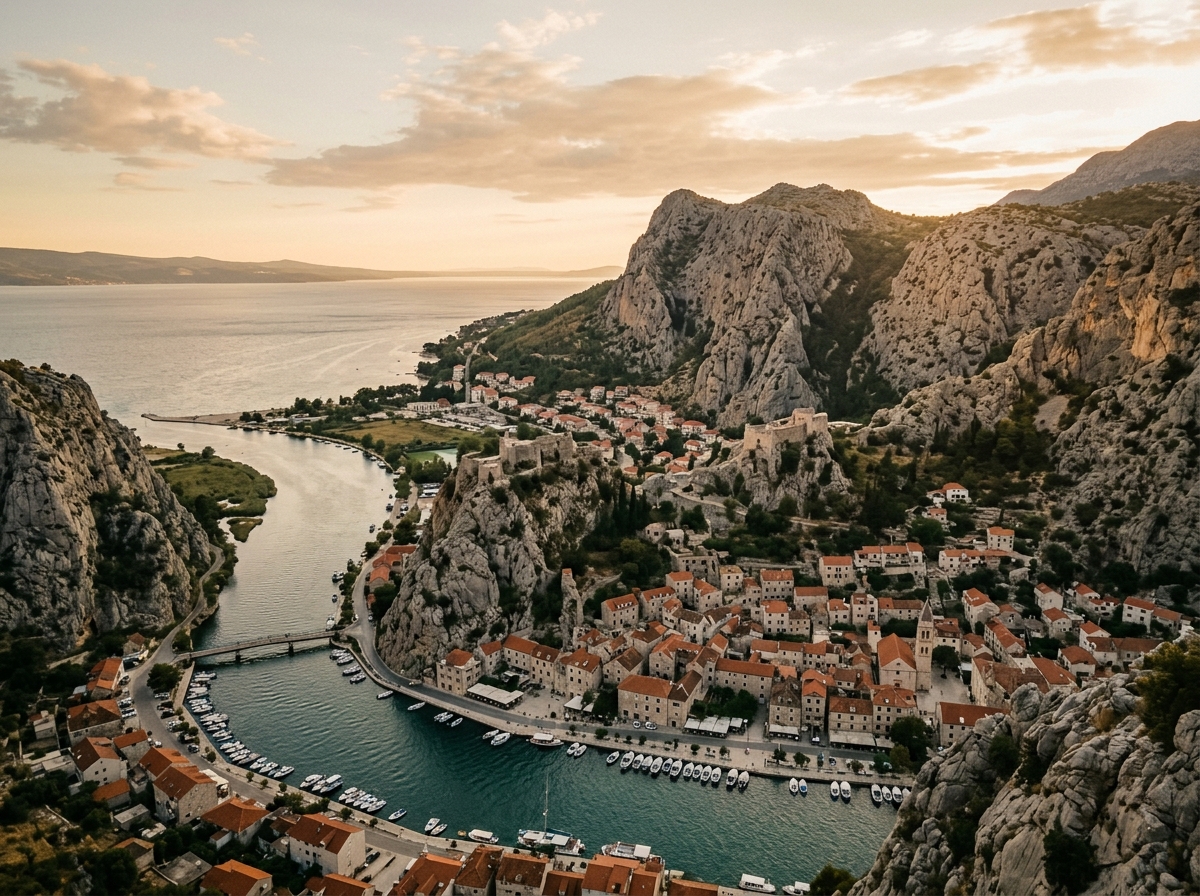
About 30 km before Split, the road passes through Omis, a small town wedged between the Adriatic and the Cetina River canyon. Omis has a pirate history — the Almissa pirates operated from here in the 12th and 13th centuries, raiding Venetian ships from the canyon’s natural cover. Today it trades on that history with a festival in August, but the real appeal is the canyon itself.
The Cetina River canyon cuts inland from Omis for 11 km, with limestone walls rising 180 meters on both sides. You can drive a short stretch along the river (the road to Radmanove Mlinice restaurant, 3 km), but the best ways to experience it are:
- Zip-lining: Eight lines strung across the canyon, the longest at 700 meters. EUR 40-50 per person, 2.5 hours. Book a day ahead in summer.
- Rafting: The upper Cetina, about 30 km inland from Omis, offers a 3-hour rafting trip (Class II-III rapids). EUR 35-45 per person including transport.
- Walking: The path along the river from Omis to Radmanove Mlinice is a flat, easy 45-minute walk each way.
If you stop for nothing else, at least eat at Radmanove Mlinice — a restaurant set under a stone mill on the river, serving trout and frog legs in a setting that looks like it was designed for a travel magazine.
Omis parking is limited in the town center (EUR 1/hour). Use the lot near the Fortress Mirabella on the east side of town.
Arriving in Split
The last 30 km from Omis to Split is the least scenic part of the drive — the road runs through suburbs and light industrial areas before delivering you to Croatia’s second-largest city. Split traffic in summer is unpleasant, and the approach from the south involves a series of roundabouts that test your navigation.
Parking in Split requires a strategy:
| Option | Location | Price | Notes |
|---|---|---|---|
| Spaladium Arena garage | North of center | EUR 6-8/day | Large, secure, 15-min walk to Old Town |
| City Center garages | Near Riva | EUR 2-3/hour | Expensive for long stays |
| Znjan parking | Southeast, near beach | EUR 1/hour | Walk or bus #12 to center |
| Sucidar parking | Above Marjan hill | Free | 20-min walk downhill to center |
We park at the Spaladium Arena garage for anything longer than a few hours. The walk into the center takes you through the market area and past Diocletian’s Palace, which is a better introduction to Split than any guidebook.
Summer Traffic: What to Expect
The D8 in July and August is a different road than the one you drive in May or October. Summer traffic concentrations:
- Dubrovnik approach (both directions): Heavy from 9 AM to 7 PM. The single-lane stretches through Dubrovnik suburbs can add 30-45 minutes.
- Neum border crossings: 15-45 minutes each in peak summer. The Peljesac Bridge alternative eliminates this.
- Makarska town center: Crawling pace through town from mid-morning to evening. Use the bypass road if you are not stopping.
- Split approach: Slow from Omis onward, particularly on weekends when charter flight arrivals coincide with apartment changeover traffic.
The smart play: Leave Dubrovnik before 8 AM or after 5 PM. The morning departure gives you the best combination of light traffic and good photo light. The evening departure means a sunset drive but arriving in Split late.
Ferry Options to Islands
The D8 passes several ferry ports connecting the mainland to Croatia’s islands. If you want to add an island stop to your coastal drive, here are the options:
| Ferry | Route | Duration | Frequency (summer) | Car price |
|---|---|---|---|---|
| Orebic-Korcula | Peljesac to Korcula | 15 min | Hourly | ~EUR 30 |
| Drvenik-Sucuraj | Mainland to Hvar (east end) | 35 min | 8-10/day | ~EUR 25 |
| Makarska-Sumartin | Mainland to Brac (south) | 60 min | 4-6/day | ~EUR 30 |
| Split-Stari Grad | Split to Hvar (town) | 2 hours | 4-6/day | ~EUR 40 |
| Split-Supetar | Split to Brac (north) | 50 min | 12-14/day | ~EUR 35 |
All ferries are operated by Jadrolinija (jadrolinija.hr). In July and August, car spaces sell out — book online at least a day ahead for popular routes like Split-Stari Grad. Walk-on passengers rarely have issues.
Tip: The Drvenik-Sucuraj ferry is the least-known way to get a car onto Hvar. It lands at the quiet eastern end of the island, and the drive from Sucuraj to Hvar Town (85 km, 2 hours on a winding road) is itself a spectacular route through lavender fields and abandoned villages.
Practical Information
Fuel
Fuel stations are frequent along the entire D8. INA and Petrol are the main chains. Prices are standard Croatian (EUR 1.45-1.55/L for petrol). In Neum, fuel is slightly cheaper (Bosnian prices), but the stop is short enough that it is barely worth pulling over for.
Tolls
The D8 coastal road has no tolls. If you detour onto the A1 motorway at any point, tolls apply (roughly EUR 0.07/km). The Peljesac Bridge is free.
Road Condition
The D8 is a well-maintained two-lane road. Surface quality ranges from good to excellent. The main challenges are:
- Width: Some sections through towns are narrow, especially when passing buses.
- Curves: The road follows the coastline, which means constant turns. Not a problem at reasonable speeds, but exhausting if you are trying to make time.
- Slow vehicles: Campervans, buses, and agricultural vehicles are common. Overtaking opportunities are limited.
Best Time
May-June and September-October are ideal. Warm weather, light traffic, and accommodations at 30-50% less than peak season. The ferries run on reduced schedules but are never full.
November-March: The D8 is open year-round, but many coastal restaurants and hotels close from November through March. The drive itself is still scenic — in winter, the snow on Biokovo above the blue Adriatic is a striking combination.
Combining with Other Routes
This drive connects naturally to several other itineraries:
- Heading south from Split? The D8 continues to Dubrovnik, or you can take the Adriatic Coast route all the way to Tirana.
- Starting from Zagreb? Drive the A1 motorway to Split (3.5 hours), then take the D8 south to Dubrovnik.
- Want to detour inland? From Ploce, the road to Bosnia via Metkovic leads to Mostar in about 2 hours.
For more on driving in Croatia, including toll details and speed limits, see our country hub page. And if you are renting a car for this drive, read our Croatia car rental tips before you book — the one-way drop-off fees between Split and Dubrovnik are worth understanding in advance.
The Bottom Line
The Dubrovnik to Split coastal drive is one of those routes where the journey genuinely matters more than the arrival. You could blast through in three hours on the A1 motorway, but you would miss the oysters in Ston, the wines on Peljesac, the absurd beauty of Biokovo reflected in the Adriatic, and the pirate canyon at Omis. Give it a full day. Start early, pack swimming gear, and resist the urge to check how much further it is to Split. The road will tell you when you have arrived.